Atlantic Ocean Road in Norway: Scenic Drive, Stops & Map
Imagine driving along a road that seems to float above the Atlantic Ocean, with waves crashing against the rocks on either side. That’s exactly what you’ll experience on Norway’s Atlantic Ocean Road (Atlanterhavsveien), one of the country’s most spectacular scenic drives.
This extraordinary road connects small islands and rocky islets through a series of impressive bridges, offering incredible views of the Norwegian coastline.
If you’re planning a road trip through Norway, the Atlantic Ocean Road is definitely worth adding to your itinerary.
In this guide, you’ll discover where the Atlantic Ocean Road is, how to get there, the best places to stop and how to visit it without a car.
What Is the Atlantic Ocean Road?
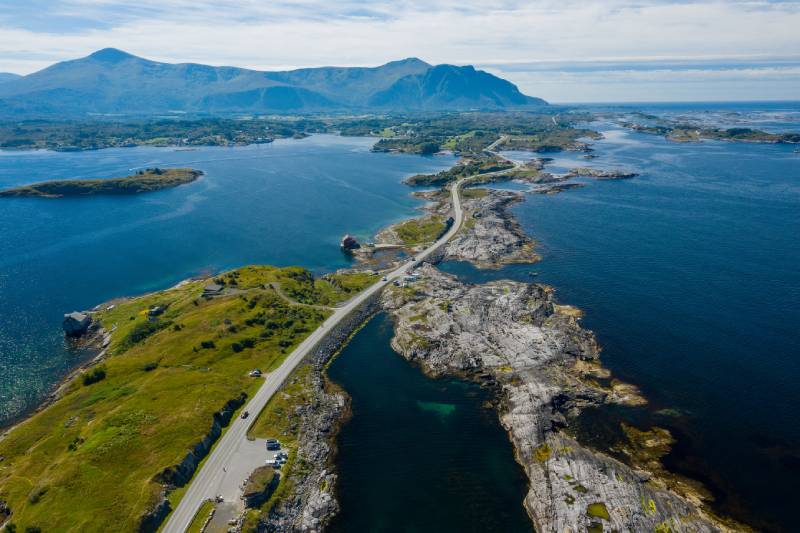
The Atlantic Ocean Road is an 8.3-kilometre scenic road that crosses a series of small islands and connects them through eight bridges.
It is located on Norway’s western coast, in the Møre og Romsdal region, between the cities of Molde and Kristiansund.
The famous section runs between Kårvåg and Vevang and forms part of County Road 64.
However, the complete Norwegian Scenic Route Atlanterhavsvegen extends for approximately 36 kilometres, from Kårvåg to the fishing village of Bud.
Opened in 1989, the road is considered one of Norway’s most remarkable engineering achievements.
Today, it has become a popular attraction for travellers exploring the country’s western coastline.
Why Is the Atlantic Ocean Road So Famous?
What makes this road special is the combination of its unusual design and the dramatic landscape surrounding it.
Instead of following the coastline, the Atlantic Ocean Road crosses the open sea, connecting islands through a series of curved bridges.
On calm days, you can enjoy beautiful views of the ocean, nearby islands and distant mountains.
During stormy weather, the experience is completely different. Powerful waves crash against the rocks and sometimes reach the road, creating dramatic scenes.
However, strong winds and rough seas can make driving dangerous, so it’s important to check the weather and road conditions before your visit.
Storseisundet Bridge: The Road That Disappears
The most famous part of the Atlantic Ocean Road is Storseisundet Bridge (Storseisundbrua).
This 260-metre-long bridge is known for its unusual curved design.
When viewed from certain angles, it creates an optical illusion that makes the road appear to disappear into the sky.
You’ve probably seen photographs of this bridge, even if you didn’t know it was in Norway.
It’s one of the most photographed places along the route and a highlight of any visit.
Interesting Facts About the Atlantic Ocean Road
The Atlantic Ocean Road has an interesting history, and its construction was anything but easy.
Work began in 1983 and continued for six years, until the road officially opened on July 7, 1989.
During construction, workers faced difficult weather conditions, including 12 storms with hurricane-force winds.
The project was considered an extraordinary engineering challenge because of its exposed location in the Atlantic Ocean.
In 2005, the road was voted Norwegian Construction of the Century, recognising its importance as an engineering achievement.
The Atlantic Ocean Road has also appeared in car advertisements and international film productions, thanks to its unusual design and spectacular coastal setting.
Another interesting fact is that the road originally had tolls to help finance construction.
However, it has been toll-free since 1999, so you don’t have to pay to drive along the famous section today.
Best Places to Stop Along the Atlantic Ocean Road
Although the most famous part of the road is only 8.3 kilometres long, it’s worth taking your time to explore the viewpoints and surrounding coastline.
Here are three places you shouldn’t miss.
1. Eldhusøya: The Best Place to Enjoy the Views
Eldhusøya is one of the best stops along the Atlantic Ocean Road.
This small island has a raised walking path that follows the natural shape of the rocky landscape.
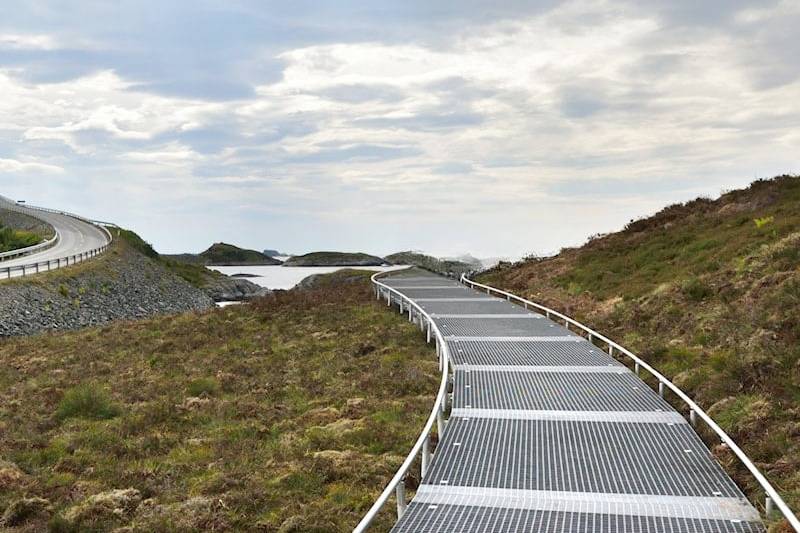
The walkway offers beautiful views of the Atlantic Ocean, nearby islands and the famous bridges.
It’s a great place to stretch your legs, enjoy the scenery and take photographs without having to walk along the road.
The circular walkway is accessible to wheelchair users and remains open throughout the year.
You’ll also find parking, public toilets and a café that opens seasonally.
If you only have time for one stop along the Atlantic Ocean Road, Eldhusøya would be my first choice.
2. Storseisundet Bridge: The Most Famous View
Storseisundet Bridge is the most recognisable landmark along the route.
Its dramatic curve makes it particularly interesting for photography, especially when viewed from the nearby coastal viewpoints.
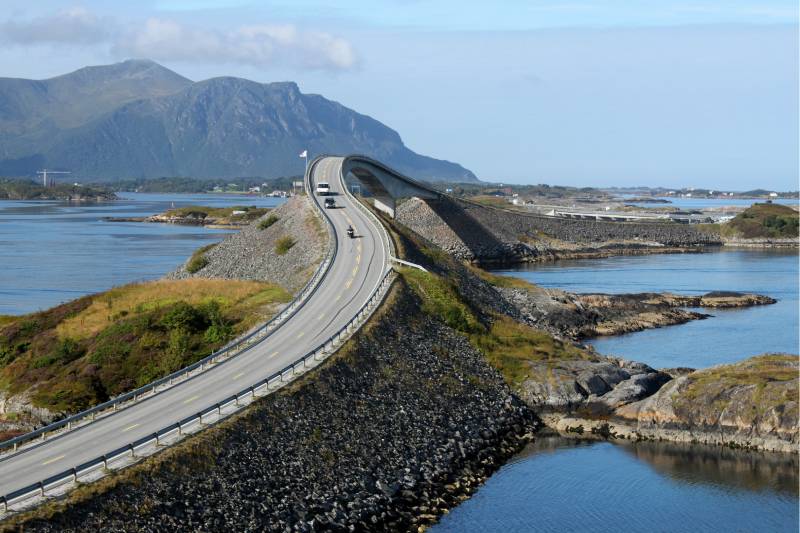
The bridge looks different depending on the angle, and some photographs make it appear almost impossible to drive across.
The surrounding landscape is also beautiful, with small islands, rocky shores and open views of the Atlantic Ocean.
For the best experience, stop at a designated parking or viewing area rather than stopping on the bridge itself.
3. Bud: A Traditional Norwegian Fishing Village
Although Bud isn’t located on the famous 8.3-kilometre section, it’s part of the longer Norwegian Scenic Route and well worth visiting.
Bud is a traditional fishing village with colourful wooden houses, small boats and beautiful views of the Atlantic coastline.
It’s a lovely place to experience the quieter side of coastal Norway.
One of its main historical attractions is Ergan Coastal Fort, a German coastal defence installation from the Second World War.
You can also walk along the waterfront, explore the harbour or stop for something to eat.
Bud is a good place to finish your scenic drive before continuing towards Molde.
How to Get to the Atlantic Ocean Road
The easiest way to visit the Atlantic Ocean Road is by car.
Its location between Molde and Kristiansund makes it a convenient stop during a road trip through the Møre og Romsdal region.
Getting There by Car
You can reach the Atlantic Ocean Road from several cities in western and central Norway.
- From Molde: drive north towards Bud or follow the route towards Vevang and the Atlantic Ocean Road.
- From Kristiansund: travel towards Averøy and Kårvåg, where the famous section begins.
- From Ålesund: allow approximately three hours, depending on the route and ferry connections.
- From Trondheim: allow around four to five hours, depending on traffic and the chosen route.
If you have a rental car, I recommend including the road as part of a longer itinerary rather than travelling all the way there just to drive the eight kilometres.
For example, you could combine the Atlantic Ocean Road with Ålesund, Geirangerfjord and Trollstigen, creating a scenic road trip through western Norway.
Keep in mind that some mountain roads, including Trollstigen, may close during winter or because of adverse weather conditions.
Always check the current road status before planning your itinerary.
Is the Atlantic Ocean Road Free?
Yes. Driving along the Atlantic Ocean Road itself is free.
The original toll charges were removed in 1999.
However, you may encounter toll roads or ferry charges elsewhere on your journey, depending on the route you choose.
How to Visit the Atlantic Ocean Road Without a Car
You don’t necessarily need a rental car to experience the Atlantic Ocean Road.
There are public transport connections and organised excursions from nearby cities.
1. Public Bus Between Molde and Kristiansund
A public bus service connects Molde and Kristiansund via the Atlantic Ocean Road on certain departures.
This allows you to experience the famous bridges without driving yourself.
Tickets can be purchased through the FRAM app or the Entur app, and card payment is also available on board.
However, there’s one important detail:
The public bus doesn’t stop at the main viewpoints or tourist areas, including Eldhusøya.
It’s a regular transport service, so you won’t have opportunities to stop and take photographs along the route.
Check the latest connections and timetables on FRAM or Entur.
2. Guided Excursions from Molde
If you want to enjoy the scenery without renting a car, a guided bus tour from Molde is a convenient option.
West Norway Travel offers excursions that include the Atlantic Ocean Road and other attractions along the coast.
Depending on the tour, you may visit:
- The famous bridges of the Atlantic Ocean Road.
- The fishing village of Bud.
- The Varden viewpoint overlooking Molde and the surrounding mountains.
- Other scenic locations along the Hustadvika coast.
Tours generally last around 3.5 to 4.5 hours, depending on the itinerary.
Some excursions also offer audio guides in different languages.
3. Guided Excursions from Kristiansund
Kristiansund is another excellent starting point for exploring the Atlantic Ocean Road.
Organised bus tours take visitors across the famous bridges and along the surrounding coastline.
Some excursions also include Bud and other scenic stops in the region.
These tours usually last around four hours, although the exact itinerary and duration depend on the operator.
They’re a practical option if you’re travelling without a car or visiting Kristiansund during a cruise.
When Is the Best Time to Visit the Atlantic Ocean Road?
The Atlantic Ocean Road can be visited throughout the year, but the experience changes depending on the season.
Summer (June to August) offers long daylight hours and generally more comfortable conditions for sightseeing, walking and photography. It’s also the busiest time of year.
Spring and autumn can be excellent alternatives if you prefer fewer visitors. The changing weather can create dramatic coastal landscapes, although rain and strong winds are possible.
Winter offers a completely different experience, with short daylight hours, stormy seas and occasionally snow-covered scenery.
However, winter driving requires more caution, especially during strong winds or icy conditions.
The road is particularly famous for its dramatic appearance during storms, but never put yourself at risk to take photographs.
Is the Atlantic Ocean Road Worth Visiting?
Yes, especially if you’re planning a road trip along Norway’s western coast.
The Atlantic Ocean Road is more than a scenic drive. It’s an unusual combination of impressive engineering, dramatic landscapes and traditional coastal villages.
Although the famous section is relatively short, the surrounding area has plenty to explore.
My recommendation is to allow at least one or two hours if you’re driving independently and want to stop at the main viewpoints.
If you also plan to explore Bud and the longer scenic route, allow half a day.
For official maps, viewpoints and updated travel information, visit the Norwegian Scenic Routes website.
Whether you visit on a sunny summer day or experience the dramatic Atlantic coastline in autumn, this is one of Norway’s most memorable road trips.