10 Best Things to Do in Geiranger, Norway (With Map)
Geiranger is one of the most spectacular destinations in Norway. This small village, surrounded by towering mountains and the deep blue waters of Geirangerfjord, is a perfect place for anyone who loves nature, scenic landscapes and outdoor adventures.
Located in the Møre og Romsdal region, Geiranger is famous for its UNESCO-listed fjord, impressive waterfalls and some of Norway’s most beautiful viewpoints.
Despite its small size, there’s plenty to see and do. You can explore the fjord by boat, drive along winding mountain roads, discover historic farms or simply enjoy the scenery.
In this guide, you’ll discover 10 of the best things to do in Geiranger, how to get there and a recommended one-day itinerary to help you make the most of your visit.
1. Take the Scenic Ferry from Hellesylt to Geiranger
Taking the ferry from Hellesylt to Geiranger is one of the most beautiful ways to arrive in the village.
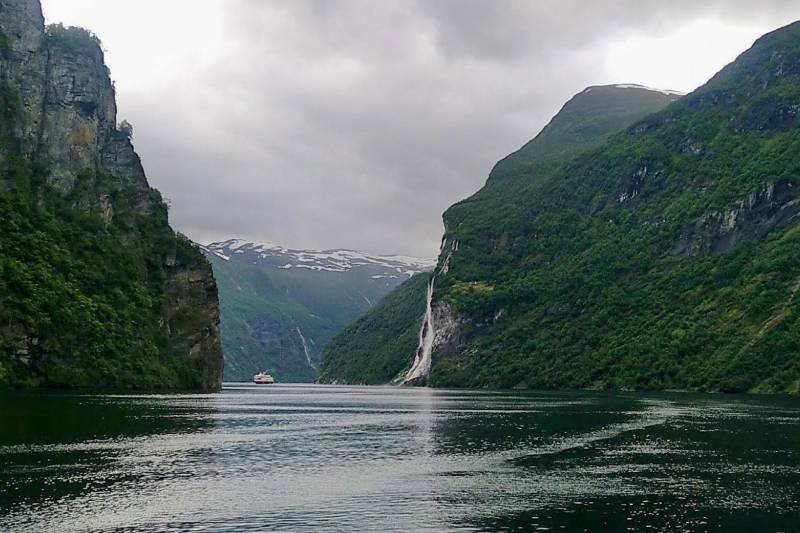
The journey takes approximately 65 minutes and crosses the spectacular Geirangerfjord, part of the UNESCO World Heritage-listed West Norwegian Fjords.
As you sail between steep mountains, you’ll pass waterfalls, abandoned mountain farms and some of the most impressive scenery in western Norway.
Among the highlights are the famous Seven Sisters, the Suitor and the Bridal Veil waterfalls.
The ferry also offers beautiful views of the small farms built high on the cliffs, where families once lived in remote and challenging conditions.
Practical information
- Route: Hellesylt–Geiranger.
- Duration: approximately 1 hour and 5 minutes.
- Season: mainly spring, summer and autumn.
- Vehicles: cars, motorcycles, bicycles and campervans are accepted.
- Booking: advance reservations are recommended, particularly if you’re travelling with a vehicle during summer.
If you’re planning a road trip, you can take your car on board and continue driving from Geiranger.
Check ferry timetables and tickets
Best for: enjoying the UNESCO-listed fjord and arriving in Geiranger by boat.
2. See the Seven Sisters and the Suitor Waterfalls
The Seven Sisters (De Syv Søstrene) are among the most famous waterfalls in Norway.
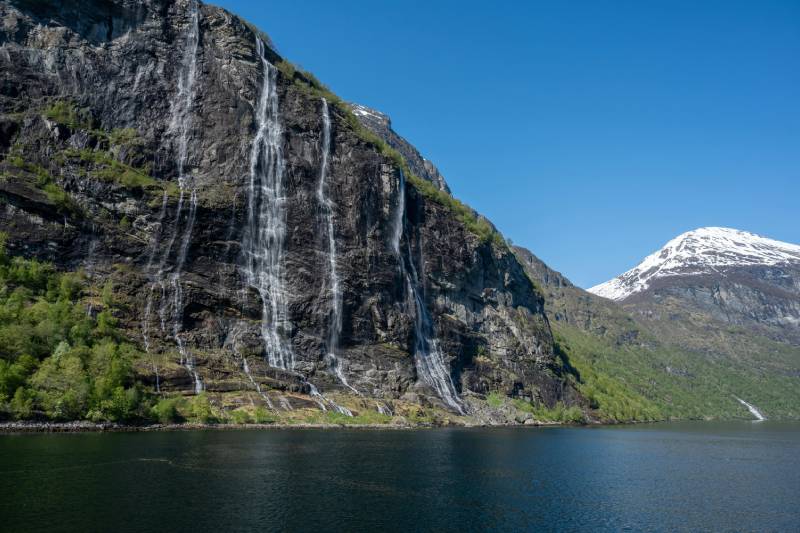
They flow down the steep mountainside in several separate streams, creating an extraordinary natural display.
The waterfalls are particularly impressive during late spring and early summer, when melting snow increases the water flow.
According to local folklore, the seven waterfalls represent seven sisters, while the Suitor (Friaren), on the opposite side of the fjord, represents a man who tried to win their affection.
The legend adds an interesting cultural element to an already spectacular landscape.
How to see the waterfalls
The best way to admire them is from the water.
You can take the Hellesylt–Geiranger ferry, join a sightseeing cruise or book a guided kayak excursion.
If you’re exploring the area by car, the Ørnesvingen viewpoint also offers beautiful views towards the waterfalls.
Best for: photography, boat trips and discovering Norwegian folklore.
3. Enjoy the Views from Dalsnibba and Geiranger Skywalk
If you want to enjoy one of Norway’s most spectacular panoramic views, Dalsnibba is a place you shouldn’t miss.
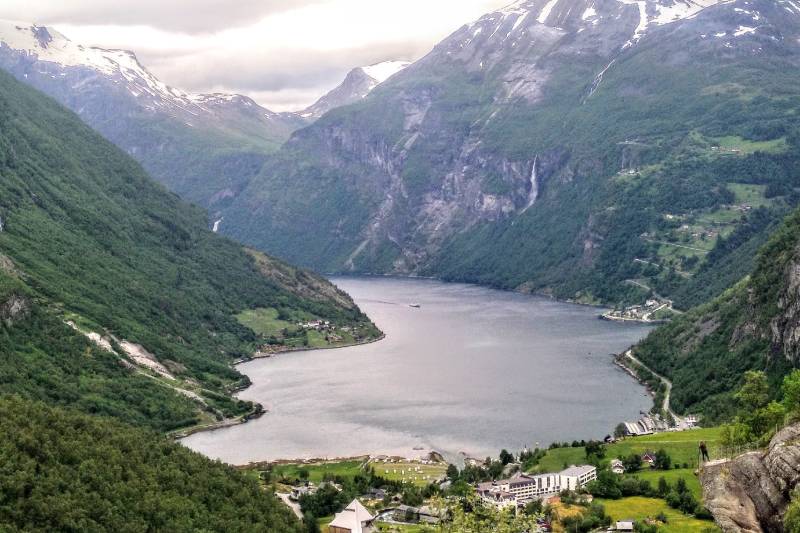
Located 1,500 metres above sea level, the Geiranger Skywalk viewpoint offers incredible views of the fjord, the surrounding mountains and the winding roads below.
On a clear day, you can see the village of Geiranger far beneath you, surrounded by steep mountain slopes.
Even during summer, you may find snow near the summit, creating a beautiful contrast with the green valleys and blue waters of the fjord.
How to get to Dalsnibba
Dalsnibba is located approximately 21 kilometres from Geiranger.
From the village, follow Road 63 towards the mountains and turn onto the Nibbevegen toll road, which leads to the summit.
The drive takes around 30 minutes each way, depending on conditions.
There’s parking at the top, along with visitor facilities and a viewing platform.
Important: the road is seasonal and may close because of snow, ice or strong winds. Entry is subject to a toll.
Check road conditions, opening information and prices on the official Geiranger Skywalk website.
Best for: panoramic photography, mountain scenery and scenic driving.
4. Drive the Eagle Road and Stop at Ørnesvingen
The Eagle Road (Ørnevegen) is one of Norway’s most famous mountain roads.
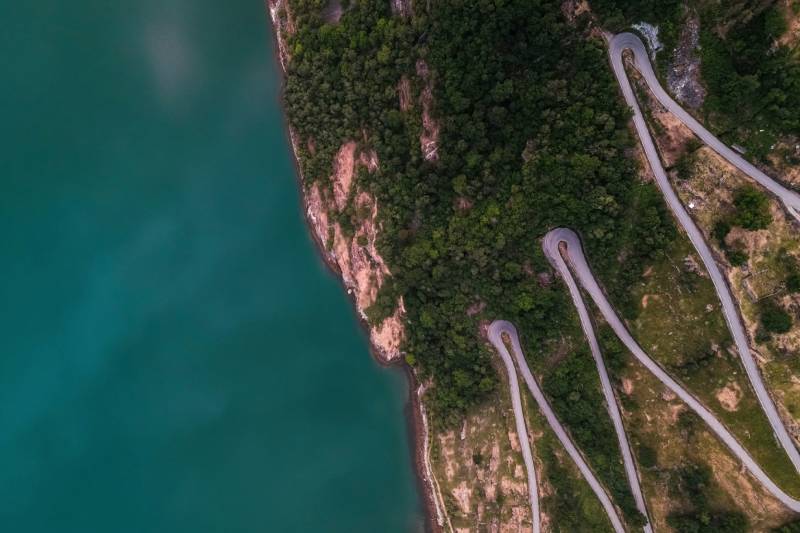
It forms part of Road 63 and connects Geiranger with Eidsdal to the north.
The road is known for its 11 hairpin bends, which climb steeply above the village.
Near the top, you’ll find Ørnesvingen, also called the Eagle Bend viewpoint.
From here, you’ll enjoy spectacular views of Geirangerfjord, the surrounding mountains and the Seven Sisters waterfalls.
It’s one of the most impressive viewpoints in the area, and you don’t need to hike to reach it.
How to visit Ørnesvingen
If you’re arriving from Ålesund via Eidsdal, you’ll drive along the Eagle Road before descending towards Geiranger.
Alternatively, you can drive uphill from the village or join a sightseeing excursion.
There’s a designated viewing platform where you can safely enjoy the scenery.
The road has steep bends, so take your time and be especially careful when sharing it with buses and other vehicles.
View Ørnesvingen on Google Maps
Best for: scenic driving and impressive fjord views without a long hike.
5. Hike to the Historic Skageflå Mountain Farm
If you enjoy hiking and want to discover a different side of Geiranger, consider visiting Skageflå, one of the most famous historic mountain farms along the fjord.
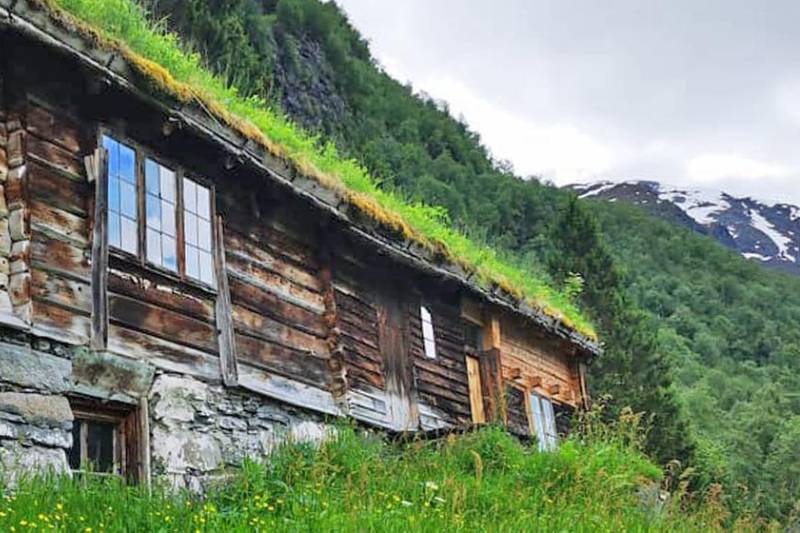
The farm sits on a steep mountainside, approximately 250 metres above the water.
It offers an interesting glimpse into the lives of the families who once lived and worked in these remote landscapes.
Today, Skageflå is a popular hiking destination because of its history and extraordinary views towards the Seven Sisters waterfalls.
How to reach Skageflå
One of the most popular options is to take a sightseeing boat from Geiranger to Skagehola, where the hiking trail begins.
From the landing point, a steep path climbs towards the farm.
The ascent takes approximately 45 minutes, depending on your fitness level and trail conditions.
Once you reach the farm, you can enjoy the views and learn more about the history of this unusual settlement.
You can then return to the boat landing for a prearranged pickup or continue hiking towards Homlongsætra and Homlong.
The longer hiking route is considerably more demanding and can take several additional hours.
Important: this is a steep mountain hike with exposed sections. Wear suitable hiking boots and avoid the route during unsafe weather conditions.
Find boat transport and hiking information for Skageflå
Best for: experienced hikers, history lovers and spectacular fjord scenery.
6. Visit the Norwegian Fjord Centre
If you want to understand more about Geirangerfjord and the landscapes surrounding it, the Norwegian Fjord Centre (Norsk Fjordsenter) is well worth visiting.
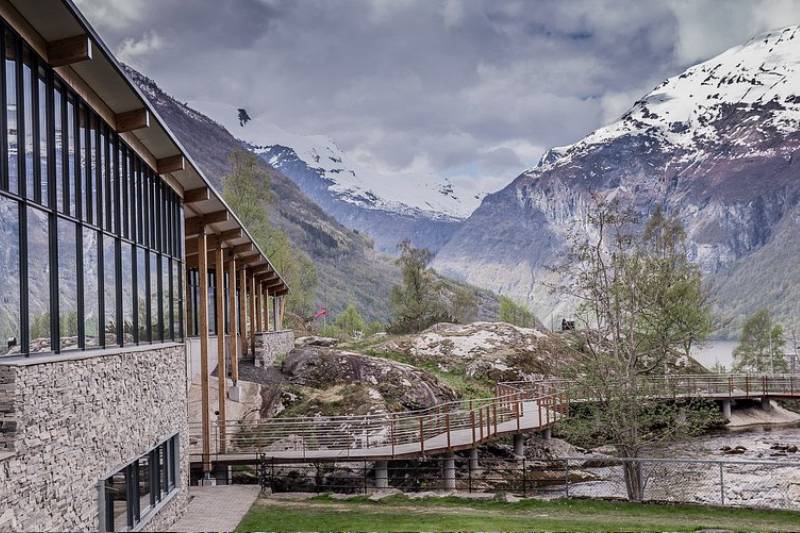
This modern visitor centre is dedicated to the UNESCO World Heritage-listed fjord region.
Through exhibitions, films and interactive displays, you’ll discover how glaciers shaped Norway’s fjords and how people adapted to living in these isolated valleys.
The centre also explores the area’s wildlife, geology, cultural history and environmental challenges.
It’s a particularly interesting stop if you want to learn more about the landscape rather than simply admire the views.
How to visit the Norwegian Fjord Centre
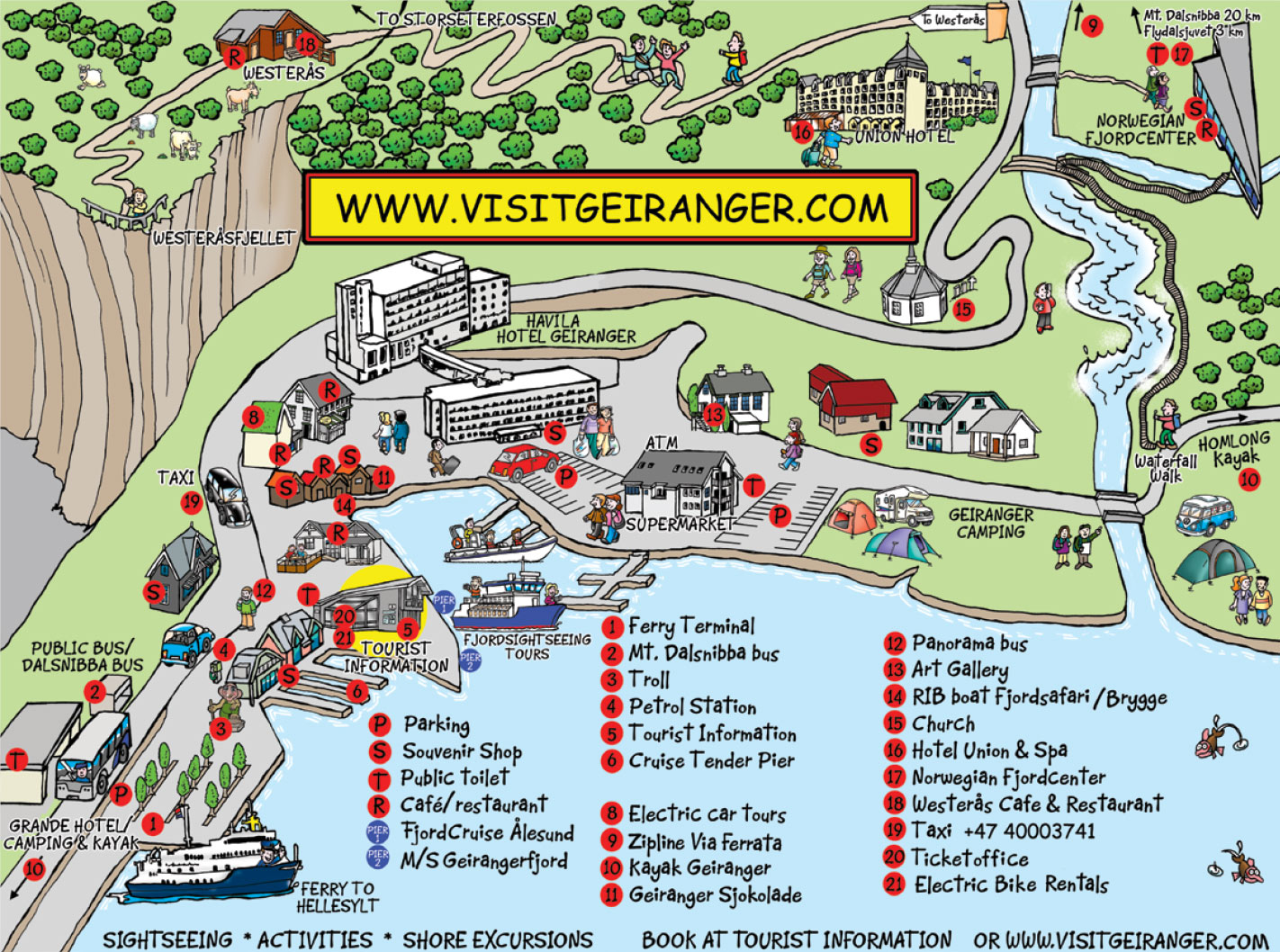
The centre is located above Geiranger village, close to Hotel Union.
You can reach it on foot by following the Waterfall Walk or drive directly to the visitor centre.
Inside, you’ll find exhibitions, a café and a shop.
It’s a good activity for families and a useful option when the weather isn’t suitable for outdoor excursions.
Visit the Norwegian Fjord Centre website
Best for: families, cultural experiences and learning about the history of Norway’s fjords.
7. Explore Geirangerfjord by Kayak
Kayaking is one of the most memorable ways to experience Geirangerfjord.
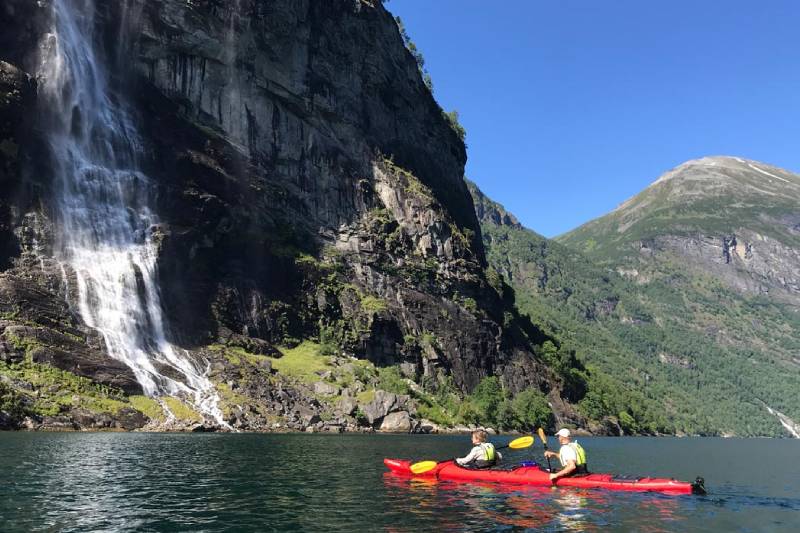
Instead of admiring the fjord from a viewpoint, you’ll be surrounded by the towering mountains and waterfalls that make this landscape so special.
Paddling across the water offers a completely different perspective, allowing you to enjoy the scenery at a slower pace.
On calm days, the reflections of the mountains on the water make the experience particularly beautiful.
Guided kayak tours and rentals
The Geiranger Kayak Centre offers guided excursions and kayak rentals during the main tourist season.
The kayak base is located in Homlong, near Geiranger village.
Guided tours are available for different experience levels, including beginners.
Some excursions last approximately 2.5 hours, while longer options explore more of the fjord.
Experienced kayakers may also be able to rent equipment independently.
However, weather conditions can change quickly, and it’s important to be aware of boat traffic.
For beginners, I’d recommend choosing a guided tour.
Explore kayak tours in Geiranger
Best for: outdoor adventures, nature lovers and travellers seeking a peaceful fjord experience.
8. Relax at Hotel Union’s Spa
After a day of hiking or sightseeing, you might want to enjoy a more relaxing experience.
Union Geiranger Resort & Spa, traditionally known as Hotel Union, is one of the best-known hotels in the village.
Located on a hillside overlooking Geiranger, it offers beautiful views of the fjord and surrounding mountains.
The hotel has a wellness area with saunas, pools, relaxation spaces and spa treatments.
It’s an appealing option if you’re staying overnight or want to take a break from outdoor activities.
Can you visit the spa without staying at the hotel?
Spa access and day-visitor packages may be available, depending on the season and hotel occupancy.
It’s best to check current availability and conditions directly with the hotel.
Explore Union Geiranger Resort & Spa
Best for: couples, wellness experiences and relaxing after a day outdoors.
9. Walk Along the Waterfall Walk
One of the easiest ways to enjoy Geiranger’s scenery without leaving the village is to follow the Waterfall Walk (Fossevandring).
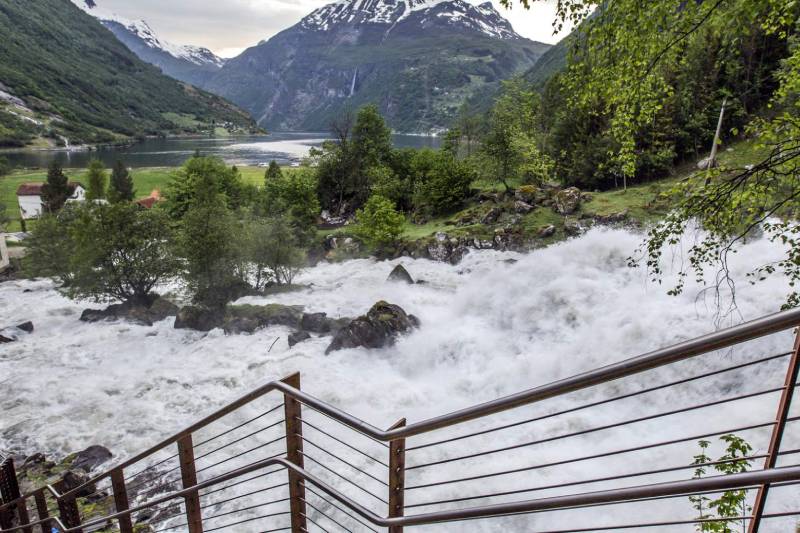
This short walking route connects the lower part of Geiranger with the Norwegian Fjord Centre and Hotel Union.
The main attraction is Storfossen, a powerful waterfall flowing down the mountainside through the village.
The walk includes approximately 327 steps, with several platforms and viewpoints where you can stop to admire the waterfall.
As you climb, you’ll also enjoy increasingly beautiful views of Geiranger and the surrounding landscape.
The waterfall is particularly impressive in spring and early summer, when melting snow increases the water flow.
Is the Waterfall Walk difficult?
The route is relatively short, but the stairs can be tiring.
There are several places where you can stop and rest.
You can walk uphill from the harbour towards the Norwegian Fjord Centre or follow the route downhill in the opposite direction.
It’s one of the best short activities in Geiranger, especially if you don’t have enough time for a longer hike.
Best for: short walks, waterfall photography and visitors exploring the village on foot.
10. Explore the Mountains on an Electric Bike
If you enjoy cycling, renting an electric bike in Geiranger is another way to explore the surrounding mountains.
The roads around the village offer spectacular scenery, but the climbs can be demanding.
An e-bike makes it easier to cover longer distances and reach viewpoints that would be challenging on a conventional bicycle.
Where can you go by e-bike?
One popular destination is Flydalsjuvet, a beautiful viewpoint located approximately 4 kilometres from Geiranger.
From here, you’ll enjoy a panoramic view of the village, the fjord and the surrounding mountains.
More experienced cyclists can consider longer mountain routes, including the climb towards Dalsnibba.
However, these routes involve significant elevation gain and require appropriate equipment and preparation.
Keep in mind that the roads around Geiranger are narrow and shared with cars, buses and other vehicles.
If you’re not comfortable cycling on steep mountain roads, consider choosing a guided excursion.
Find electric bike routes and rentals
Best for: active travellers, scenic cycling and exploring viewpoints outside the village.
How to Get to Geiranger
Geiranger is located in western Norway, in the Møre og Romsdal region.
Although it’s a small village surrounded by mountains, you can reach it by car, ferry and public transport during the main tourist season.
Getting to Geiranger by Car
Driving is one of the most flexible ways to visit Geiranger, especially if you’re planning a road trip through western Norway.
Several scenic routes lead to the village.
From Ålesund
The drive usually takes approximately 2.5–3 hours, depending on traffic, the route and ferry connections.
A popular route travels through Sjøholt and Valldal, crosses the fjord between Linge and Eidsdal, and continues along Road 63.
This route takes you along the famous Eagle Road before descending towards Geiranger.
From Oslo
Allow approximately 7–8 hours, depending on your route and weather conditions.
One option is to drive north through the Gudbrandsdalen Valley towards Lom, then continue along Road 15 and Road 63.
From Bergen
The drive generally takes around 7–9 hours, depending on ferry connections and your chosen route.
There are several possible routes through western Norway, many of which include beautiful fjord crossings.
Important: some mountain roads around Geiranger close during winter because of snow and difficult driving conditions.
Always check the latest road status before travelling.
Check Norwegian road conditions
Getting to Geiranger by Ferry
The Hellesylt–Geiranger ferry is one of the most scenic ways to arrive.
The crossing takes approximately 65 minutes and travels through Geirangerfjord.
You can bring your car, motorcycle, bicycle or campervan on board, making it convenient for a road trip.
The service operates seasonally, so check departure times and book in advance when travelling during busy periods.
Getting to Geiranger by Public Transport
It’s possible to visit Geiranger without a car, but public transport requires more planning.
From Ålesund, you can travel by regional bus towards the Geiranger area, with the exact route depending on the season.
Some connections involve buses and ferries through Eidsdal, while others travel towards Hellesylt, where you can take the sightseeing ferry.
Services may be limited outside summer.
For the latest connections and timetables, check:
- FRAM — regional buses and ferries in Møre og Romsdal.
- Entur — Norway’s national public transport journey planner.
If you’re travelling without a car, plan your arrival and departure before booking accommodation.
When Is the Best Time to Visit Geiranger?
The best time to visit Geiranger is generally from May to September, when most outdoor activities, sightseeing ferries and mountain roads are operating.
Summer offers long daylight hours, green mountain landscapes and excellent conditions for hiking and fjord cruises.
However, July and August are also the busiest months, particularly when cruise ships arrive.
If you prefer a quieter experience, late May, June or September can be good alternatives, depending on the weather and the activities you want to enjoy.
During winter, Geiranger is much quieter, but several tourist services, accommodation options and mountain roads may be closed.
How Many Days Do You Need in Geiranger?
You can visit Geiranger’s main attractions in a single day, but staying at least one night is a good idea if your itinerary allows it.
With one day, you can enjoy the fjord, explore the village and visit the main viewpoints.
With two days, you’ll have more time for activities such as kayaking, longer hikes or visiting the historic Skageflå farm.
Staying overnight also gives you the chance to enjoy the village early in the morning or in the evening, when it’s often quieter.
Recommended One-Day Itinerary in Geiranger
If you only have one day in Geiranger, I’d recommend combining a scenic fjord crossing, the village’s main attractions and three of its most beautiful viewpoints.
This itinerary is designed for travellers visiting between late spring and early autumn, when the ferry and mountain roads are operating.
You’ll need a car for the complete route. If you’re travelling without one, you can replace the viewpoint drive with an organised sightseeing excursion.
Allow approximately 7–8 hours, including the ferry, short walks, lunch and photo stops. Timings will depend on ferry departures and weather conditions.
Stop 1. Hellesylt–Geiranger Ferry
Suggested time: 65 minutes
Start your day in Hellesylt and take the scenic ferry through Geirangerfjord.
This is one of the highlights of the itinerary, as you’ll enjoy spectacular views of the Seven Sisters and Suitor waterfalls, steep mountains and historic farms.
If you’re travelling by car, take your vehicle on board so you can continue your journey after arriving in Geiranger.
Tip: book the ferry in advance and choose a morning departure if available.
Stop 2. Explore Geiranger and the Waterfall Walk
Suggested time: 60–90 minutes
Once you arrive in Geiranger, take some time to explore the village and waterfront.
Walk along the harbour and follow the Waterfall Walk towards the Norwegian Fjord Centre.
The 327 steps take you beside Storfossen waterfall, with several platforms offering beautiful views.
If you’re interested in learning more about the fjord’s history and geology, you can also visit the Norwegian Fjord Centre.
Afterwards, stop for lunch in the village before continuing to the viewpoints.
Stop 3. Flydalsjuvet Viewpoint
Suggested time: 15–20 minutes
From Geiranger, drive approximately 4 kilometres along Road 63 towards the mountains.
Your next stop is Flydalsjuvet, one of the most famous viewpoints in Norway.
From here, you’ll enjoy a classic panoramic view of Geiranger village and the fjord stretching between the mountains.
It’s an excellent place for photography and doesn’t require a long walk.
Stop 4. Dalsnibba and Geiranger Skywalk
Suggested time: 1.5–2 hours including the drive from Flydalsjuvet and the return towards Geiranger
Continue uphill along Road 63 towards Dalsnibba.
The final section follows the Nibbevegen toll road, which climbs to the Geiranger Skywalk viewpoint at 1,500 metres above sea level.
From the summit, you’ll enjoy spectacular views across the mountains and towards Geirangerfjord.
This is the highest viewpoint on the itinerary and one of the most memorable places in the region.
Important: Dalsnibba is only accessible when the mountain road is open. If it’s cloudy or the road is closed, skip this stop and spend more time exploring Geiranger or the lower viewpoints.
Stop 5. Ørnesvingen and the Eagle Road
Suggested time: 30–45 minutes from Geiranger, including a photo stop
After returning towards Geiranger, follow Road 63 north and begin the climb along the Eagle Road.
The road has 11 hairpin bends and leads to Ørnesvingen, a spectacular viewpoint overlooking the fjord.
From here, you’ll have a completely different perspective of Geirangerfjord and, when visibility is good, the Seven Sisters waterfalls.
It’s a beautiful final stop before continuing towards Eidsdal and Ålesund or returning to Geiranger.
One-Day Itinerary Summary
| Stop | Suggested time |
|---|---|
| Hellesylt–Geiranger Ferry | 1 hour 5 minutes |
| Geiranger village and Waterfall Walk | 1–1.5 hours |
| Lunch in Geiranger | 45–60 minutes |
| Flydalsjuvet | 15–20 minutes |
| Dalsnibba and Geiranger Skywalk | 1.5–2 hours |
| Ørnesvingen and Eagle Road | 30–45 minutes |
| Total | Approximately 7–8 hours, allowing for transfers and breaks |
What If You Don’t Have a Car?
If you’re visiting Geiranger without a car, you can still enjoy a wonderful day.
Start with a fjord cruise, explore the village and follow the Waterfall Walk to the Norwegian Fjord Centre.
Then join an organised sightseeing bus tour to visit viewpoints such as Flydalsjuvet, Ørnesvingen or Dalsnibba, depending on the excursion and road conditions.
This way, you can enjoy the main highlights without renting a car.
A Final Tip for Your Day in Geiranger
Don’t try to fit all ten activities into one day.
Skageflå, kayaking and mountain cycling are excellent experiences, but they require extra time and are better suited to a longer stay.
For a first visit, combining the fjord, the village and the main viewpoints provides a complete introduction to Geiranger’s extraordinary landscape.
If you have another day available, you can dedicate it to hiking, kayaking or exploring more of the surrounding mountains.