These Are the 4 Best Places to See the Northern Lights in Norway
Seeing the Northern Lights in Norway is an unforgettable experience. Watching colourful lights dance across the Arctic sky is one of the highlights of a winter trip.
But where should you go, and when is the best time to see them?
In this guide, we’ll explore four of the best places to see the Northern Lights in Norway, from the lively city of Tromsø to the remote landscapes of North Cape. You’ll also find practical tips to help you plan your trip and improve your chances of seeing this incredible natural phenomenon.
What are the Northern Lights?
The Northern Lights, also known as Aurora Borealis, are colourful lights that appear in the night sky, usually in regions close to the Arctic Circle.
They form when charged particles from the Sun interact with gases in the Earth’s atmosphere. These interactions produce glowing lights that can appear green, pink, purple or red.
The lights often move across the sky in waves, arcs or curtain-like shapes, creating one of nature’s most spectacular displays.
Although the Northern Lights can occur throughout the year, they are only visible when the sky is dark enough. This makes the long Arctic nights particularly suitable for watching them.
When is the best time to see the Northern Lights in Norway?
The best time to see the Northern Lights in Norway is generally from September to March, when the nights are long and dark. In northern Norway, sightings are also possible in early April.
However, there is no guarantee that you will see them. Three main factors affect your chances:
- Solar activity: stronger activity can produce brighter and more widespread auroras.
- Cloud cover: clear or partly clear skies are essential to see the lights.
- Darkness: locations away from city lights offer better viewing conditions.
The Northern Lights can appear at different times of the night, although the hours around 9 PM to 2 AM are often a good starting point for planning your search.
To improve your chances, try to spend at least three or four nights in northern Norway rather than relying on a single evening.
1. Tromsø: The Gateway to the Arctic
Tromsø is one of the most popular destinations for seeing the Northern Lights in Norway. Located well above the Arctic Circle, the city is known as the Gateway to the Arctic.
One of its main advantages is accessibility. Tromsø has an international airport, good transport connections and a wide range of hotels, restaurants and guided tours.
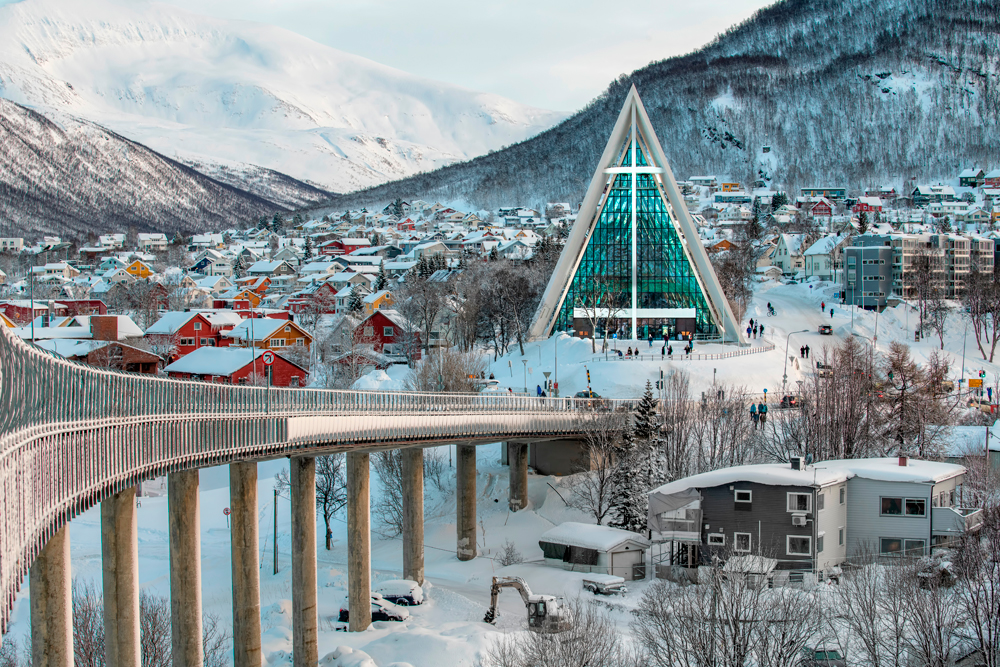
The Northern Lights season usually runs from September to early April, although sightings depend on solar activity and weather conditions.
Tromsø can experience cloudy weather, so many visitors join Northern Lights tours that travel outside the city in search of clearer skies.
What else can you do in Tromsø?
Beyond the Northern Lights, Tromsø offers plenty of activities to enjoy during the Arctic winter:
- Dog sledding: ride through snowy landscapes with a team of huskies.
- Snowmobile tours: explore the Arctic wilderness on guided excursions.
- Whale watching: join seasonal boat trips to look for whales in the surrounding waters.
- Sámi cultural experiences: learn about the traditions and reindeer herding practices of northern Norway’s Indigenous people.
The city itself is also worth exploring. You can visit the Arctic Cathedral, enjoy panoramic views from Mount Storsteinen or spend an evening in one of its cosy cafés and restaurants.
Best for: first-time visitors who want to combine Northern Lights tours with comfortable accommodation, good transport connections and other winter activities.
2. Lofoten and Vesterålen Islands: Northern Lights by the Sea
The Lofoten and Vesterålen Islands offer some of the most beautiful settings for watching the Northern Lights in Norway.
Located in the north of the country, these archipelagos are known for their dramatic mountains, white-sand beaches, traditional fishing villages and rugged coastlines.
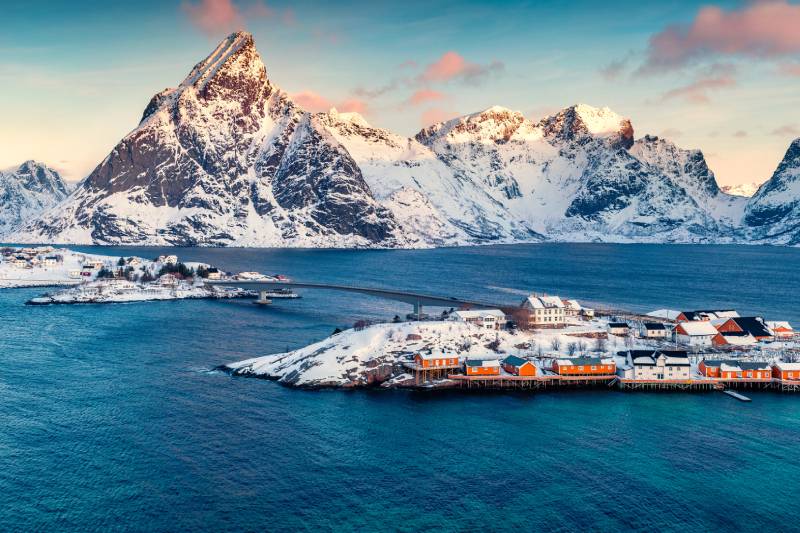
Unlike inland destinations, the Northern Lights here often appear above the sea, creating spectacular views with mountains and fishing cabins in the foreground.
Northern Lights in Lofoten
Lofoten is particularly popular among photographers thanks to its remarkable coastal scenery.
Places such as Reine, Hamnøy and the beaches along the northern coast offer beautiful locations for watching the sky.
The islands are also famous for their traditional rorbuer, former fishermen’s cabins that have been converted into holiday accommodation.
Staying in one of these cabins can make your Arctic experience even more special.
However, Lofoten’s coastal climate is often cloudy and changeable. It’s important to remain flexible and check the weather forecast before heading out.
Northern Lights in Vesterålen
Just north of Lofoten, Vesterålen offers a quieter alternative with fewer visitors and equally impressive Arctic landscapes.
The archipelago is known for its mountains, fishing communities and wide coastal views.
Places around Andøya and other areas away from town lights can provide excellent conditions for Northern Lights watching when the sky is clear.
What else can you do on the islands?
Both archipelagos offer activities beyond aurora watching:
- Explore traditional Norwegian fishing villages.
- Stay in a rorbu overlooking the sea.
- Enjoy scenic coastal drives.
- Join guided winter photography or Northern Lights tours.
- Go hiking on suitable trails when conditions allow.
Best for: travellers who love photography, wild landscapes and peaceful coastal villages.
3. Alta: The City of the Northern Lights
Alta is another excellent destination for seeing the Northern Lights. Located in Finnmark, well above the Arctic Circle, it is often called the City of the Northern Lights.
The city has a long history of aurora research and offers many opportunities to explore the Arctic landscape.
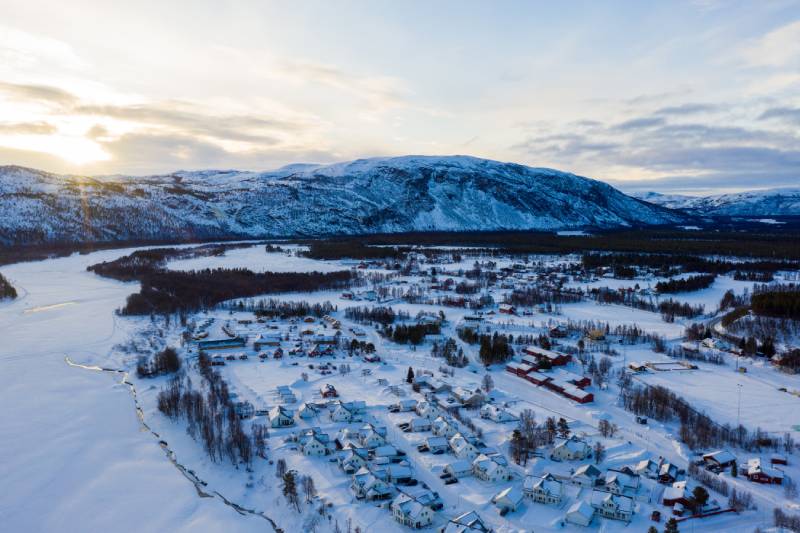
Compared with some coastal destinations, Alta often experiences a relatively dry climate, which can improve the chances of finding clear skies. However, weather conditions still vary from night to night.
What to do in Alta
Alta offers a wide range of winter activities, including:
- Northern Lights tours: guided trips to locations away from artificial lighting.
- Dog sledding: discover snowy forests and open landscapes with huskies.
- Snowmobile safaris: explore the Arctic wilderness.
- Sámi cultural experiences: learn about local traditions and reindeer herding.
- Ice hotel visits: discover seasonal accommodation and sculptures made from snow and ice.
Alta also has an interesting connection to the history of Northern Lights research.
At the beginning of the 20th century, scientists used the nearby Haldde mountain observatory to study auroral activity. The remains of this historic observatory are still part of the region’s scientific heritage.
If you have time, you can also visit the Alta Museum, famous for its prehistoric rock carvings, which are recognised as a UNESCO World Heritage Site.
Best for: travellers looking for Northern Lights experiences, Arctic adventures and a quieter atmosphere than Tromsø.
4. North Cape (Nordkapp): Northern Lights at the Edge of Europe
North Cape, or Nordkapp, is one of the most iconic destinations in northern Norway.
Located on the island of Magerøya, this dramatic cliff rises 307 metres above the Barents Sea and is famous for its remote location and spectacular Arctic scenery.
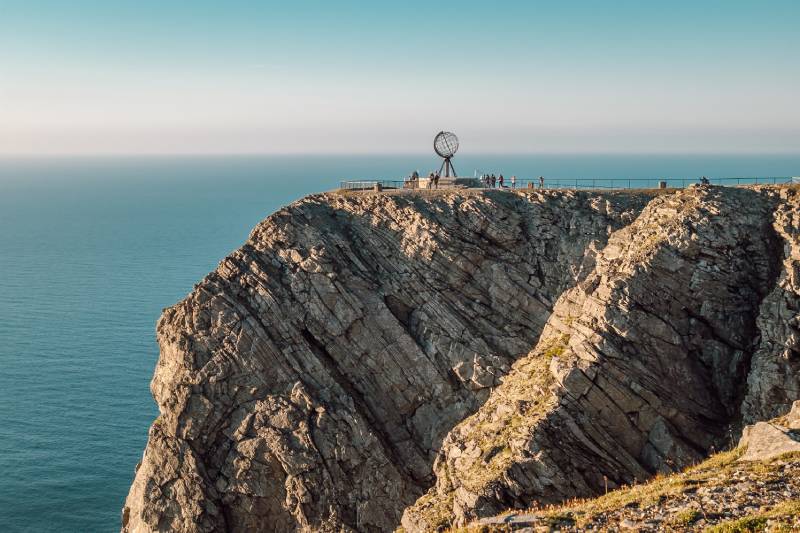
Although it is often described as the northernmost point of mainland Europe, North Cape is actually on an island. It is one of Europe’s northernmost points accessible by road.
During summer, visitors come to experience the Midnight Sun. In winter, the long Arctic nights create opportunities to see the Northern Lights.
What to see and do at North Cape
The main attraction is the North Cape Plateau, where you’ll find the famous globe monument overlooking the sea.
On a clear night, watching the Northern Lights above this dramatic landscape can be an unforgettable experience.
You can also visit Nordkapphallen, the North Cape visitor centre, which offers exhibitions, panoramic views and information about the history and nature of the region.
The nearby town of Honningsvåg is the main base for visitors, with accommodation, restaurants and local tour operators.
Visiting North Cape in winter
Reaching North Cape during winter requires careful planning.
The E69 road connects Honningsvåg with the North Cape Plateau, but snow, strong winds and poor visibility can affect access.
In winter, the final section of the road may operate with scheduled convoy driving or close temporarily because of the weather.
It is important to check road conditions before travelling and consider joining an organised excursion if you are not experienced with Arctic winter driving.
Best for: adventurous travellers looking for remote landscapes and a unique experience in the far north.
How to increase your chances of seeing the Northern Lights
Even in the best locations, seeing the Northern Lights requires a little planning and patience. Here are some practical tips.
1. Find a dark location
Artificial lights can make the aurora harder to see, especially when it is faint.
Try to move away from city centres, streetlights and other brightly lit areas. A beach, open viewpoint or quiet rural location can be ideal.
You don’t necessarily need to climb a mountain. A safe, open area with a clear view of the sky is often enough.
2. Check the aurora and weather forecasts
Aurora forecast apps can help you understand solar activity, while weather forecasts show where the skies may be clear.
Useful tools include:
- Yr.no: Norwegian weather forecasts and cloud cover information.
- NOAA Aurora Forecast: short-term aurora activity predictions.
You may also see references to the Kp index, a scale used to measure geomagnetic activity.
A higher Kp value can indicate stronger activity, but you don’t need a Kp of 4 or higher to see the Northern Lights in northern Norway. Auroras can be visible at lower values, especially at high latitudes.
For this reason, clear skies and your exact location can be just as important as the activity forecast.
3. Be patient and flexible
The Northern Lights are a natural phenomenon, so they don’t appear at a fixed time.
Some displays last only a few minutes, while others continue for hours.
If possible, plan several nights in the region and keep your schedule flexible so you can travel to areas with better weather conditions.
4. Dress for Arctic temperatures
Watching the Northern Lights often involves standing outside for long periods, sometimes in freezing temperatures.
Bring warm clothing and equipment:
- Thermal layers: wear a thermal base layer, insulating clothing and a windproof outer layer.
- Gloves, hat and warm socks: protect your hands, head and feet from the cold.
- Winter boots: choose insulated footwear with good grip.
- Camera and tripod: use a stable tripod and adjust your camera settings for night photography.
- Hot drinks and snacks: a thermos of coffee, tea or hot chocolate can make a long evening much more comfortable.
Final tips for watching the Northern Lights in Norway
A little preparation can make a big difference to your Northern Lights experience.
Consider booking a guided tour. Local guides know the area and can help you find locations with clearer skies. Some tours travel considerable distances when weather conditions are unfavourable.
Respect the environment. Stay on permitted paths, avoid disturbing wildlife and never leave rubbish behind. If you stop beside a road, make sure you park somewhere safe.
Don’t focus only on taking photographs. Watching the Northern Lights with your own eyes is part of what makes the experience so special.
And remember: even if the aurora doesn’t appear, northern Norway offers extraordinary landscapes, welcoming communities and plenty of opportunities to enjoy the Arctic winter.