5 Best Glaciers to Visit in Norway
Norway is home to some of Europe’s most impressive glaciers. These enormous masses of ice have shaped the country’s landscape over thousands of years, carving out the deep valleys and spectacular fjords we see today.
There are more than 1,600 glaciers across Norway, mainly in the mountainous regions of the west and north. Some of the largest are found in Jostedalsbreen National Park, Folgefonna National Park and the Svartisen area.
Before planning your visit, it’s useful to understand the difference between a glacier and a glacier tongue.
A glacier is a large mass of ice formed by the accumulation and compression of snow over many years. A glacier tongue is a section of that ice that extends down into a valley, sometimes reaching areas that are easier for visitors to access.
For example, Briksdalsbreen, Bøyabreen and Nigardsbreen are all glacier tongues belonging to the enormous Jostedalsbreen glacier.
In this guide, we’ll explore 5 of the best glaciers to visit in Norway, including where to find them, how to get there and what activities you can enjoy.
Jostedalsbreen: The Largest Glacier in Mainland Europe
Jostedalsbreen is the largest glacier on the European mainland, covering approximately 460 square kilometres.
Located in Vestland, this enormous ice cap stretches across several mountain valleys and forms the heart of Jostedalsbreen National Park.
What makes Jostedalsbreen particularly interesting is its many glacier tongues, which flow down from the main ice cap into the surrounding valleys.
Some are relatively easy to admire from designated viewpoints, while others offer opportunities for guided glacier hiking.
Three of the most popular are Briksdalsbreen, Bøyabreen and Nigardsbreen.
1. Briksdalsbreen: One of Norway’s Most Popular Glaciers
Briksdalsbreen is one of the most famous and photographed glacier tongues in Norway.
It is located in the beautiful Oldedalen Valley, surrounded by steep mountains, waterfalls and green forests.
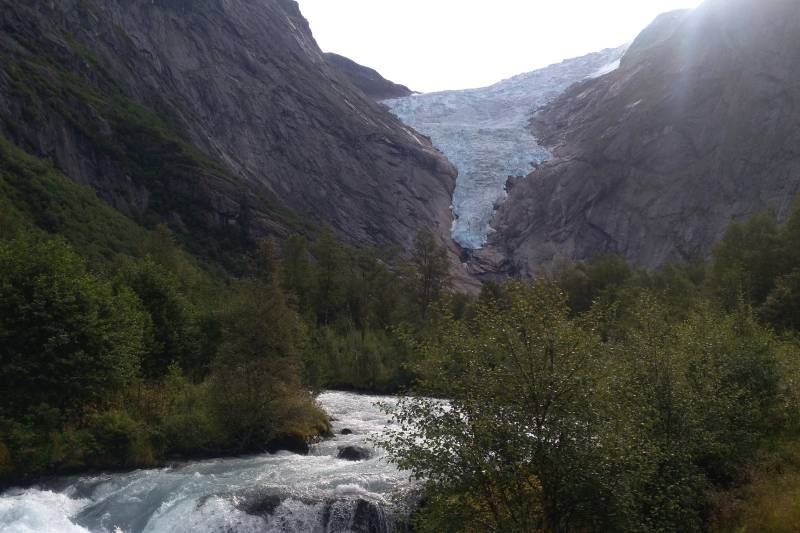
The glacier extends down from the Jostedalsbreen ice cap, creating a dramatic landscape of blue-white ice and rocky cliffs.
One of the main reasons for its popularity is accessibility. You can enjoy beautiful views of the glacier without needing specialist equipment or experience in mountain climbing.
How to get to Briksdalsbreen
The most convenient starting point is Olden, a small village near the Nordfjord, about 25 kilometres from the glacier’s visitor area.
From Olden, follow the road through Oldedalen to Briksdalsbre Fjellstove, where you’ll find parking, a café and visitor facilities.
A well-maintained walking trail leads towards the glacier viewpoint.
- Distance: approximately 2.5–3 km each way.
- Walking time: around 40–60 minutes each way.
- Difficulty: easy, although some sections are uphill.
The walk itself is part of the experience. Along the way, you’ll pass the impressive Kleivafossen waterfall and enjoy views of the surrounding mountains.
If you prefer not to walk the entire route, seasonal electric vehicles known as Troll Cars can take you along much of the way.
Keep in mind that the glacier has retreated significantly in recent decades. The viewing area is not necessarily right beside the ice.
Best for: first-time visitors, families and travellers looking for an accessible glacier viewpoint.
2. Bøyabreen: An Easily Accessible Glacier Near Fjærland
Bøyabreen is another impressive glacier tongue of Jostedalsbreen, located near the village of Fjærland.
It is particularly known for its accessibility, as you can admire the glacier from a viewpoint just a short distance from the road.
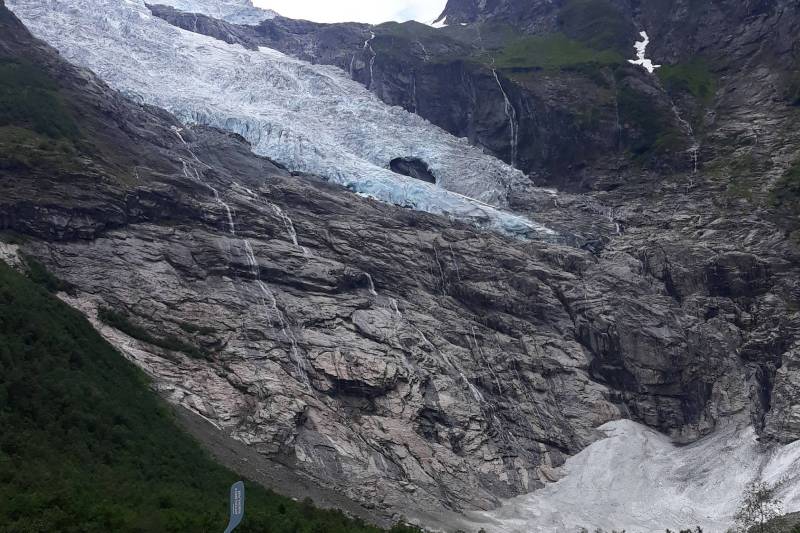
The ice descends along a steep mountainside towards a small glacial lake, surrounded by high cliffs and green vegetation.
The contrast between the blue-white ice, dark rock and water makes Bøyabreen one of the most beautiful glacier viewpoints in the Sognefjord region.
How to get to Bøyabreen
Bøyabreen is located along Road 5, between Sogndal and Skei, just a short drive from Fjærland.
A small road leads to a parking area near the glacier viewpoint.
From there, you can take a short walk towards the lake and enjoy views of the glacier descending from the mountains.
Unlike some other glaciers, Bøyabreen is best visited as a scenic viewpoint rather than a glacier hiking destination.
Do not attempt to approach the ice directly or cross safety barriers. Falling ice, loose rocks and unstable terrain can make the area dangerous.
You can combine your visit with the Norwegian Glacier Museum in Fjærland, located only a short drive away.
Best for: short stops, road trips and travellers who want impressive glacier views without a long hike.
3. Nigardsbreen: One of the Best Glaciers for Guided Ice Hiking
Nigardsbreen is another glacier tongue of Jostedalsbreen, located in the Jostedalen Valley.
It is one of Norway’s most popular destinations for guided glacier hiking, offering visitors the opportunity to explore the blue ice with professional guides.
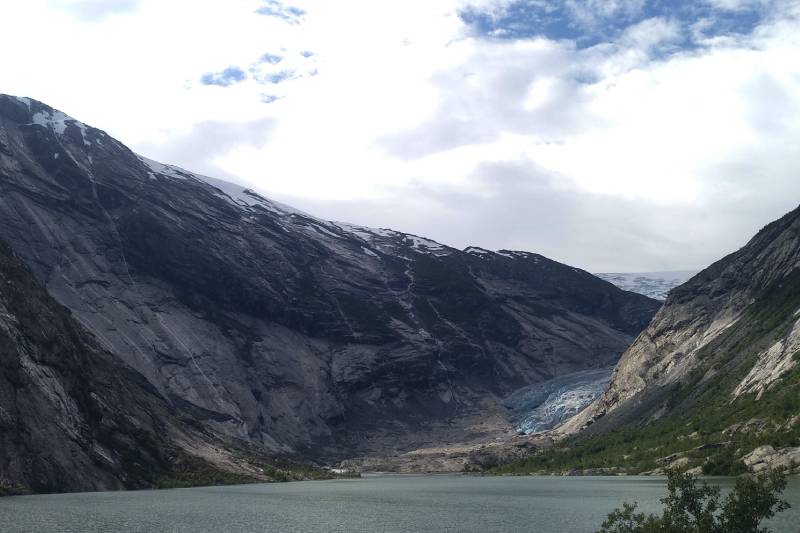
Its impressive ice formations, deep crevasses and surrounding mountain scenery make it a particularly memorable destination.
How to get to Nigardsbreen
The most convenient way to reach Nigardsbreen is by car from Sogndal.
Drive towards Gaupne and continue along the Jostedalen Valley until you reach Breheimsenteret, the national park visitor centre.
From here, a seasonal toll road leads to the parking area beside Nigardsbrevatnet, the glacial lake in front of Nigardsbreen.
You have two main options for reaching the designated glacier viewpoint:
- Walk along the lake: follow the marked hiking trail over rocky and sometimes uneven terrain.
- Take the glacier boat: during the summer season, a small passenger boat crosses part of the lake, reducing the walking distance.
Even if you take the boat, you’ll still need to walk over rocky terrain to reach the viewpoint. The walk after the boat crossing can take around 40 minutes, depending on conditions.
The boat usually operates from June to September, although the exact dates depend on water levels and weather conditions.
Check the official Nigardsbreen visitor information for current prices and transport details.
Guided glacier hikes
If you want to walk on the ice, Nigardsbreen offers several guided excursions for different experience levels.
Professional guides provide the necessary equipment, including crampons, ropes and ice axes.
Some tours are suitable for beginners, while others require better physical fitness and experience with outdoor activities.
Never walk onto a glacier without appropriate equipment and an experienced glacier guide. Glaciers contain hidden crevasses, unstable ice and other serious hazards.
Best for: adventurous travellers who want to experience walking on glacier ice with a professional guide.
4. Svartisen: A Spectacular Glacier in Northern Norway
Svartisen is one of the largest glacier systems in Norway and an excellent destination for travellers exploring the northern part of the country.
Located in Nordland, it consists of two main ice masses: Vestre Svartisen and Østre Svartisen.
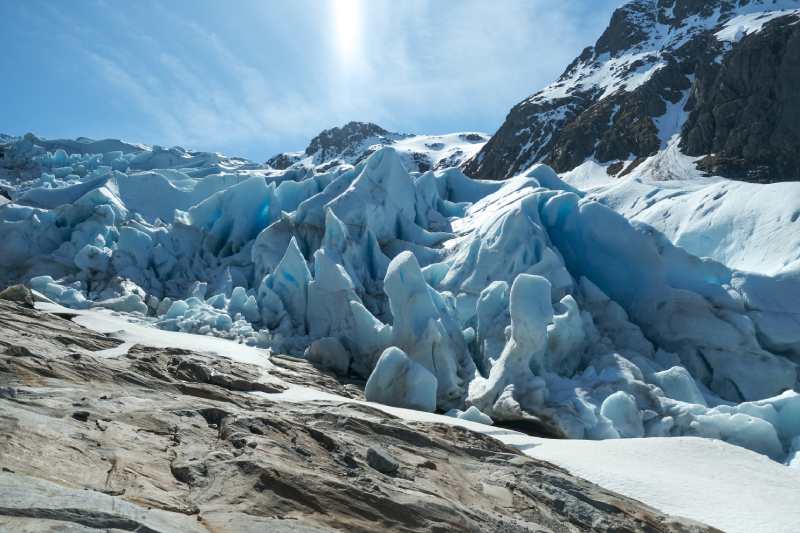
Its name means black ice, referring to the dark appearance of the dense, compressed ice in some areas.
One of the most famous glacier tongues is Engabreen, which descends towards Holandsfjorden in the municipality of Meløy.
The glacier is particularly impressive because of its proximity to the coast and the contrast between its blue ice, mountain landscape and turquoise glacial waters.
How to get to Svartisen
One of the most popular ways to visit Svartisen is from Bodø.
Drive south along the scenic Coastal Route (Fv17) towards Holandsvika, where you’ll find parking and the departure point for the passenger boat.
During the summer, a shuttle boat crosses Holandsfjorden to the Engen quay, taking approximately 10–15 minutes.
From the quay, you can follow a walking route towards Engabrevatnet and the designated glacier viewing areas.
The route includes a gravel road and, if you continue further, more demanding rocky terrain.
You can also enjoy beautiful views of the glacier from the lake without walking all the way towards the ice.
The boat operates seasonally, generally from late May or June into September, depending on the timetable.
Check the official shuttle boat website before planning your visit.
Glacier hiking at Svartisen
Guided glacier hikes are available during suitable conditions.
These excursions allow you to explore the ice with professional equipment and experienced guides.
If you prefer a more relaxed visit, simply walking around Engabrevatnet and enjoying the views is a rewarding experience.
Best for: travellers exploring northern Norway, glacier hiking and scenic coastal adventures.
5. Folgefonna: A Glacier Near the Hardangerfjord
Folgefonna is one of the largest glacier systems in Norway, located in the Hardanger region of Vestland.
It is the main attraction of Folgefonna National Park, a protected area established in 2005.
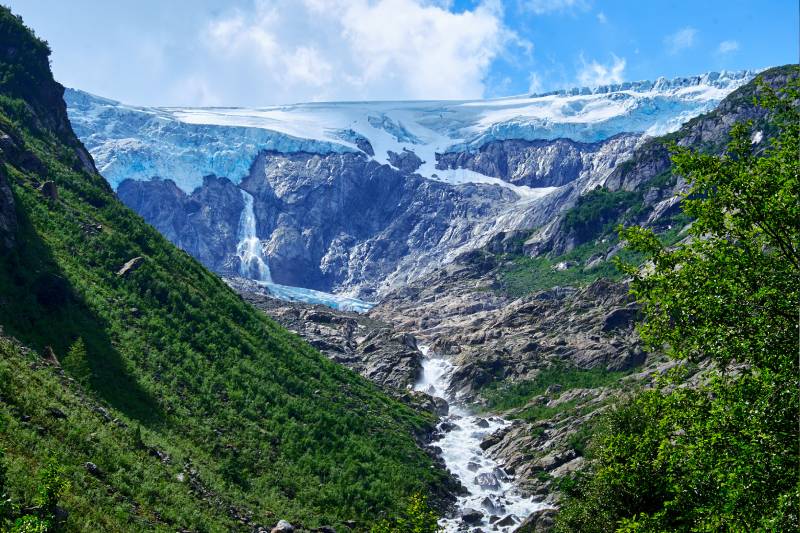
The glacier landscape includes several connected mountain areas and glacier tongues that descend into the surrounding valleys.
One of the most remarkable features of this region is the contrast between the snowy mountains and the green valleys, orchards and fjords below.
What to see and do at Folgefonna
Folgefonna is particularly popular for outdoor adventures, with opportunities to explore the area through guided excursions.
Activities may include:
- Guided glacier hiking: walk on the ice with experienced guides and specialist equipment.
- Mountain hiking: follow marked trails with views of the glacier and the surrounding valleys.
- Scenic viewpoints: admire the glacier landscape without stepping onto the ice.
One of the most beautiful places nearby is Bondhusvatnet, a turquoise lake surrounded by steep mountains and waterfalls.
The lake can be reached by a relatively easy walk through the Bondhusdalen Valley. From the surrounding area, you can enjoy views towards Bondhusbreen, a glacier tongue of Folgefonna.
How to get to Folgefonna
Bergen is one of the main starting points for exploring the Folgefonna region.
From Bergen, you can drive towards the Hardangerfjord, with towns such as Odda and Jondal serving as useful bases for visiting different parts of the national park.
The exact route depends on which glacier viewpoint or activity you choose.
For guided glacier hiking, it’s best to book through an experienced local operator and confirm the meeting point in advance.
You can find more information on the Folgefonna National Park website.
Explore the Åkrafjord area
The southern part of Folgefonna National Park extends towards the Åkrafjorden area, where you’ll find some of the most spectacular landscapes in the region.
If you’re exploring this part of Vestland, don’t miss Langfoss, a 612-metre waterfall that descends towards Åkrafjorden and can be admired from the E134 road.
You can discover more places nearby in our guide to the best things to do in Etne.
Best for: glacier experiences, mountain scenery and combining nature with a Hardangerfjord road trip.
What Activities Can You Do on Norway’s Glaciers?
Visiting a glacier doesn’t always mean walking on the ice. Norway offers several ways to experience these landscapes, depending on your interests and level of experience.
Guided glacier hiking
Glacier hiking is one of the most popular activities.
Professional guides lead visitors across the ice and provide specialist equipment, such as crampons, harnesses, ropes and ice axes.
You can join guided excursions at glaciers such as Nigardsbreen, Folgefonna and Svartisen.
Some tours are designed for beginners, while others require previous outdoor experience and good physical fitness.
Kayaking on glacial lakes
Some glacial lakes offer organised kayaking experiences, allowing you to admire glaciers and mountain landscapes from the water.
For example, guided kayak and glacier excursions are available in parts of the Jostedalsbreen region, including Austdalsbreen.
However, kayaking close to glacier fronts can be dangerous because of falling ice, sudden waves and cold water.
Choose organised activities with qualified local guides rather than attempting to paddle near a glacier independently.
Scenic flights
In some regions, specialist operators may offer scenic flights over mountain and glacier landscapes.
These experiences provide a different perspective of the ice caps, surrounding valleys and fjords.
Availability depends on the operator, weather conditions and local restrictions, so it’s worth checking before planning your trip.
Visit the Norwegian Glacier Museum in Fjærland
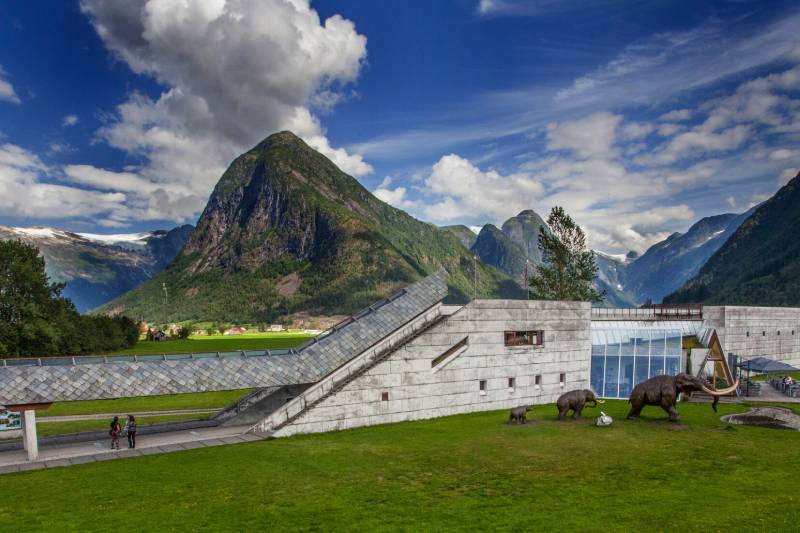
If you’re interested in learning more about Norway’s glaciers, the Norwegian Glacier Museum (Norsk Bremuseum) is well worth visiting.
Located in the village of Fjærland, near Bøyabreen, the museum explores how glaciers form, how they shape the landscape and what they can tell us about climate change.
Its interactive exhibitions make it an interesting experience for both adults and children.
What can you see at the museum?
The museum includes several educational exhibits and experiences:
- Glacier formation: discover how snow gradually turns into ice and how glaciers move.
- Climate change: learn how glaciers have changed over time and what scientists can learn from them.
- Interactive displays: explore the geology of Norway and the forces that shaped its fjords.
- Panoramic film: enjoy spectacular footage of the Jostedalsbreen National Park landscape.
The museum also features exhibitions about the history of glacier exploration and the relationship between glaciers and human activity.
How to get there
The Norwegian Glacier Museum is located in Fjærland, approximately 30–40 minutes by car from Sogndal.
You can also reach the village by public transport, although connections may vary depending on the season.
During the summer, local sightseeing services may connect Fjærland with Bøyabreen and the museum, making it possible to visit both attractions on the same day.
Check current opening hours, tickets and transport options on the Norwegian Glacier Museum website.
Which Glacier Should You Visit in Norway?
The best glacier to visit depends on your travel route and the kind of experience you’re looking for.
| Glacier | Region | Best for |
|---|---|---|
| Briksdalsbreen | Vestland · Nordfjord | Easy walks, waterfalls and first-time visits |
| Bøyabreen | Vestland · Fjærland | Quick roadside stops and short viewpoints |
| Nigardsbreen | Vestland · Jostedalen | Guided ice hiking and blue crevasses |
| Svartisen | Nordland | Northern Norway and coastal glacier scenery |
| Folgefonna | Vestland · Hardanger | Mountain adventures and fjord road trips |
If you’re visiting a glacier for the first time and prefer a relatively easy experience, Briksdalsbreen and Bøyabreen are excellent choices.
For a more adventurous experience, Nigardsbreen and Folgefonna offer organised activities on the ice.
If your itinerary takes you to northern Norway, Svartisen is a wonderful opportunity to discover a different glacier landscape.
Whatever you choose, remember that glaciers are constantly changing. Always follow marked trails, respect safety barriers and check current conditions before your visit.