7 Most Beautiful and Impressive Fjords in Norway
7 Most Beautiful and Impressive Fjords in Norway
Norway is famous for its spectacular coastline, with more than 1,000 fjords stretching between mountains, valleys and small coastal villages. These natural landscapes are among the country’s most popular attractions and one of the main reasons travellers visit Norway.
But what exactly is a fjord?
A fjord is a long, narrow inlet of the sea surrounded by steep mountains or cliffs. Most Norwegian fjords were formed during the Ice Ages, when enormous glaciers carved deep valleys into the landscape. As the glaciers retreated, seawater flooded these valleys, creating the fjords we see today.
The most famous fjords are found along Norway’s western coast, although you can also find beautiful examples further north, beyond the Arctic Circle.
Each fjord has something different to offer. Some, like Sognefjord, are known for their impressive length and depth, while others, like Trollfjord, stand out for their narrow passages and dramatic mountain walls.
In this guide, we’ll explore 7 of the most beautiful fjords in Norway, including what makes each one special and how to visit them.
1. Geirangerfjord: A UNESCO World Heritage Site
Geirangerfjord is one of Norway’s most famous and photographed fjords. Located in the Møre og Romsdal region, it is part of the UNESCO World Heritage-listed West Norwegian Fjords.
This 15-kilometre-long fjord is a branch of Storfjord and is surrounded by steep mountains, waterfalls and small farms built on the hillsides.
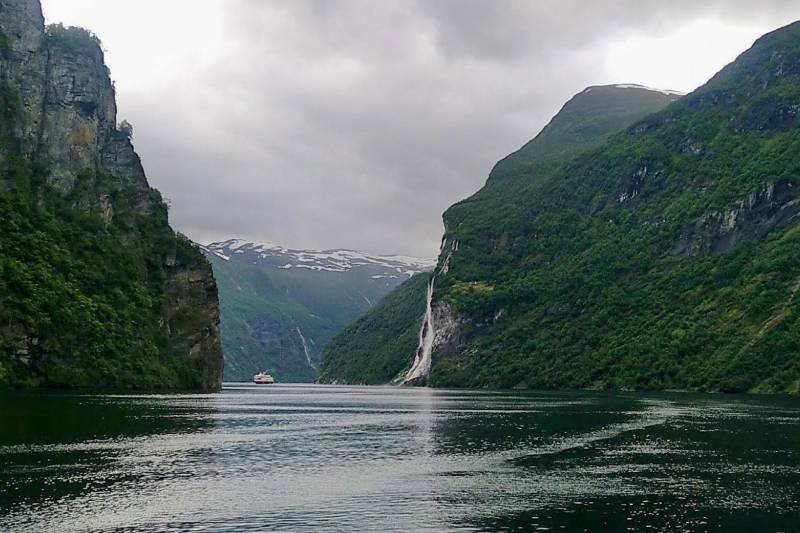
Two of its most famous waterfalls are the Seven Sisters (De Syv Søstrene) and Bridal Veil (Brudesløret), which flow down the rocky cliffs towards the water.
One of the best ways to experience Geirangerfjord is by taking a boat trip. From the water, you can admire its impressive mountain walls and the waterfalls that are difficult to see from the road.
If you prefer panoramic views, you can visit several viewpoints around Geiranger, including Flydalsjuvet, Ørnesvingen and Dalsnibba, which offers spectacular views from high above the fjord.
How to get to Geirangerfjord
The most common starting point is Ålesund, located approximately two to three hours away by car, depending on the route and seasonal ferry connections.
You can also reach Geiranger from Åndalsnes or take a scenic ferry from Hellesylt, which travels directly through the fjord.
Best for: spectacular waterfalls, fjord cruises and panoramic mountain viewpoints.
2. Sognefjord: The Longest and Deepest Fjord in Norway
Known as the King of the Fjords, Sognefjord is the longest and deepest fjord in Norway.
It stretches approximately 205 kilometres inland and reaches depths of more than 1,300 metres.
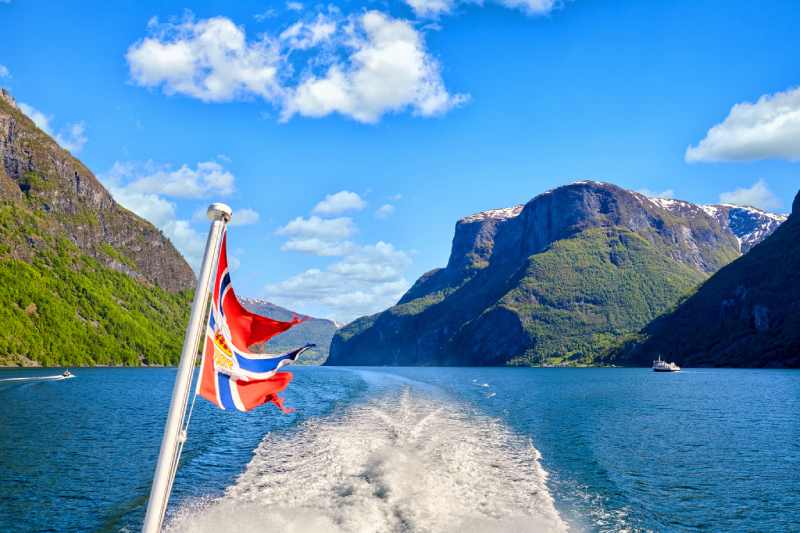
Located in the Vestland region, Sognefjord is surrounded by high mountains, green valleys and traditional villages that offer a glimpse into life along Norway’s western coast.
Among its most attractive destinations is Balestrand, a picturesque village known for its historic wooden buildings and beautiful waterfront.
The area is also home to Urnes Stave Church, a UNESCO World Heritage Site and one of the oldest surviving wooden churches in Norway.
Sognefjord has several spectacular branches, including Aurlandsfjord and Nærøyfjord, which are also featured in this guide.
How to get to Sognefjord
Bergen is one of the main starting points for exploring the Sognefjord region.
You can travel by car, bus or express boat, depending on which part of the fjord you want to visit.
Another popular option is to take the train from Bergen to Myrdal and connect with the famous Flåm Railway, which descends through a beautiful mountain valley to the village of Flåm, beside Aurlandsfjord.
Best for: exploring traditional fjord villages, scenic rail journeys and Norwegian cultural heritage.
3. Nærøyfjord: One of Norway’s Narrowest Fjords
Nærøyfjord is one of the most spectacular fjords in Norway, famous for its narrow waters and towering mountain walls.
This 17-kilometre-long fjord is a branch of Aurlandsfjord, within the larger Sognefjord system.
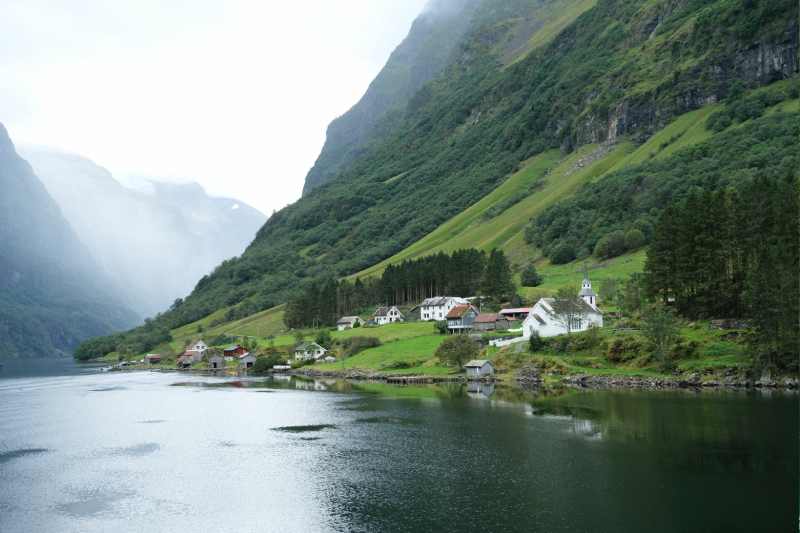
At its narrowest point, it measures only about 250 metres across, while the surrounding mountains rise steeply from the water.
Together with Geirangerfjord, Nærøyfjord has been part of the UNESCO World Heritage List since 2005.
Its dramatic landscape, waterfalls and small isolated farms make it one of the most impressive places to experience the Norwegian fjords.
How to visit Nærøyfjord
The most popular way to explore Nærøyfjord is by taking a fjord cruise between Flåm and Gudvangen.
The journey takes approximately two hours and passes through both Aurlandsfjord and Nærøyfjord, offering beautiful views of the mountains and small villages along the water.
Gudvangen can also be reached by car or bus from Flåm or Voss.
If you are planning a trip around the Sognefjord region, combining Nærøyfjord with the Flåm Railway is a popular way to experience both the mountains and the fjords.
Best for: narrow fjord landscapes, peaceful boat trips and dramatic mountain scenery.
4. Hardangerfjord: Fruit Orchards, Waterfalls and Glaciers
At approximately 180 kilometres long, Hardangerfjord is the second-longest fjord in Norway.
Located in the Vestland region, it is particularly famous for its fruit orchards, which cover many of the hillsides surrounding the fjord.
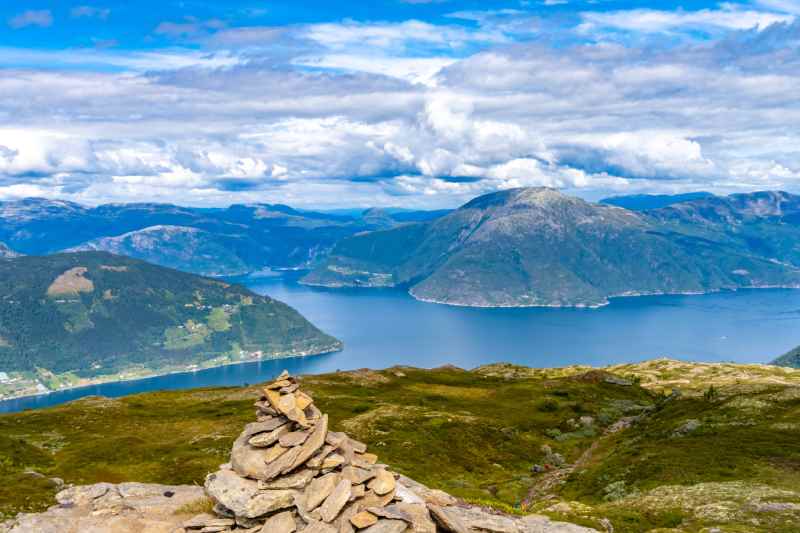
During spring, thousands of apple and cherry trees bloom, creating a beautiful contrast between the white blossoms, green valleys and snow-covered mountains.
Hardangerfjord is also known for its impressive waterfalls and nearby mountain landscapes.
The region is home to Folgefonna National Park, which protects one of Norway’s largest glacier areas, and the famous Trolltunga rock formation.
Trolltunga is one of the country’s most iconic hiking destinations, with a narrow rock ledge extending high above Lake Ringedalsvatnet.
How to get to Hardangerfjord
Hardangerfjord is easily accessible from Bergen, making it a popular destination for day trips and longer road trips.
Travelling by car gives you the most flexibility to explore the villages, waterfalls and viewpoints around the fjord.
Some of the most popular places to visit include Odda, Eidfjord and Norheimsund, each offering different experiences and beautiful landscapes. Eidfjord, at the inner end of the fjord, is the base for Vøringsfossen and the road up to Hardangervidda. On the northern shore, Ulvik is the village most closely tied to the orchards, with a separate trip by train up to Finse.
You can also use public transport and local ferries to reach several destinations around the region.
Best for: spring blossoms, waterfalls, scenic road trips and mountain hiking.
5. Lysefjord: Home to Preikestolen and Kjerag
Located in southwestern Norway, Lysefjord is best known for two of the country’s most famous natural attractions: Preikestolen and Kjerag.
Preikestolen, also called Pulpit Rock, is a flat mountain plateau rising 604 metres above the fjord.
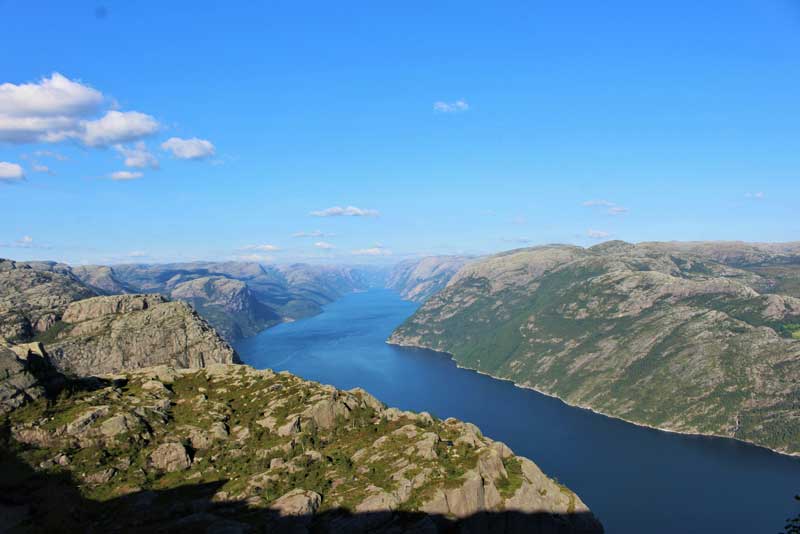
Its dramatic location and spectacular views make it one of Norway’s most popular hiking destinations.
Further along the fjord lies Kjerag, a mountain famous for Kjeragbolten, a large boulder wedged between two rock walls high above the landscape.
Both hikes offer unforgettable views, although Kjerag is considerably more demanding and requires good physical fitness and suitable weather conditions.
If hiking is not your thing, you can still enjoy Lysefjord from the water.
A fjord cruise allows you to admire its steep cliffs, waterfalls and impressive rock formations without having to climb the mountains.
How to get to Lysefjord
Stavanger is the main starting point for visiting Lysefjord.
From the city, you can take a sightseeing cruise through the fjord or travel by road and local transport towards the starting points of the hiking trails.
The Preikestolen hike is one of the easiest major attractions to organise from Stavanger, while visiting Kjerag usually requires more planning.
Best for: iconic hiking experiences, dramatic cliffs and fjord cruises.
6. Aurlandsfjord: Scenic Villages and the Famous Flåm Railway
Aurlandsfjord is one of the most beautiful branches of Sognefjord, stretching approximately 29 kilometres between steep mountains and small villages.
It is particularly famous for the village of Flåm and the spectacular Stegastein viewpoint, which offers one of the best panoramic views of the fjord.
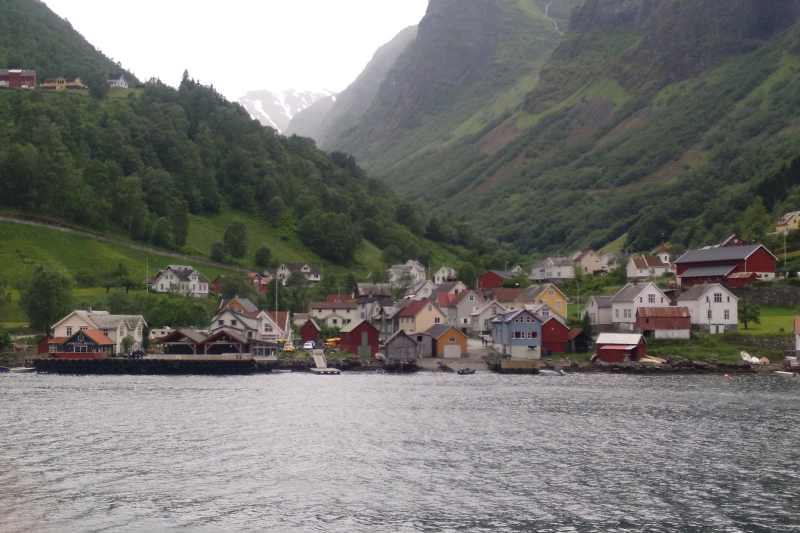
Stegastein is located 650 metres above sea level and features a viewing platform that extends 30 metres from the mountainside.
From here, you can admire the fjord, the village of Aurlandsvangen and the surrounding mountains.
What to see around Aurlandsfjord
The area offers several experiences worth including in your itinerary:
- Flåm Railway (Flåmsbana): one of Norway’s most scenic train journeys, connecting Flåm with Myrdal through a steep mountain valley.
- Stegastein viewpoint: a spectacular platform overlooking the fjord.
- Aurlandsvangen: a small village with traditional wooden buildings and a medieval stone church.
- Undredal: a picturesque village known for its medieval wooden church and traditional goat cheese.
You can also combine your visit with a cruise through Nærøyfjord, which branches off from Aurlandsfjord.
How to get to Aurlandsfjord
Flåm is one of the main gateways to Aurlandsfjord and can be reached by car from Bergen or Oslo.
If you prefer public transport, you can take the Bergen Railway to Myrdal and continue on the Flåm Railway down to the fjord.
For a more complete itinerary, including Stegastein, the surrounding villages and outdoor activities, read our guide to the best things to do in Aurland.
Best for: scenic train journeys, traditional villages and panoramic viewpoints.
7. Trollfjord: A Narrow Fjord Surrounded by Towering Mountains
Located in northern Norway, Trollfjord is one of the country’s most dramatic and distinctive fjords.
Although it is only about 2 kilometres long, its entrance is just 100 metres wide, with steep mountains rising almost vertically from the water.
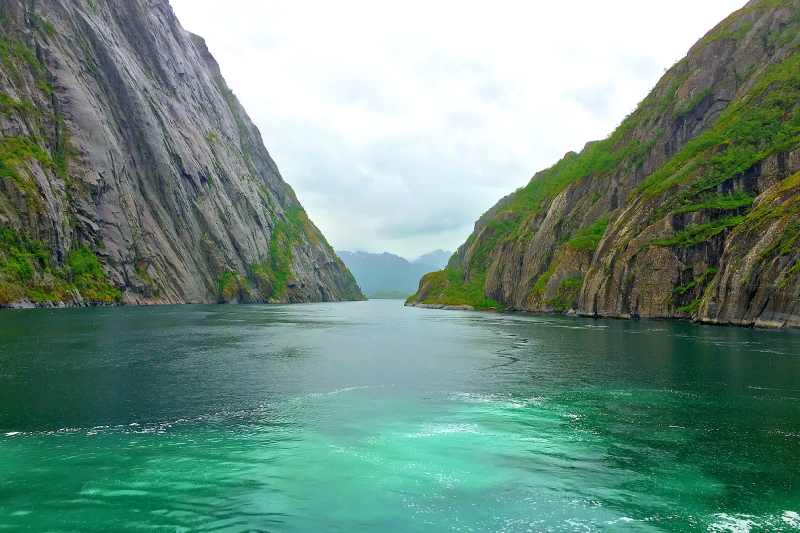
Trollfjord branches off the Raftsundet strait, between the Lofoten and Vesterålen archipelagos.
Unlike the larger fjords of western Norway, Trollfjord has no road running along its shores.
The best way to experience it is by boat, sailing through its narrow entrance and into the sheltered waters surrounded by mountains.
How to visit Trollfjord
Most visitors explore Trollfjord on a boat excursion from Svolvær, in the Lofoten Islands.
These trips often include opportunities to observe sea eagles and enjoy views of the rugged coastline.
Boat excursions are also available from parts of Vesterålen, depending on the season.
Another way to see Trollfjord is aboard the Hurtigruten coastal voyage. When conditions allow, the ship may enter the fjord, although this is not guaranteed and does not involve a stop for passengers to disembark.
Best for: dramatic mountain scenery, wildlife watching and unforgettable boat trips.
Beyond the Famous Fjords: Discover Norway’s Hidden Gems
Norway has many beautiful fjords that receive far fewer visitors than Geirangerfjord or Nærøyfjord.
For example, Dalsfjorden and Førdefjorden, in the Sunnfjord region, offer a quieter experience surrounded by mountains, small coastal villages and islands.
Between these two fjords lies Askvoll, a coastal municipality known for its beautiful archipelago, the distinctive Mount Alden and the islands of Værlandet and Bulandet.
It’s a great place to discover a different side of Norway, away from the most popular tourist routes.
Discover what to see and do in Askvoll
Which Norwegian Fjord Should You Visit?
Each of these seven fjords offers a different experience, so the best choice depends on your interests and travel itinerary.
If you’re visiting Norway for the first time, Geirangerfjord and Nærøyfjord are excellent choices for their impressive scenery and famous fjord cruises.
For a combination of traditional villages, train journeys and cultural attractions, Sognefjord and Aurlandsfjord are particularly appealing.
If you enjoy hiking, Lysefjord and Hardangerfjord offer access to some of Norway’s most iconic mountain trails.
And if you’re travelling to northern Norway, Trollfjord is a wonderful opportunity to experience the dramatic landscapes of the Arctic coast.
Whichever you choose, exploring Norway’s fjords is one of the most memorable experiences the country has to offer.