13 Best Things to See and Do in Aurland, Norway
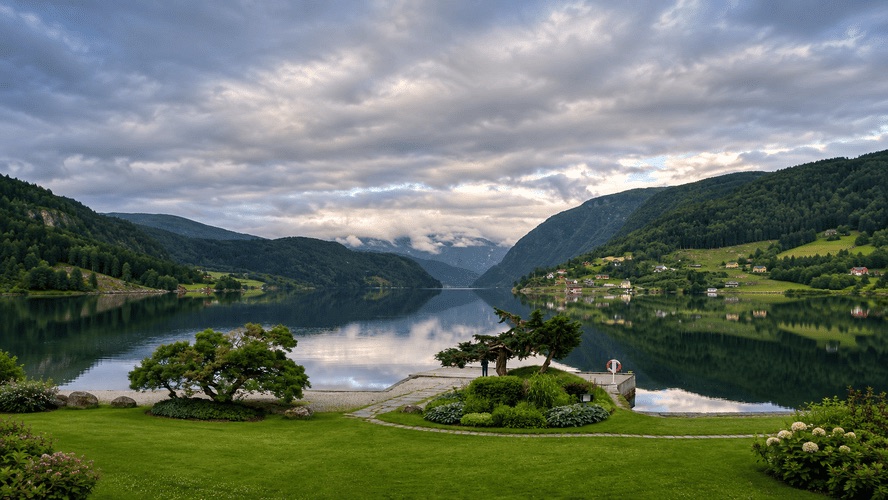
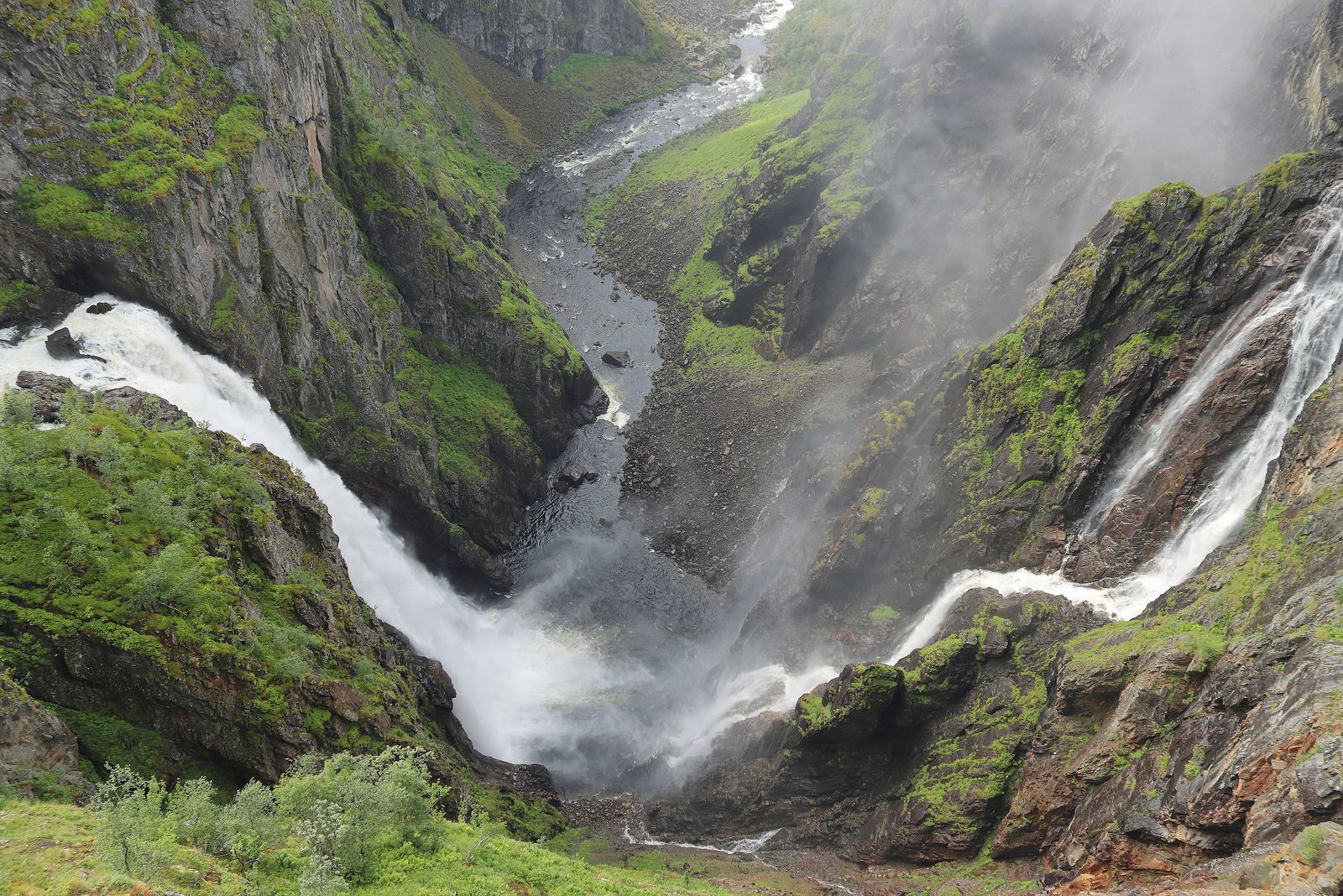
Aurland is one of the most visited destinations in Norway’s fjord region. Located in Vestland, beside Sognefjord, it combines towering mountains, waterfalls, small villages and some of the most impressive fjords in the country.
The municipality is home to two particularly famous fjords: Aurlandsfjord and Nærøyfjord, the latter recognised as a UNESCO World Heritage Site. It’s also home to Flåm, famous for its scenic railway, the Stegastein viewpoint and the historic Aurlandsdalen valley.
Although many travellers come to the area to take the famous train journey or enjoy a fjord cruise, Aurland offers plenty of other experiences worth discovering.
Here are 13 places to see and things to do in Aurland, along with practical tips to help you plan your visit.
1. Admire Aurlandsfjord from Stegastein Viewpoint
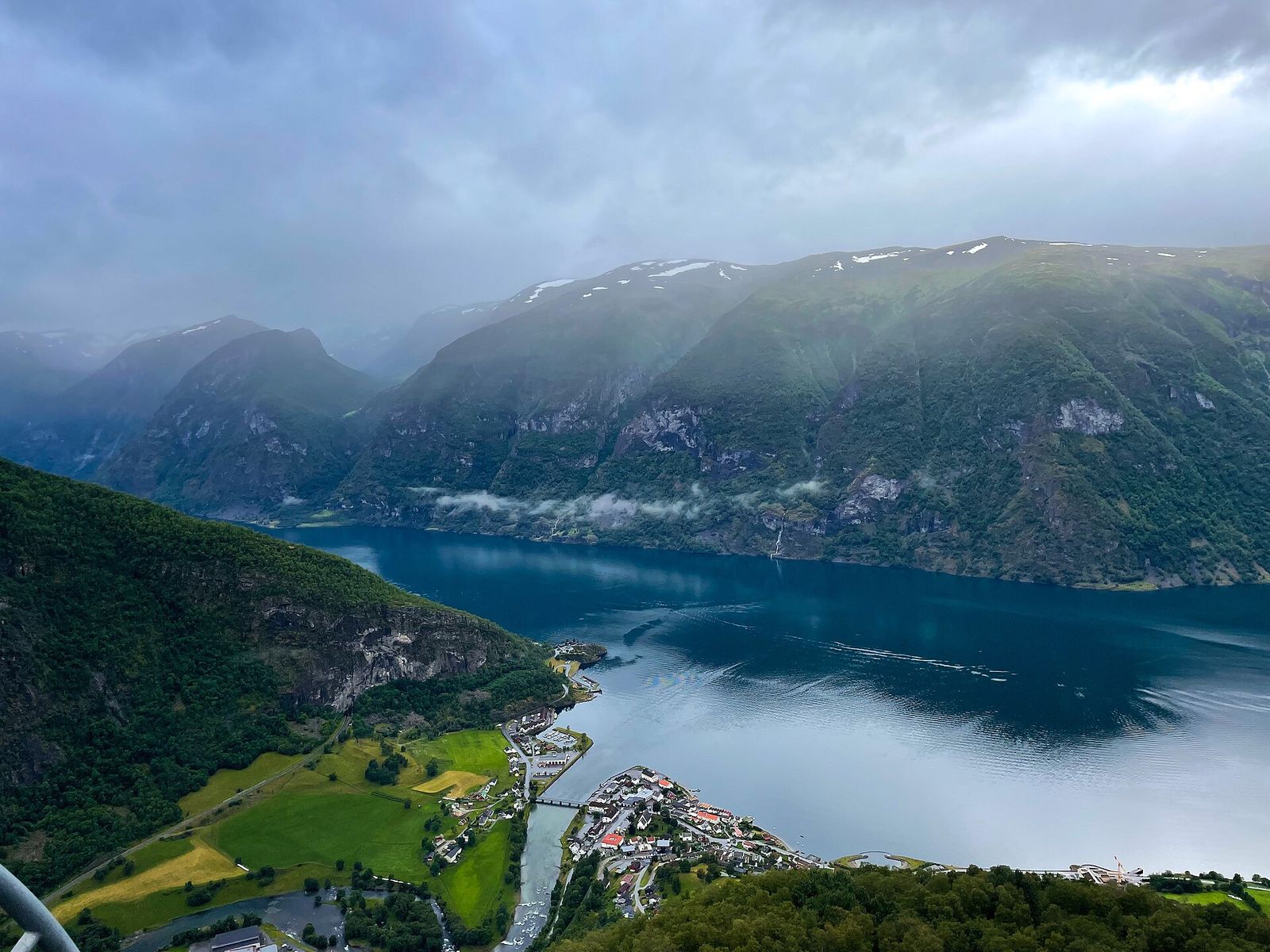
Stegastein is one of Aurland’s most famous attractions and one of the best viewpoints overlooking Aurlandsfjord.
Located approximately 650 metres above sea level, it stands on a mountainside above the village of Aurlandsvangen.
Its wooden and steel structure extends around 30 metres out from the mountain and ends with a glass barrier, creating the feeling of being suspended above the fjord.
Designed by architects Todd Saunders and Tommie Wilhelmsen and opened in 2006, the viewpoint is part of Norway’s National Scenic Routes project.
From the platform, you’ll enjoy spectacular panoramic views of the fjord, Aurlandsvangen village and the surrounding mountains.
How to Get to Stegastein Viewpoint
Stegastein is located approximately 8 kilometres from Aurlandsvangen, along a narrow mountain road with numerous bends.
You can reach it by car or take one of the sightseeing buses departing from Flåm and Aurlandsvangen.
The viewpoint is accessible throughout the year, although weather conditions can affect the road.
During summer, it’s one of the busiest attractions in the area, so visiting early in the morning or later in the day is a good idea.
2. Drive the Scenic Aurlandsfjellet Road
Aurlandsfjellet is one of Norway’s most spectacular scenic routes, known as Snøvegen, or the Snow Road.
Stegastein viewpoint is one of its main attractions.
This spectacular road stretches for 47 kilometres between Aurlandsvangen and Lærdalsøyri, crossing a high mountain landscape that reaches an altitude of 1,308 metres.
Along the way, you’ll discover small lakes, rocky hillsides and vast mountain landscapes where snow can remain well into summer.
Because of its altitude, much of the road is closed during winter. It usually reopens between May and June, depending on snow conditions.
An interesting option during summer is to drive the scenic route and return through the 24.5-kilometre Lærdal Tunnel, creating a circular route between the two municipalities.
You can check route details and road conditions on the official Norwegian Scenic Routes website.
3. Explore the Flåm Valley on the Famous Flåm Railway
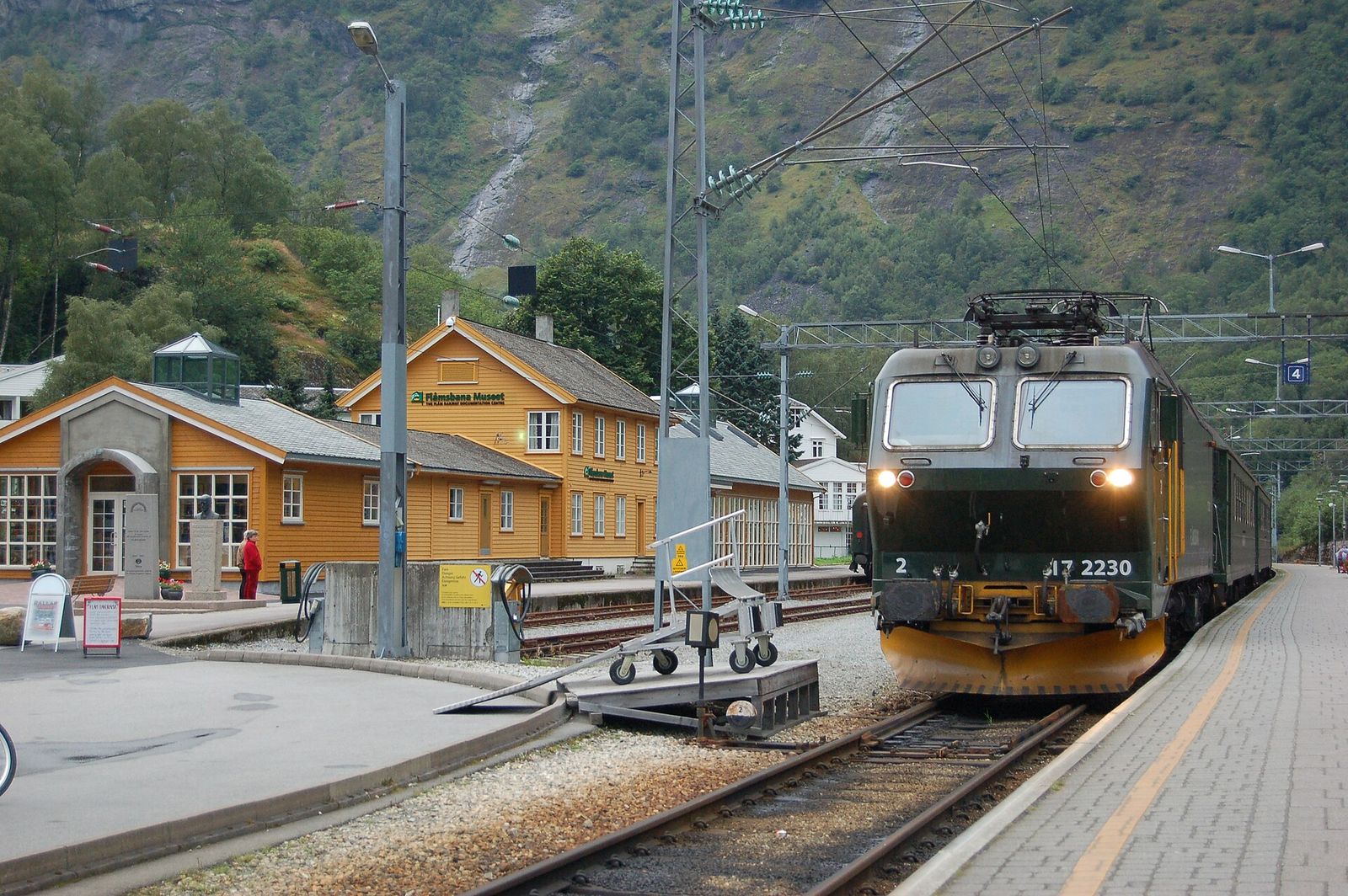
The Flåm Railway (Flåmsbana) is one of the most spectacular train journeys in Norway and one of the main reasons thousands of travellers visit Aurland every year.
This scenic railway connects Myrdal, located 866 metres above sea level, with the small village of Flåm, on the shores of Aurlandsfjord.
During its approximately 20-kilometre journey, the train travels through a landscape of steep mountains, forests, waterfalls and small rural settlements.
Construction of the railway began in 1924, and the line opened during the 1940s.
The route is particularly impressive because it overcomes a considerable difference in elevation through steep gradients and 20 tunnels carved into the mountains.
What to See Along the Flåm Railway
The journey takes approximately one hour each way and offers views of some of the most beautiful landscapes in the Flåmsdalen valley.
Highlights include waterfalls cascading down the mountainsides, the Flåmselvi River and small farms surrounded by towering peaks.
One of the most memorable moments is the stop at Kjosfossen, a spectacular waterfall beside the railway.
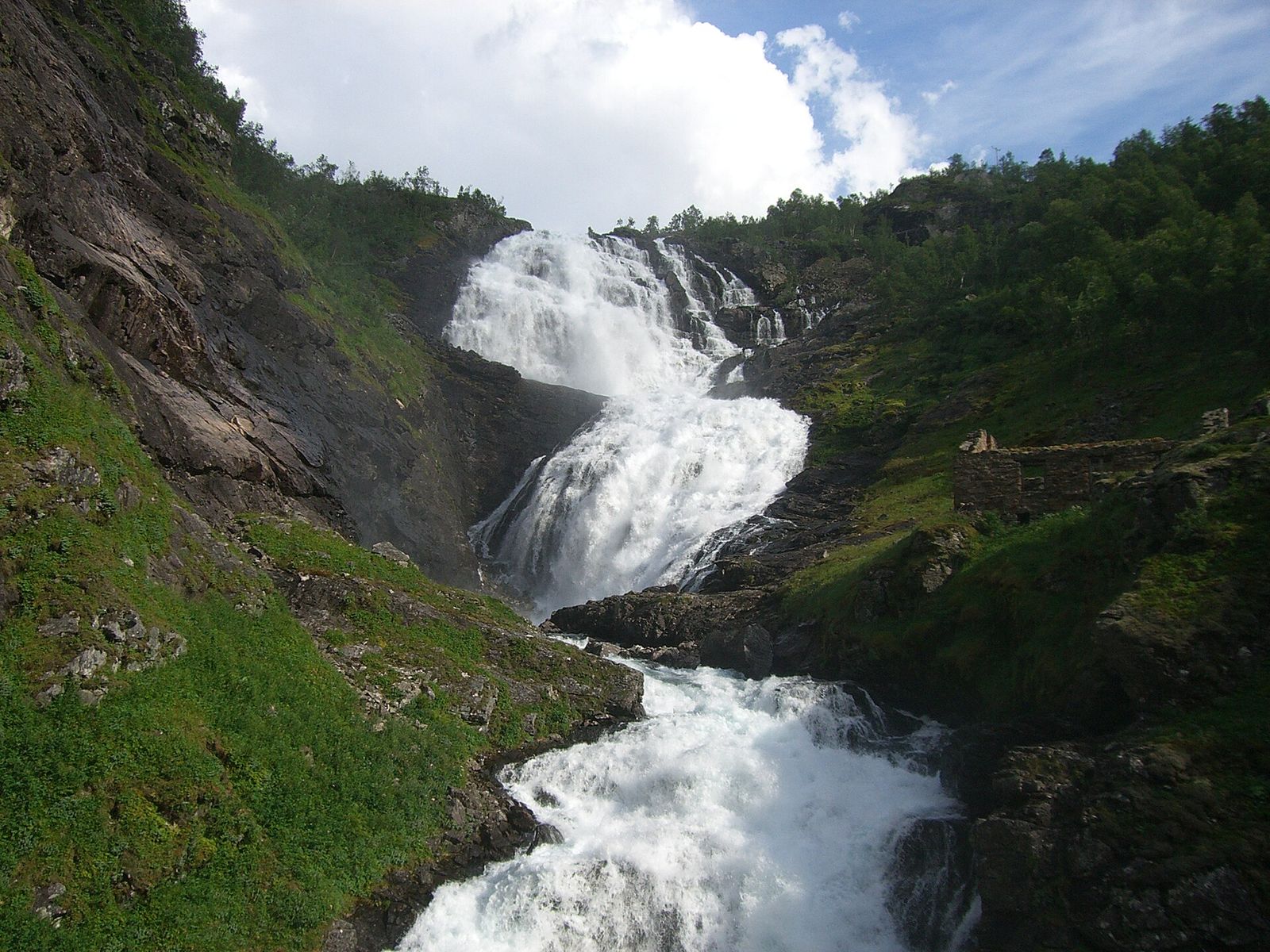
The train stops for a few minutes at a viewing platform, allowing passengers to step outside, admire the waterfall and take photographs.
During the tourist season, short performances inspired by traditional Norwegian legends also take place here.
How to Plan Your Train Journey
The Flåm Railway operates throughout the year, although train frequency varies depending on the season.
You can take a round trip from Flåm or use the railway as a connection with the main Oslo–Bergen train line, changing trains at Myrdal. In summer, many cyclists reach Myrdal and Flåm along Rallarvegen, the old construction road that passes Finse in Ulvik.
During summer, booking tickets in advance is recommended, especially if you want to combine the railway with a fjord cruise.
At the end of your journey, you can also visit the Flåm Railway Museum, located beside the station.
The exhibition explains the history of the railway’s construction and includes photographs, tools and other objects connected to the railway workers.
Check timetables and tickets on the official Flåm Railway website.
4. Cruise Through Nærøyfjord, a UNESCO World Heritage Site
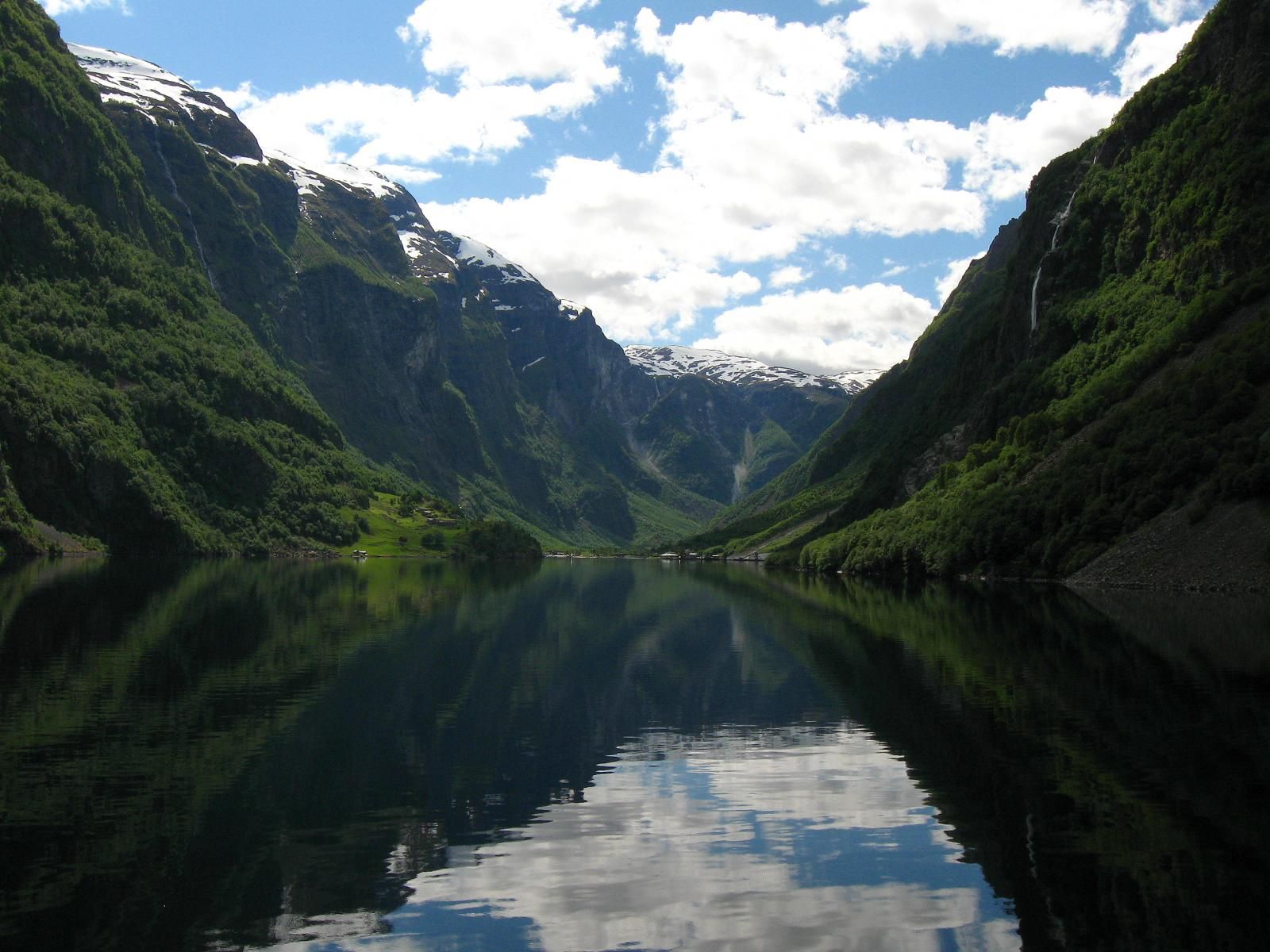
Nærøyfjord is one of Norway’s most impressive fjords and one of Aurland’s greatest natural attractions.
This branch of the Sognefjord system stretches for approximately 17 kilometres between mountains that rise dramatically from the water.
In some sections, the fjord is only around 250 metres wide, creating a particularly spectacular landscape where the steep rock walls appear incredibly close.
In 2005, Nærøyfjord was designated a UNESCO World Heritage Site alongside Geirangerfjord, in recognition of its exceptional scenic and geological value.
Nærøyfjord Cruise Between Flåm and Gudvangen
One of the best ways to explore the fjord is by taking a boat trip between Flåm and Gudvangen.
The journey first crosses Aurlandsfjord before entering Nærøyfjord, where the surrounding mountains seem to close in around the boat.
During the cruise, you’ll see small farms, waterfalls and some of the region’s most isolated villages.
The journey usually takes around two hours, and electric boats are available to reduce noise and emissions during the trip.
You can book a one-way cruise and return by bus or choose a combined ticket that includes both types of transport.
Nærøyfjord cruises operate throughout the year, although timetables and departure frequency depend on the season.
You can find information about available excursions on Flåm’s official tourism website.
5. Discover Gudvangen and Bakka Villages
Gudvangen is located at the end of Nærøyfjord, surrounded by towering mountains and numerous waterfalls.
From the village, you can admire Kjelfossen, one of Norway’s tallest waterfalls, cascading down the mountainside.
Nearby lies Bakka, a small village beside the fjord, known for Nærøy Church, a wooden church built in 1859.
If you’d like to visit Bakka, you’ll need to travel there by road from Gudvangen, as sightseeing cruises don’t stop in the village.
6. Walk Through Aurlandsvangen and Visit Vangen Church
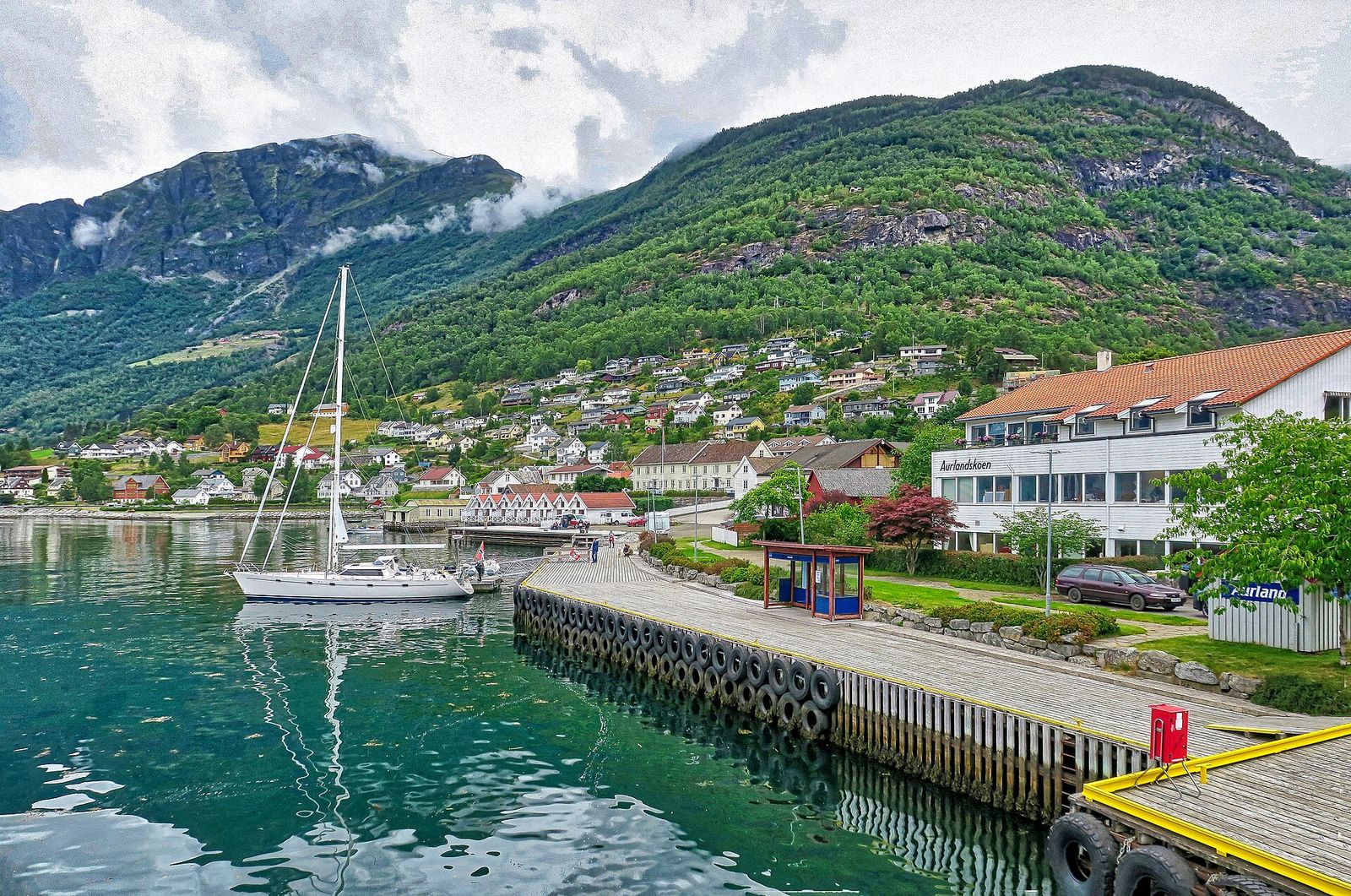
Aurlandsvangen is the administrative centre of the municipality and one of the quieter villages along Aurlandsfjord.
It’s located in a small valley at the mouth of the Aurlandselvi River, surrounded by mountains and traditional houses.
Unlike Flåm, which attracts most of the area’s tourists, Aurlandsvangen retains a more local atmosphere.
The village centre is easy to explore on foot.
It’s worth walking through the streets near the harbour and heading towards the waterfront to enjoy the fjord views.
Vangen Church
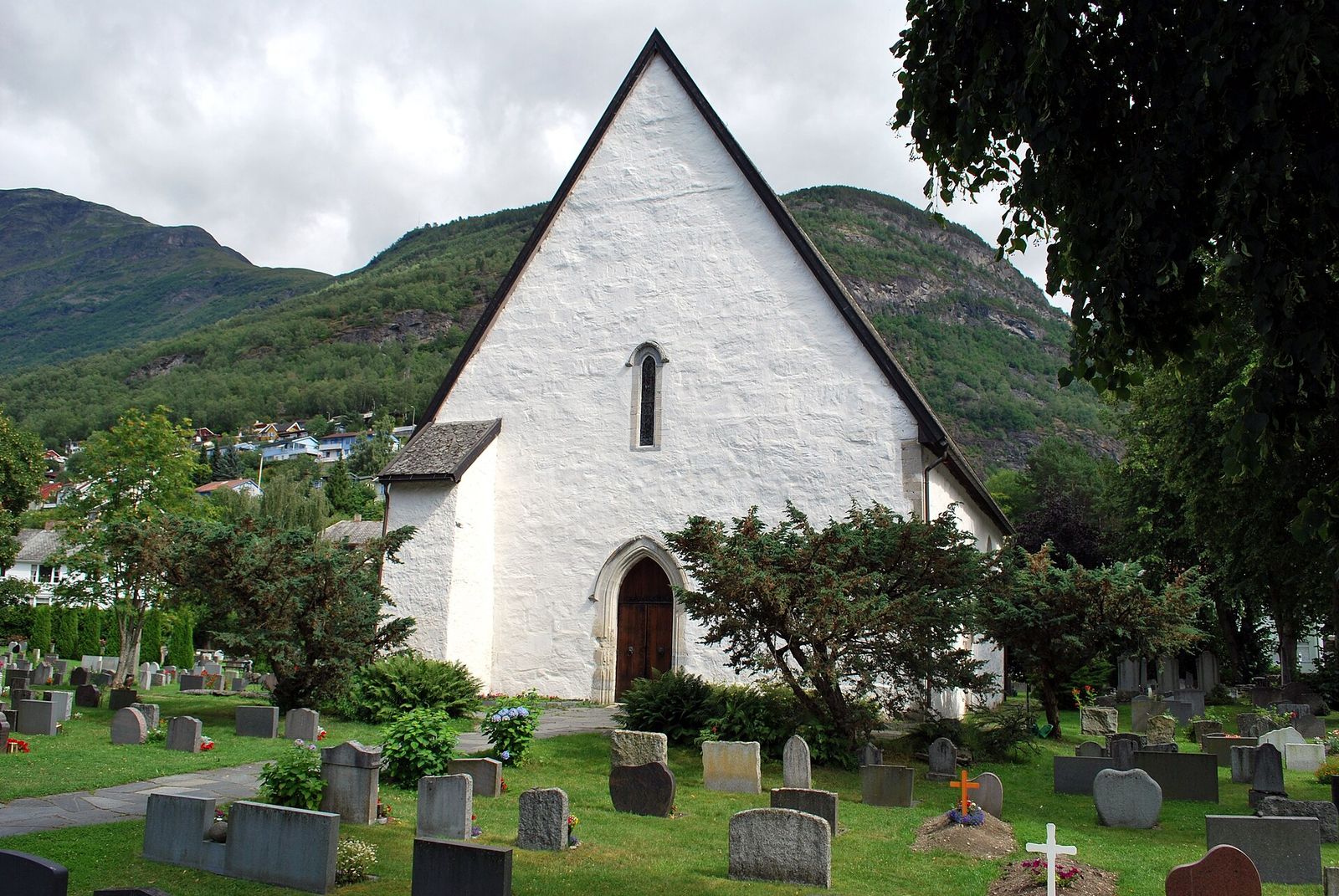
The village’s main historical landmark is Vangen Church (Vangen kyrkje), a medieval stone church built in the early 13th century.
It’s the largest medieval stone church in the Sogn region and one of the most important religious buildings in this part of Norway.
Its architecture features elements of Early Gothic design, with influences from medieval English churches.
Over the centuries, the church has undergone several renovations.
During restoration work in 1926, decorative elements were restored, and stained-glass windows designed by Norwegian artist Emanuel Vigeland were added.
The church is surrounded by a small cemetery, with mountains rising in the background.
You can admire the exterior throughout the year, although access to the interior depends on the parish’s opening hours.
7. Discover the Traditional Aurland Shoe Factory
Another interesting place to visit in Aurlandsvangen is Aurland Skofabrikk, a traditional factory known for producing Aurland leather shoes.
This style of shoe, known as Aurlandsskoen, was developed during the first half of the 20th century and is considered one of the predecessors of the modern loafer.
Today, the factory continues to produce shoes using traditional craftsmanship.
It also has a small visitor centre explaining the history of the footwear and the manufacturing process.
There’s also a shop where you can buy its products.
It’s a particularly interesting visit if you’d like to discover one of the municipality’s best-known craft traditions.
You can find visitor information on the Aurland Shoes website.
8. Visit Undredal Village and Try Its Traditional Goat Cheese
Undredal is one of Aurland’s most picturesque villages.
Located beside Aurlandsfjord, it’s surrounded by mountains that descend almost vertically towards the water.
Despite its small size, the village has an important cultural heritage and is known for two particular traditions: its medieval wooden church and its goat cheese production.
Undredal has just around 70 inhabitants and maintains a strong connection with farming, particularly goat breeding.
It’s worth spending some time walking through its narrow streets, admiring the traditional houses and visiting the quay to enjoy the scenery.
Try Undredal’s Traditional Goat Cheese
Undredal is famous for its traditional goat cheese production.
Local specialities include white goat cheese, known for its salty flavour and different levels of maturity, and brunost, a brown cheese made from whey and known for its distinctive sweet taste.
At the local shop Underdalsbui, you can buy these cheeses and discover other regional products.
During the tourist season, food-related activities and experiences connected to cheese production are also organised.
How to Get to Undredal
Undredal is approximately 15 minutes by car from Flåm.
To reach the village, turn off the E16 and follow the road downhill for approximately 6 kilometres.
It’s easy to combine a visit with Aurlandsvangen and Stegastein, particularly if you’re travelling by car.
Some public transport connections and organised excursions are also available from Flåm, although you should check their schedules beforehand.
9. Visit Undredal Stave Church
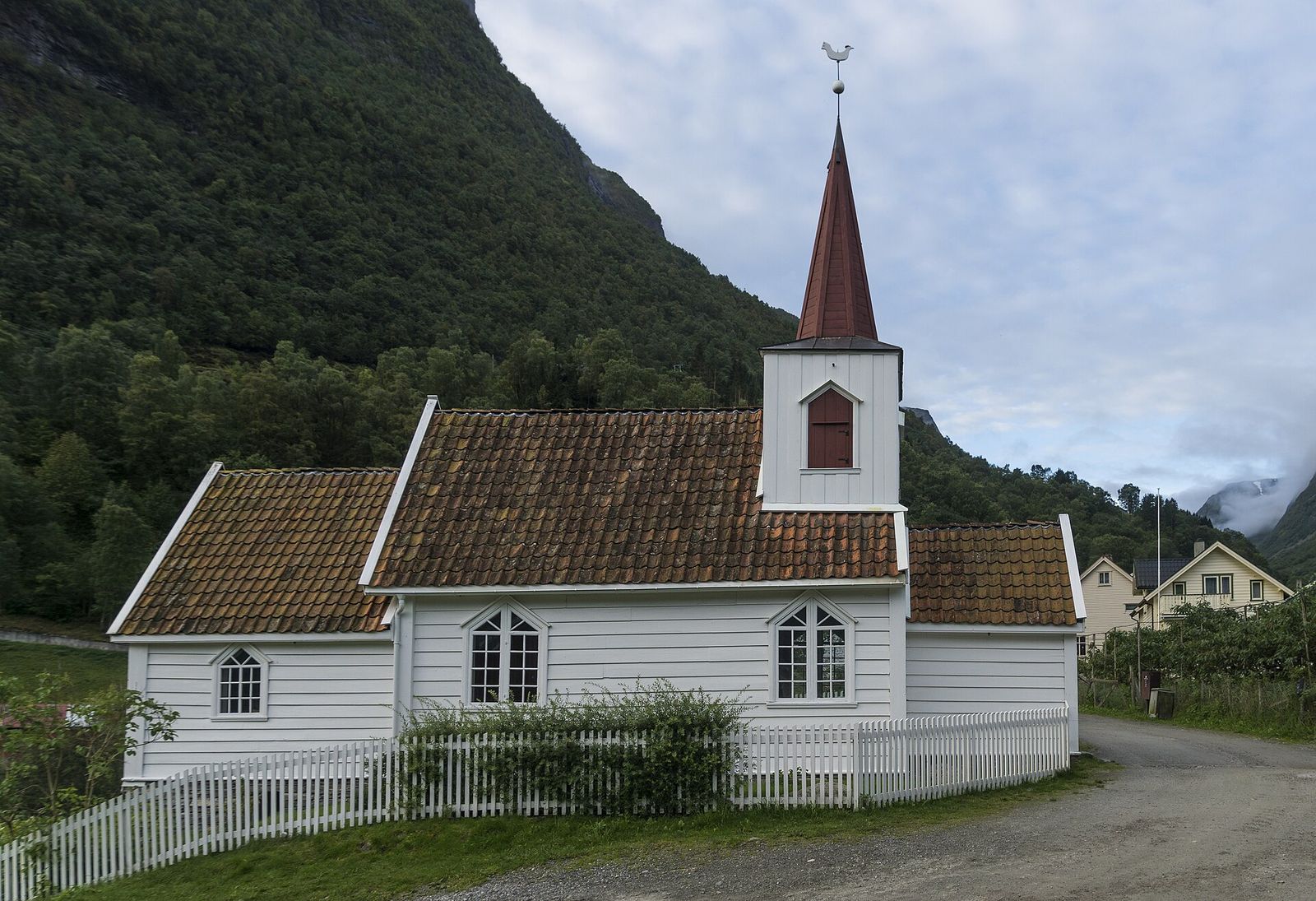
Undredal Stave Church (Undredal stavkyrkje) is one of Norway’s most unusual religious buildings.
Its origins date back to the 12th century, and it’s considered the smallest medieval wooden church in Norway still in use.
The church can accommodate approximately 40 people and preserves original structural elements, although it has undergone several modifications over the centuries.
Inside, you’ll find painted wooden decorations typical of traditional Norwegian rural churches.
The church is located in the centre of Undredal village and can be visited during the tourist season, usually through organised tours.
If you’re interested in discovering similar buildings, you can read our guide to Norway’s stave churches.
10. Hike Through the Aurlandsdalen Valley
Aurlandsdalen is one of Norway’s most spectacular mountain valleys and one of the region’s best-known hiking destinations.
Its landscape combines deep gorges, waterfalls, forests and abandoned farms in places that seem almost impossible to reach today.
The valley stretches from the mountains near Finse to Vassbygdi, close to Aurlandsvangen.
It’s often called Norway’s Grand Canyon because of its steep rock walls and deep ravines.
Hiking from Østerbø to Vassbygdi
The most popular hike is the final section of the valley, connecting Østerbø with Vassbygdi.
This route is approximately 19 kilometres long and takes between 6 and 8 hours.
It begins at around 820 metres above sea level and finishes at approximately 80 metres.
The trail passes through varied landscapes, from open mountain terrain to forests and narrow paths carved into steep hillsides.
Along the way, you’ll discover waterfalls, abandoned settlements and several sections offering spectacular views of the gorge.
Although the trail is well marked, some sections involve steep descents and exposed paths.
It’s not recommended for people without mountain hiking experience or those who are uncomfortable with heights.
Some parts can also become wet and slippery, especially after rainfall.
The Historic Farms of Sinjarheim and Almen
One of the cultural highlights of the hike is Sinjarheim, a small farm located on a hillside above the river.
The farm was inhabited until the early 20th century and was later restored to preserve its traditional architecture.
Further along the trail lies Almen, another former farm known for a small building sheltered beneath an enormous rock.
Both places offer a fascinating insight into how families lived in the valley before modern roads existed.
Practical Information
The usual hiking season runs from June to October, although this depends on weather conditions and remaining snow.
During summer, a hiking bus connects Flåm, Aurlandsvangen, Vassbygdi and Østerbø.
Because the route is one-way, it’s important to arrange transport in advance to avoid having to walk back to your starting point.
You should bring suitable hiking boots, water, food, warm layers and waterproof clothing.
You can find the route description and access information on the Visit Sognefjord website.
11. Discover the Historic Otternes Farmstead
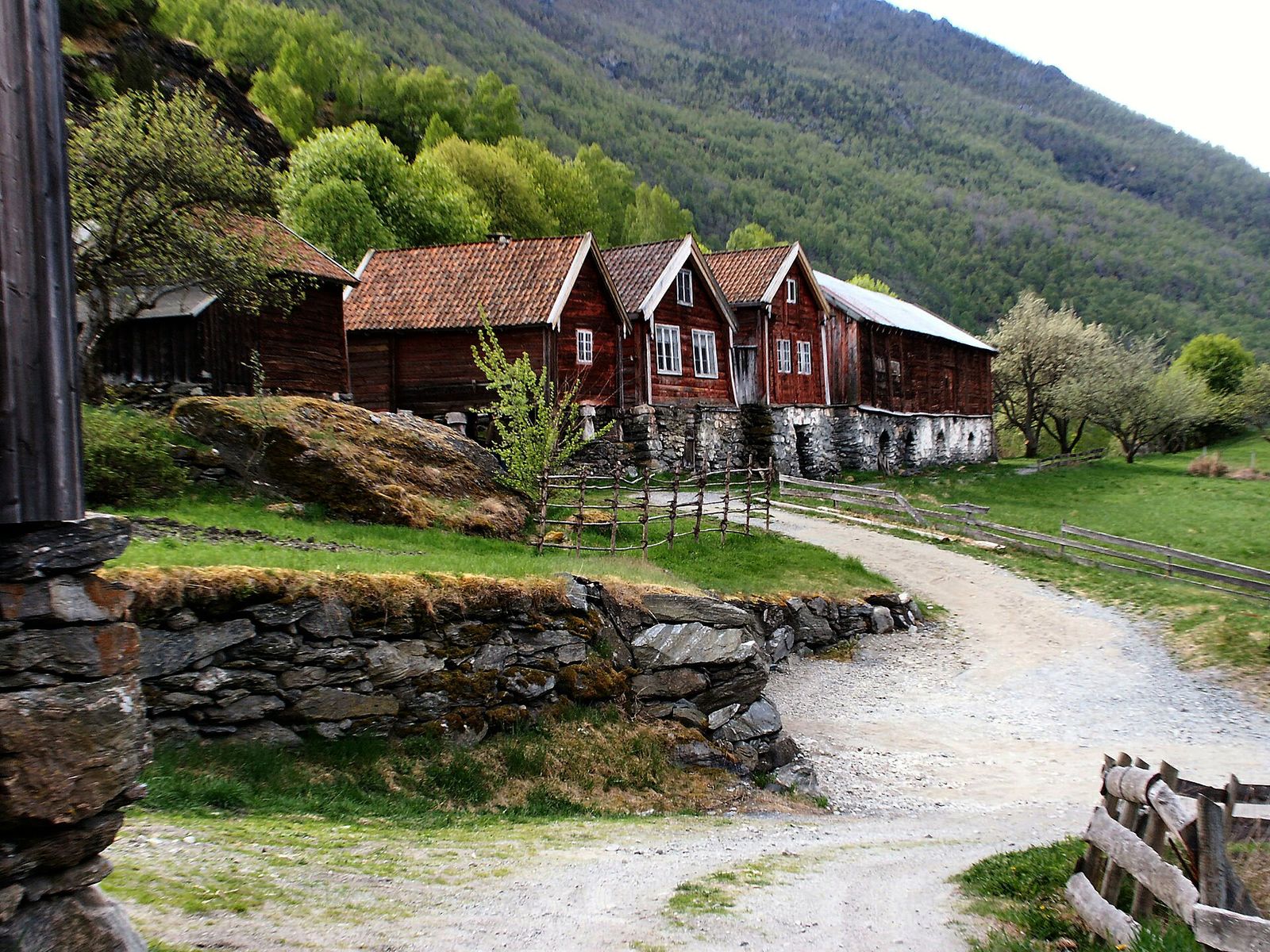
Between Aurlandsvangen and Flåm lies Otternes Bygdetun, one of the best-preserved traditional farmsteads in the region.
It consists of approximately 27 wooden buildings grouped together on a hillside overlooking Aurlandsfjord.
The oldest surviving buildings date back to the 17th century, although evidence of human activity in the area goes back many centuries.
The farmstead offers an insight into how traditional Norwegian farms were organised, with several families sharing certain spaces and buildings.
The structures include houses, barns and buildings used to store food and tools.
How to Visit Otternes
Access is from the road connecting Flåm with Aurlandsvangen.
You can also reach the area on foot or by bicycle from Flåm, following the route near the fjord.
From the surrounding area, you’ll enjoy excellent views of Aurlandsfjord and the mountains on the opposite shore.
It’s an easy stop to combine with a visit to either village.
Check the access conditions before entering the farmstead and respect any areas that may be closed.
12. Explore Flåm Village and Its Historic Church
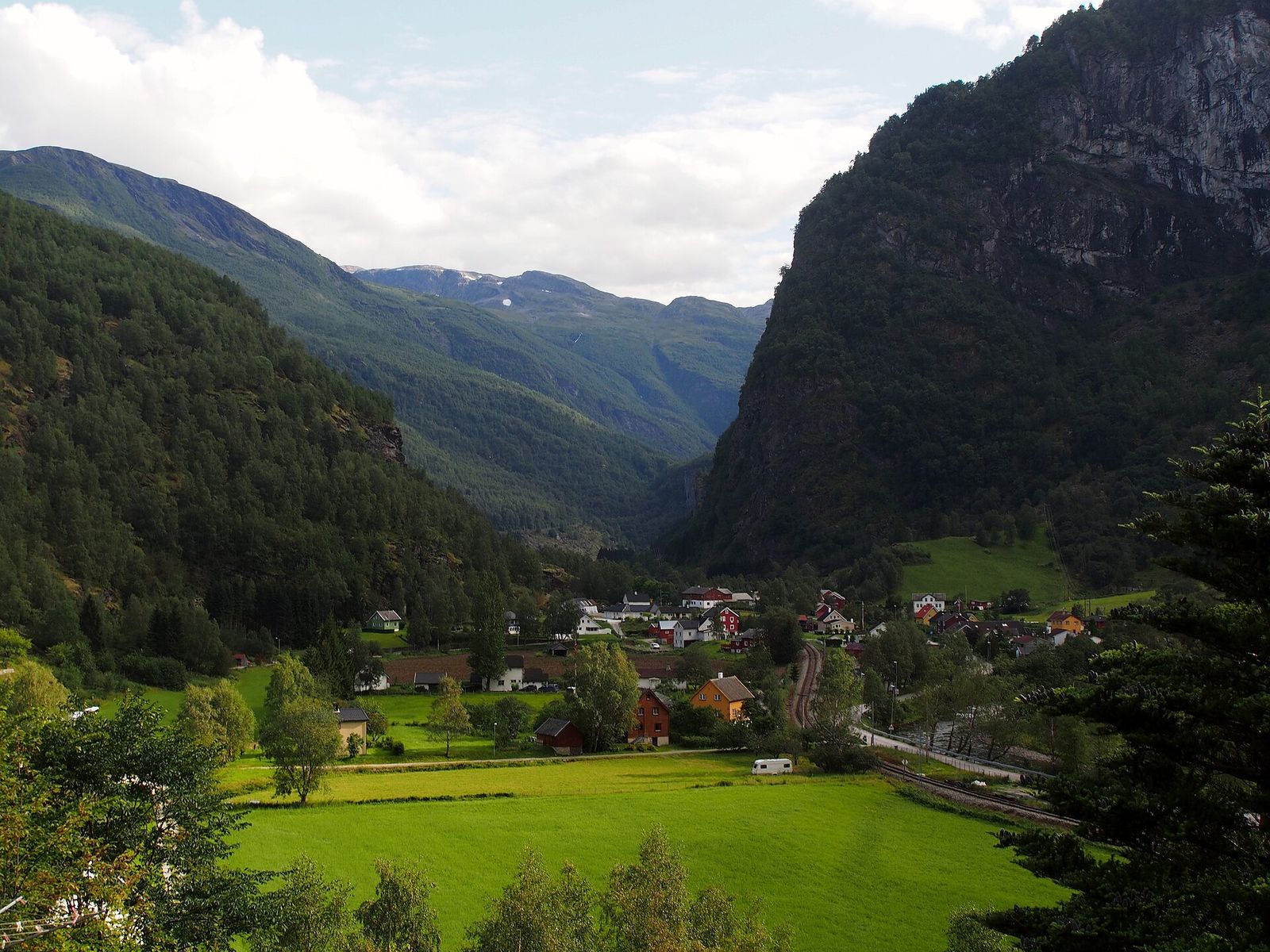
Flåm is the most visited village in Aurland and one of the main tourist destinations in Norway’s fjord region.
It’s located at the end of Aurlandsfjord, surrounded by towering mountains and beside the mouth of the Flåmselvi River.
Despite its small size, the village has numerous tourist services, restaurants, accommodation options and transport connections.
This is where the Flåm Railway terminates and where cruises through Nærøyfjord depart.
Things to Do in Flåm Village
Besides the famous train journey and fjord cruises, it’s worth spending some time exploring the village itself.
You can walk to the harbour, enjoy the fjord views or follow the riverside path.
You’ll also find cafés, restaurants and shops selling local products.
If you prefer outdoor activities, several hiking trails begin in Flåm, including the walk to the Brekkefossen waterfall viewpoint.
Flåm Church
In the old part of Flåm, in the Håreina area, you’ll find Flåm Church (Flåm kyrkje), a wooden church built in 1667.
It’s located approximately 3 kilometres from the present railway station, in a rural setting beside the river.
The interior is particularly interesting for its decorative paintings from the 17th and 18th centuries, as well as an altarpiece dating from 1681.
The church replaced an earlier medieval building and preserves much of the character of traditional Norwegian rural churches.
It’s an interesting place to visit if you want to discover a quieter part of the valley, away from the busy tourist harbour.
13. Cycle the Historic Rallarvegen
For cycling enthusiasts, one of the most popular experiences around Flåm is riding part of the Rallarvegen, also known as the Navvies’ Road.
This historic route was originally built to transport workers and materials during the construction of the Bergen Railway.
Today, it’s one of Norway’s best-known mountain cycling routes.
The complete route begins in Haugastøl and passes through Finse and Myrdal before descending towards Flåm.
A shorter alternative is to start in Myrdal and cycle approximately 20 kilometres downhill to Flåm.
The journey crosses mountain landscapes, waterfalls and small rural settlements.
The upper sections include gravel tracks and steep descents, particularly around the bends of Myrdalsberget.
For this reason, you should have some experience cycling on mountain terrain and use suitable equipment.
The route is usually completed during summer, when snow conditions allow access to the higher sections.
How to Plan Your Visit to Aurland
Aurland has some of the most popular attractions in Norway’s fjord region, but they’re not all located close to one another.
If you have two or three days, you can combine the main attractions without rushing.
If you only have one day, it’s more practical to choose one area and focus your visit there.
Route 1: Flåm and Nærøyfjord
This is the best option if you’re travelling without a car and want to experience Aurland’s most famous attractions.
You can start with a journey on the Flåm Railway, explore Flåm village and take a cruise through Nærøyfjord to Gudvangen.
From Gudvangen, you can return to Flåm by bus.
If you have more time, you could also include an excursion to Stegastein viewpoint.
Route 2: Aurlandsvangen, Stegastein and Undredal
This route is ideal for travellers with a car who want to combine small villages, historical landmarks and spectacular panoramic views.
Start in Aurlandsvangen, where you can visit medieval Vangen Church and learn about the traditional shoe factory.
Continue towards Stegastein viewpoint before heading to Undredal to discover its stave church and try the local goat cheese.
On your return journey, you can stop at the historic Otternes farmstead.
During summer, if you have enough time, you could also plan another excursion along the Aurlandsfjellet Scenic Route.
Route 3: Hiking in Aurlandsdalen
If you enjoy mountain hiking, set aside a full day for the section between Østerbø and Vassbygdi.
It’s a demanding hike and shouldn’t be combined with other activities that have fixed schedules.
Arrange transport to Østerbø, check the weather conditions and enjoy the journey through the valley.
How to Get to Aurland
By car — Aurland is located beside the E16 road, which connects Bergen and Oslo.
From Bergen, it's approximately 165 kilometres to the Flåm and Aurlandsvangen area, with a driving time of around 2.5–3 hours, depending on road conditions.
From Oslo, the journey is considerably longer and crosses several mountainous areas of inland Norway.
Travelling by car makes it easier to visit villages, viewpoints and attractions outside the main public transport routes.
Important: Renovation work on the Lærdal Tunnel, which connects Aurland and Lærdal along the E16, is scheduled to begin on November 16, 2026.
Night-time closures between 6 PM and 6 AM, six nights a week, are planned for approximately two years.
Saturday nights into Sunday mornings are expected to be exempt from these closures.
Improvement work will continue over the following years and may cause additional traffic restrictions.
If you're planning to drive through the tunnel, check the latest information on the official Statens vegvesen website before travelling.
By train — One of the most popular ways to reach Aurland is by train.
From Oslo or Bergen, you can take a train to Myrdal, where you change to the Flåm Railway for the scenic descent to Flåm.
This journey allows you to enjoy some of the region's most spectacular landscapes without needing to rent a car.
Check timetables and connections on the Vy website.
By bus and boat — Bus services connect Flåm, Aurlandsvangen and other nearby villages, although frequency varies depending on the season.
You can also reach the region by express boat, with services connecting different villages along Sognefjord, particularly during summer.
To plan public transport journeys, use Entur, Norway's official journey planner.
You can find more information in our guide to getting around Norway.
When Is the Best Time to Visit Aurland?
May to September generally offers the best conditions for visiting Aurland, especially if you want to combine fjord cruises, scenic drives and hiking.
Spring: May and June
Spring is one of the most beautiful times to enjoy Aurland’s waterfalls, as melting snow greatly increases their flow.
The valleys begin to turn green, and the days become increasingly long.
However, some mountain roads may still be closed because of snow.
Summer: July and August
These are the most popular months for visiting Flåm and taking a cruise through Nærøyfjord.
Temperatures are generally more pleasant, and there’s a wider selection of excursions, train departures and tourist activities.
Summer is also the best season for hikes such as Aurlandsdalen and cycling along the Rallarvegen.
Autumn: September and October
During autumn, the forests turn shades of yellow and red, creating particularly beautiful landscapes.
There are fewer visitors than during the height of summer, although some excursions run less frequently and the weather can be more unpredictable.
Winter: November to April
Aurland can also be visited during winter, particularly if you want to experience the fjords in a quieter atmosphere.
The Flåm Railway and Nærøyfjord cruises continue operating throughout the year, although with more limited schedules.
Stegastein viewpoint remains accessible from Aurlandsvangen, provided road conditions allow it.
However, the mountain section of the Aurlandsfjellet Scenic Route is closed, and more demanding hiking trails aren’t recommended without suitable winter equipment and experience.
Sources and Useful Links
- Visit Sognefjord — Aurland Tourist Information
- Visit Norway — Flåm
- Norwegian Scenic Routes — Aurlandsfjellet
- Norway’s Best — Flåm Railway and Excursions
- UNESCO — West Norwegian Fjords
- Visit Sognefjord — Hiking in Aurlandsdalen
- Aurland Shoes — Traditional Shoe Factory
- Statens vegvesen — Lærdal Tunnel Roadworks
- Aurland Municipality