8 Best Things to See and Do in Ulvik, Norway
Ulvik is a small village in Norway’s Hardanger region, surrounded by steep mountains, peaceful fjords and fruit orchards. Located at the end of Ulvikafjorden, in Vestland, it’s a beautiful destination for travellers looking to experience a quieter side of western Norway.
Known as the Pearl of Hardanger, Ulvik is particularly famous for its apple orchards, local cider and beautiful natural landscapes. It’s also home to the Olav H. Hauge Centre, dedicated to one of Norway’s most celebrated poets.
Beyond the village, you can explore small coastal settlements, waterfalls and hiking trails overlooking the fjords. Many attractions are within walking distance of the centre, while others require a short drive.
Here are 8 of the best things to see and do in Ulvik, from exploring its orchards to discovering the surrounding mountains.
1. Explore Ulvik Village and Its Waterfront
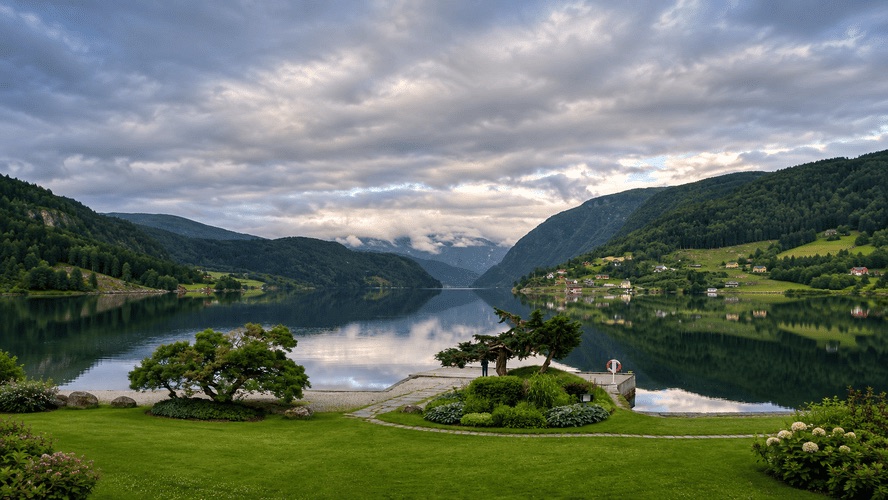
Ulvik is a small, peaceful village at the end of Ulvikafjorden, an arm of the Hardangerfjord.
Its centre, located around Brakanes, is easy to explore on foot. You’ll find a small harbour, waterfront hotels, cafés, restaurants and traditional houses surrounded by green hills.
One of the nicest things to do is simply walk along the waterfront and enjoy the views of the mountains reflected in the fjord.
Ulvik is part of the international Cittaslow movement, which promotes slower living, local traditions and sustainable communities. This philosophy fits the village’s relaxed atmosphere.
Much of Ulvik was rebuilt after the Second World War. In April 1940, fighting during the German invasion caused a fire that destroyed most of the village. Ulvik Church was one of the buildings that survived.
Today, Ulvik is a pleasant place to spend a few hours, have lunch by the fjord or use as a base for exploring the surrounding countryside.
Getting there: The waterfront, harbour and main village streets are all within walking distance of Brakanes, so you won’t need a car to explore the centre.
2. Visit Ulvik Church
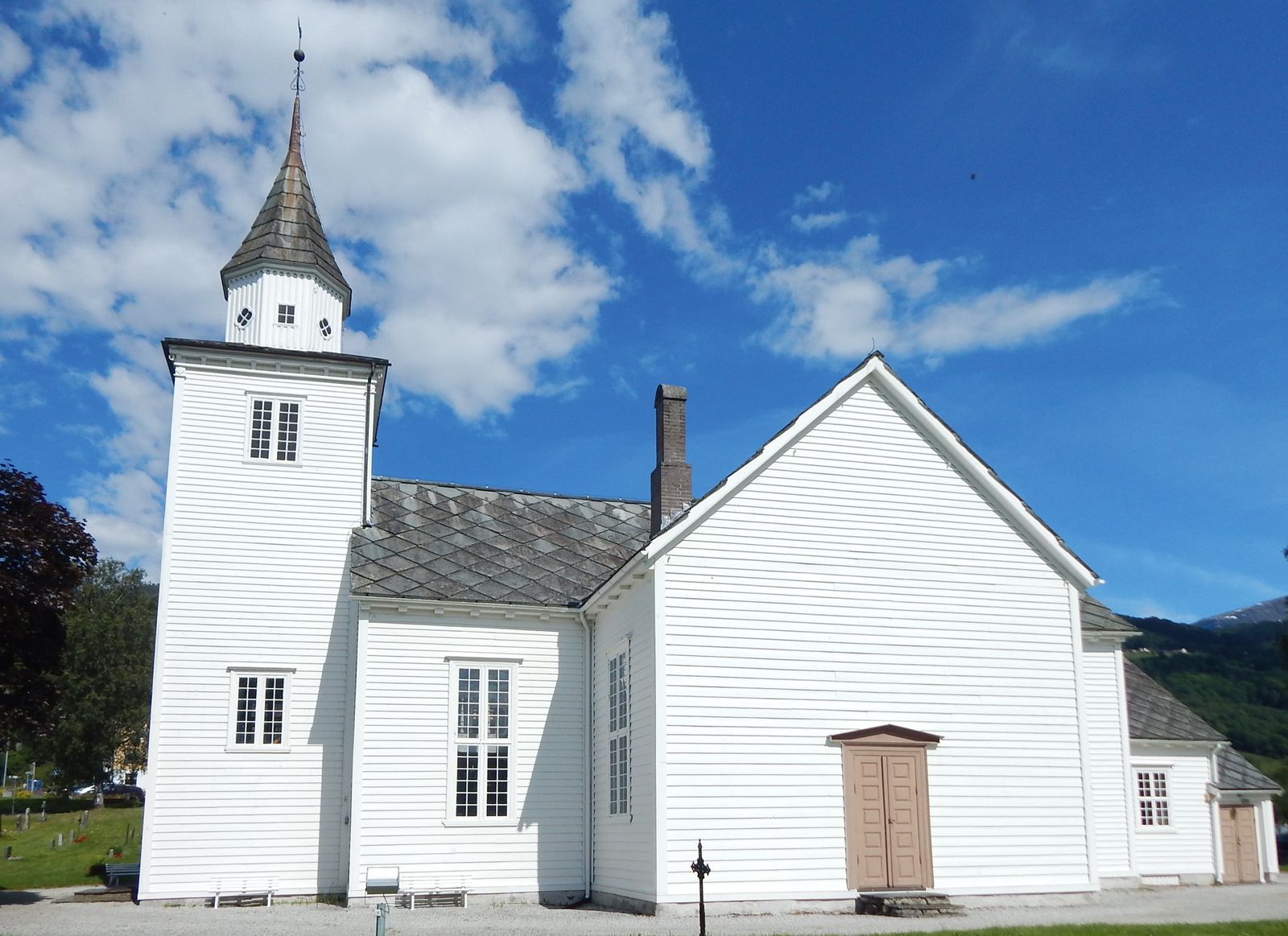
Located in the village centre, Ulvik Church is one of its most recognisable buildings.
This white wooden church was completed in 1859 and designed by Norwegian architect Hans Linstow.
Although its exterior is fairly simple, the interior is surprisingly colourful.
In 1923, local artist Lars Osa decorated the walls with traditional Norwegian rosemaling, a style of decorative painting featuring flowers and flowing patterns.
The church also preserves historical objects from earlier churches in Ulvik, including medieval artefacts.
One of its most interesting pieces is a copy of a medieval altar frontal dating from around 1250. The original is kept at the University Museum of Bergen.
The church is generally open to visitors during summer, from June to August, with free admission. Outside the main season, visits may be arranged through the tourist information office.
If you’re interested in Norwegian history or traditional art, it’s worth stepping inside rather than admiring the exterior alone.
Getting there: Ulvik Church is in the village centre, approximately 300 metres or a 5-minute walk from the harbour area.
3. Follow Ulvik’s Fruit and Cider Route
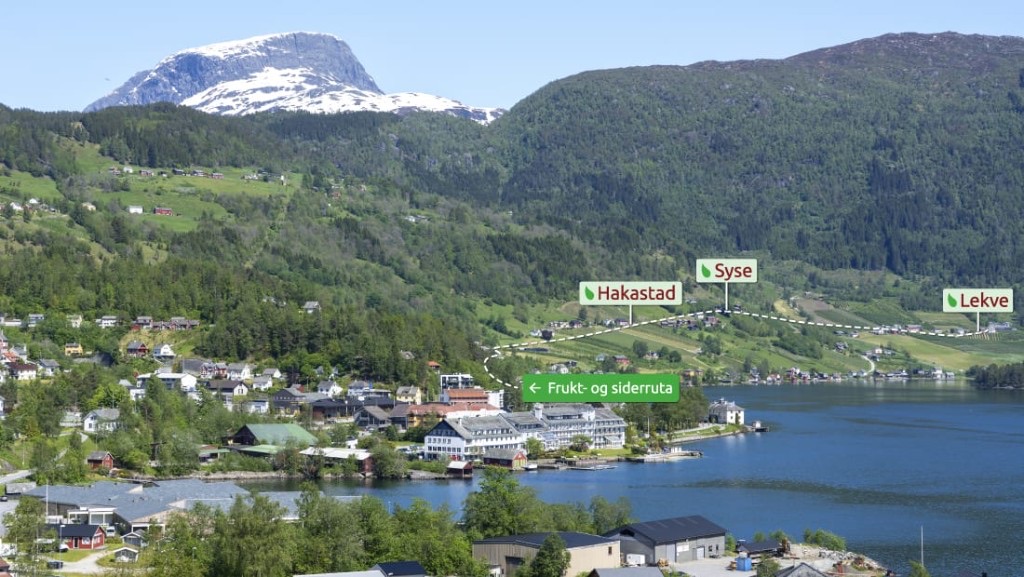
The Fruit and Cider Route is one of Ulvik’s main attractions and a great way to discover Hardanger’s agricultural traditions.
The route connects three family-run fruit farms located on the hillsides above the village.
All three grow apples and produce local products, including apple juice and cider.
The Three Cider Farms
- Hardanger Saft- og Siderfabrikk (Lekve): Produces apple juice, cider and spirits. It also has a farm shop where visitors can buy local products. Approximately 1.6 km from the village centre.
- Syse Gard: A traditional farm specialising in local food and cider. During summer, its café serves dishes made with regional ingredients. Approximately 900 metres from the centre.
- Ulvik Frukt & Cideri (Hakastad): Grows a wide variety of apples, including traditional Norwegian varieties, and produces cider, apple juice and apple cider vinegar. Approximately 700 metres from the centre.
Walking the Fruit and Cider Route
The entire circuit is approximately 3 kilometres long and can be completed on foot from Ulvik village.
The road climbs gently through the orchards, offering beautiful views of Ulvikafjorden and the surrounding mountains.
Allow around 2–3 hours if you plan to stop at the farms, browse their shops or enjoy a tasting.
You can visit the farm shops, sample local products or book guided tours to learn about cider production.
Guided tastings should be arranged in advance, particularly during the busy summer months.
When to Visit the Orchards
The landscape changes considerably throughout the year.
- May: Apple trees are covered in white blossoms. Ulvik also celebrates Sidersleppet, a local cider festival.
- July and August: The farms are easier to visit, with longer opening hours and summer activities.
- September and October: Apple harvesting season brings autumn colours and Fruktsleppet, a festival celebrating the fruit harvest.
If you visit Ulvik in spring, walking among the blossoming orchards with the fjord and snow-covered mountains in the background is one of the area’s most beautiful experiences.
You can find farm information and arrange visits through The Fruit and Cider Route.
4. Discover the Olav H. Hauge Centre
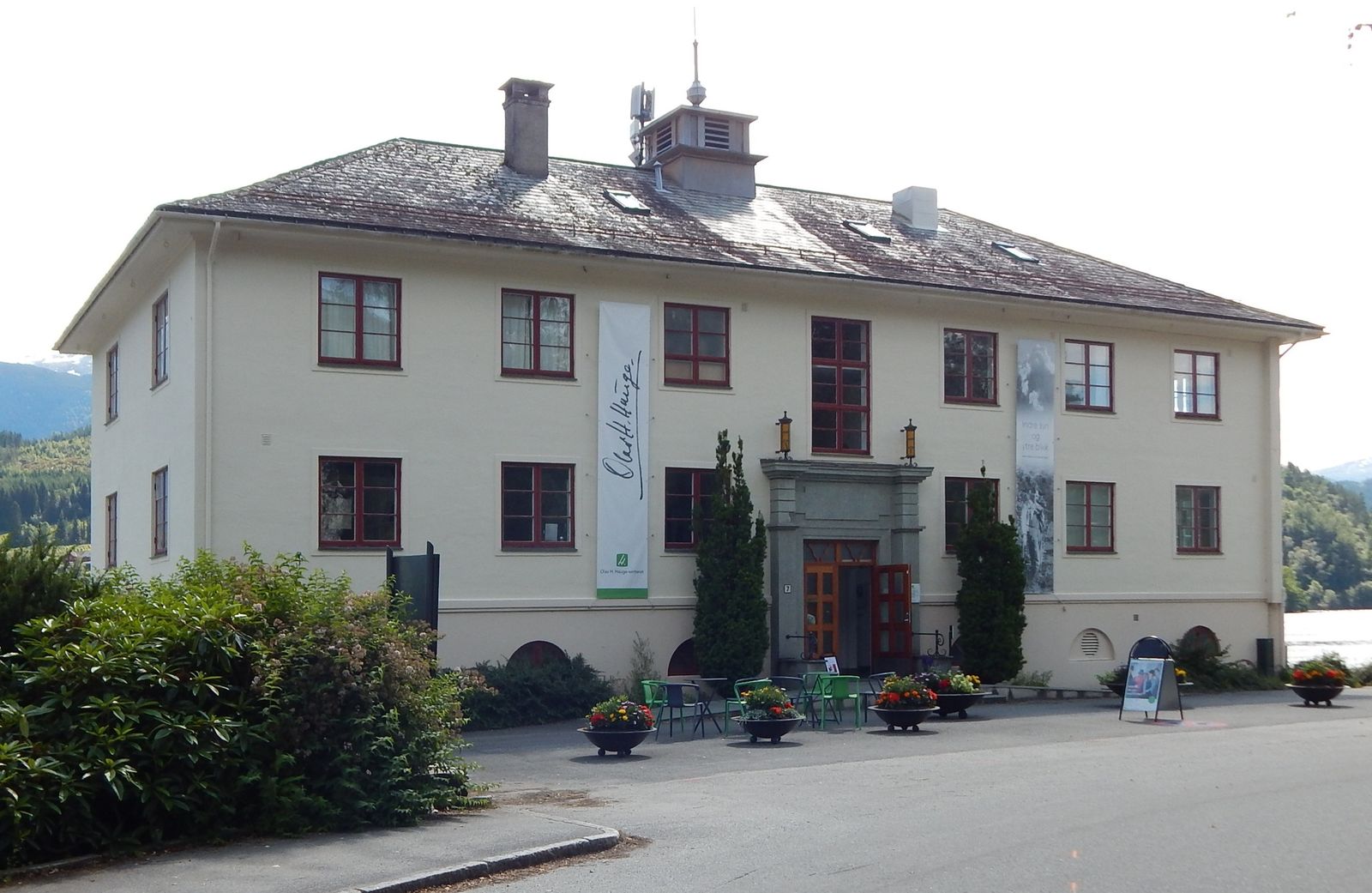
Ulvik is often called Norway’s poetry village, thanks to the writer Olav H. Hauge (1908–1994).
Hauge spent his entire life in Ulvik, working as a gardener while becoming one of Norway’s most important modern poets and translators.
His poetry often reflects the natural surroundings of Hardanger, from orchards and mountains to the changing seasons.
The Olav H. Hauge Centre, located at Promenaden 7, is a museum dedicated to his life and work.
Its exhibitions explore Norwegian literature, poetry and Hauge’s connection to the landscape. The centre also hosts readings, concerts, workshops and cultural events.
Even if you’re not particularly interested in poetry, the museum offers an interesting introduction to local culture.
Getting there: The centre is on the waterfront, approximately 5 minutes’ walk from the main harbour area. No car is needed.
Check opening hours on the official museum website, as they vary throughout the year.
5. Explore Ulvikafjorden by Kayak or Boat
One of the best ways to appreciate Ulvik’s landscape is from the water.
Ulvikafjorden is surrounded by green mountainsides, farms and small settlements, making it a beautiful place for a kayaking excursion.
During summer, local activity providers offer guided kayak trips suitable for beginners, as well as equipment rentals.
Paddling along the shoreline gives you a different perspective of the village and its orchards.
You can also explore quieter areas of the fjord.
Boat Trips Along Hardangerfjord and Osafjorden
If you’d rather not paddle, there are also organised boat excursions departing from Ulvik.
Some trips explore Osafjorden and Simadalsfjorden, two narrow branches of Hardangerfjord surrounded by steep mountain walls.
From the water, you can see waterfalls, isolated farms and stretches of coastline that are difficult to appreciate from the road.
RIB boat excursions offer a faster way to explore these areas, with stops to enjoy the scenery.
Getting there: Many organised activities depart from Ulvik village or its waterfront area. The exact meeting point depends on the operator, so check your booking before setting off.
Both kayaking and boat trips are mainly seasonal activities, so it’s best to check availability and book ahead during summer.
6. Visit Osa, Osafjorden and Røykjafossen Waterfall
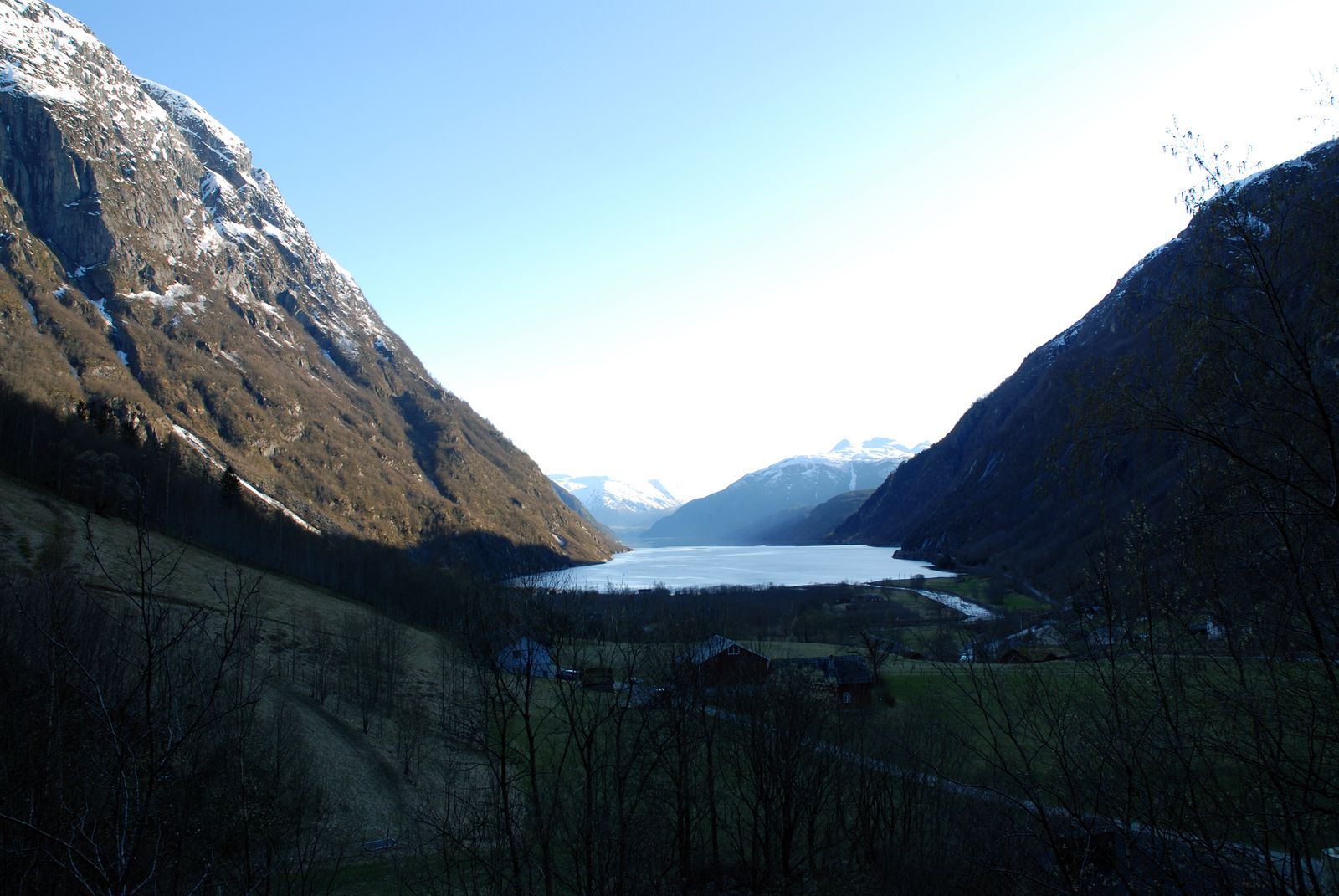
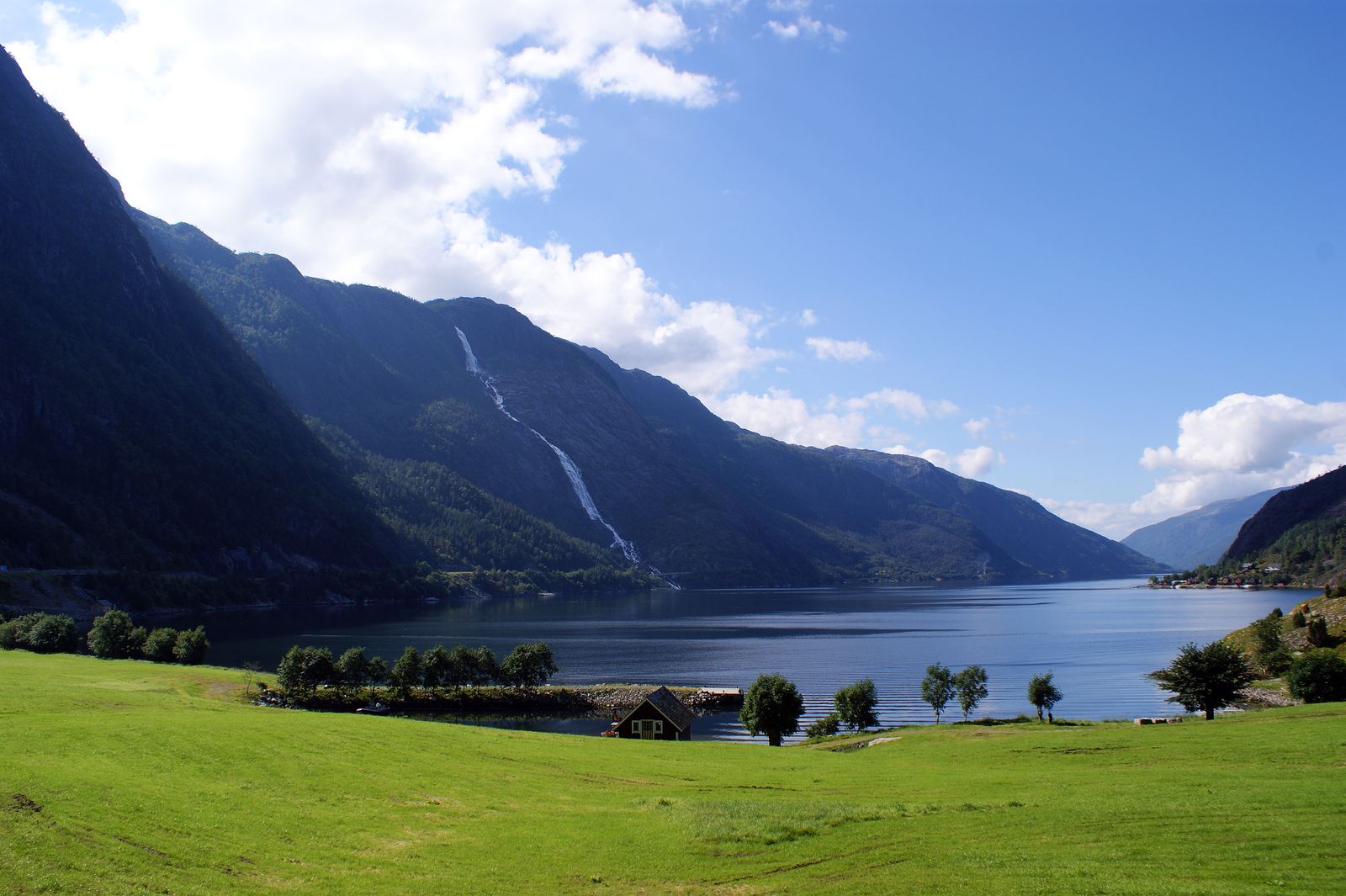
Osa is a small settlement at the end of Osafjorden, a narrow fjord east of Ulvik village.
The landscape is particularly beautiful, with steep mountains rising directly above the water and a peaceful valley stretching inland.
Compared with Ulvik, Osa feels even more secluded. There are fewer services and tourist facilities, but that’s part of its appeal.
How Far Is Osa from Ulvik?
Osa is approximately 9 kilometres from Ulvik village, and the journey takes around 10–15 minutes by car.
The road follows the fjord through a landscape of forests, farms and steep mountainsides.
You can also travel between Ulvik and Osa by local bus, although departures are limited, so it’s important to check the timetable in advance.
Once you reach Osa, you can walk around the small settlement and enjoy the views of Osafjorden.
Hjadlane Gallery
If you’re interested in art, you can visit Hjadlane Gallery, a small gallery featuring contemporary art inspired by nature and local landscapes.
It’s located a little further inland from the fjord, in the Osa area.
Opening times are limited, so check before visiting.
Røykjafossen Waterfall
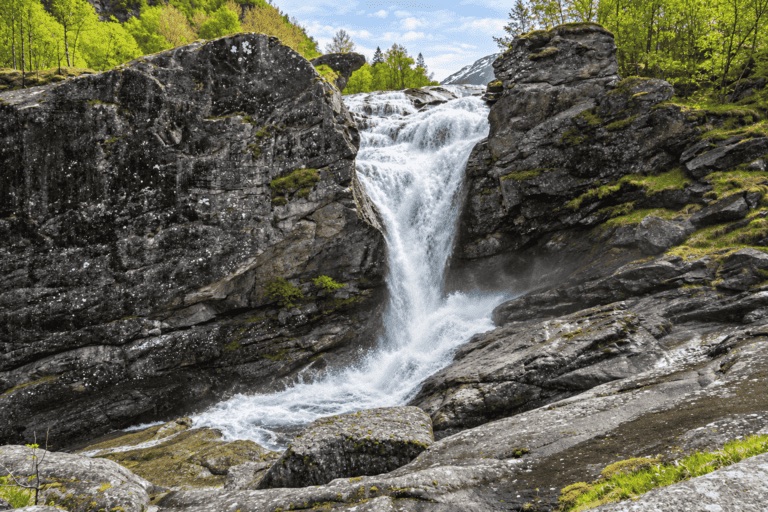
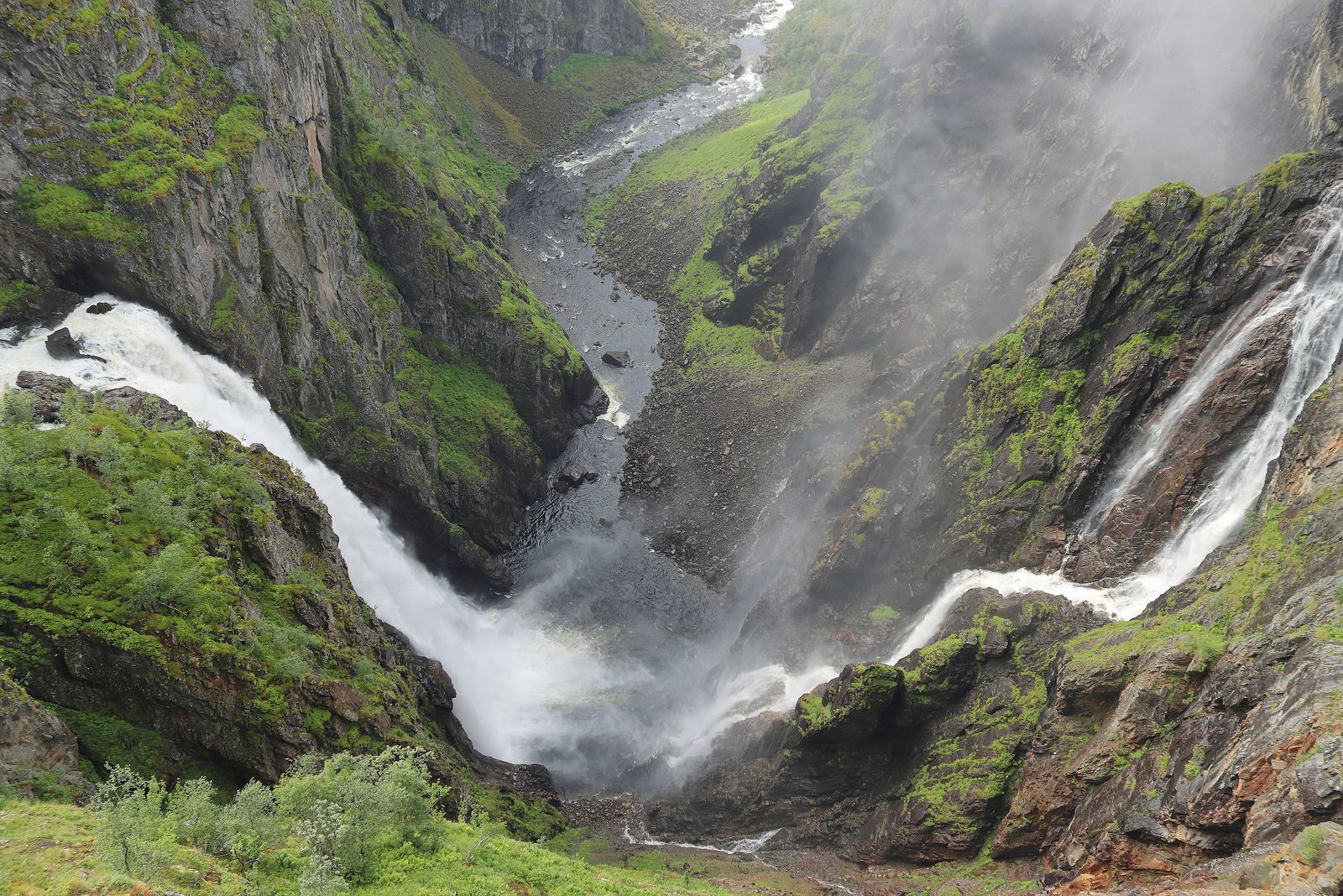
One of the area’s most interesting natural attractions is Røykjafossen, a waterfall cascading down the mountainside near Osa.
The waterfall is located inland, near Hjadlane Gallery, and can be visited as part of the same excursion.
How to reach Røykjafossen from Ulvik:
- By car: Drive approximately 9 km from Ulvik to Osa, then continue towards the Hjadlane Gallery area. Allow around 15–20 minutes or slightly longer for the drive, depending on your exact destination.
- On foot: From the Hjadlane Gallery area, the waterfall is approximately a 10–15-minute walk away.
It’s a convenient additional stop if you’re already visiting Osa, although you should check the local access route before setting off.
The waterfall’s water flow can vary depending on the season and hydroelectric regulation.
Osa, Hjadlane Gallery and Røykjafossen can be combined into one excursion from Ulvik, without committing to a long mountain hike.
7. Walk the Liavegen and Jobykse Trail
If you want to enjoy panoramic views without undertaking a demanding mountain expedition, Liavegen/Jobykse is one of the best hiking options in Ulvik.
This marked route passes through the hillsides above the village, combining fruit orchards, forests and viewpoints over the fjords.
The highlight is Jobykse viewpoint, where the landscape opens towards Osafjorden.
From here, you can see the narrow fjord stretching between steep mountainsides.
Where Does the Liavegen/Jobykse Hike Start?
The hike starts in Ulvik village, so you don’t need a car.
From the village centre, follow the signs towards the Fruit and Cider Route, passing Syse Gard.
Continue along the gravel road towards Tunheim and follow the signs for Liavegen and Jobykse.
The route is well marked and passes through woodland before reaching the viewpoint.
Practical Hiking Information
- Starting point: Ulvik village centre.
- Distance: Approximately 9 km round trip.
- Duration: Around 3 hours.
- Elevation gain: Approximately 300 metres.
- Difficulty: Easy to moderate; generally family-friendly.
- Best season: Spring, summer and autumn, depending on trail conditions.
Some sections can be slippery after rain, so comfortable walking shoes with good grip are recommended.
This is one of the most convenient hikes in Ulvik because you can start directly from the village and combine part of the route with the cider farms.
You can find route information on Visit Hardanger — Liavegen/Jobykse.
8. Climb Mount Kvasshovden
If you’re looking for a more demanding mountain hike, Kvasshovden offers some of the best panoramic views in Ulvik.
The mountain rises more than 1,000 metres above sea level, overlooking the village and its surrounding fjords.
The trail climbs through farmland, forests and traditional summer pasture areas before reaching the open mountain landscape.
As you ascend, you’ll see the village becoming smaller below you, with the fjord stretching between the mountains.
From the summit, the views extend across the Hardanger landscape.
Where Does the Kvasshovden Hike Start?
The hiking trail begins at Ulvik Fjord Hotel, close to the village centre.
You can reach the starting point on foot if you’re staying in Ulvik, so there’s no need to drive to a remote trailhead.
The route is marked and climbs directly from near sea level towards the summit.
However, it’s considerably more demanding than the Liavegen/Jobykse trail.
Practical Hiking Information
- Starting point: Ulvik Fjord Hotel, near the village centre.
- Distance: Approximately 7.5 km uphill to the summit.
- Duration: Around 5–6 hours for the complete hike, depending on fitness and conditions.
- Elevation gain: More than 1,000 metres.
- Difficulty: Challenging.
- Best season: Summer and early autumn, depending on snow conditions.
The trail includes steep and rocky sections, so it’s best suited to experienced hikers with good fitness and suitable mountain equipment.
Snow can remain near the summit well into June, so check conditions before attempting the climb.
The annual Kvasshovden Opp mountain race follows this route during summer.
You can find more information on Visit Hardanger — Mount Kvasshovden.
How to Get to Ulvik
By car — Driving is one of the easiest ways to reach Ulvik and explore the surrounding area.
From Bergen, the journey takes approximately two hours, depending on traffic and road conditions.
The usual route follows the E16 towards Voss before continuing towards Ulvik through the Hardanger region.
If you're travelling from Eidfjord, you can cross the Hardanger Bridge, which connects the two sides of the fjord, and continue along road 572 towards Ulvik.
The bridge is also one of the area's most impressive engineering landmarks.
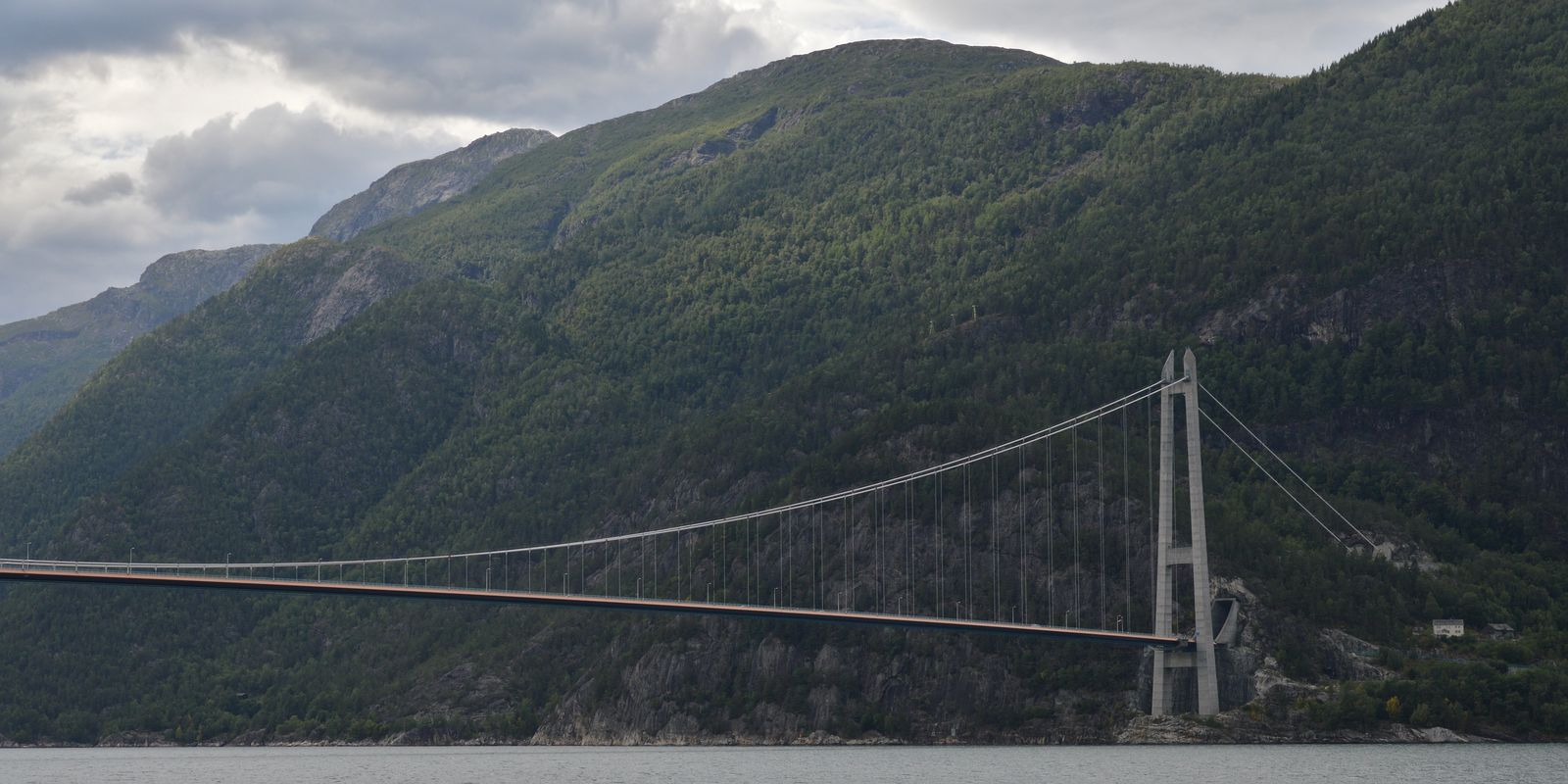
Although most attractions in Ulvik village can be explored on foot, a car is useful if you want to visit Osa and Røykjafossen.
By bus — Regional connections are available, although schedules may be limited.
Local bus services in the Vestland region are operated by Skyss.
Connections to Ulvik are available from surrounding towns, although some journeys require a transfer.
There are also local connections towards Osa, but services may be infrequent.
Check the latest routes and departure times on Entur.
By boat — A scenic way to arrive along Hardangerfjord in summer.
During summer, express boat services along Hardangerfjord connect Ulvik with other destinations in the region.
The seasonal route between Norheimsund and Eidfjord includes stops at places such as Utne, Lofthus, Kinsarvik and Ulvik.
This is a particularly scenic way to arrive, with beautiful views of the fjord and surrounding villages.
Check the latest schedules and availability with Norled.
By cruise ship — Some Hardangerfjord itineraries stop in Ulvik.
If you're visiting on a cruise, the village centre, Ulvik Church, the Olav H. Hauge Centre and the cider farms are among the most convenient attractions to explore during a short stop.
When Is the Best Time to Visit Ulvik?
May to September generally offers the best conditions for visiting Ulvik, although each season has something different to offer.
May and Early June: Apple Blossoms
Spring is one of the most beautiful times to visit Ulvik.
The fruit trees are in bloom, creating a lovely contrast with the green hills, blue fjord and snow-covered mountains.
May is also the season of the local cider festival, Sidersleppet.
It’s an ideal time to walk around the orchards and enjoy the scenery.
However, snow may still remain on higher mountain trails such as Kvasshovden.
July and August: Hiking and Outdoor Activities
Summer offers the widest range of activities.
Cider farms, museums and local businesses generally have longer opening hours.
It’s also the best time for kayaking, boat excursions and hiking around Ulvik.
Long daylight hours make it easier to enjoy the village and nearby attractions.
September and October: Harvest Season
Autumn brings apple harvesting, colourful orchards and fewer visitors.
The Fruktsleppet festival usually takes place in early October.
It’s a lovely time to explore Ulvik village, although some summer activities begin to close.
Winter
Ulvik remains accessible throughout winter, but outdoor activities are more limited.
The surrounding mountains may be covered in snow, and hiking trails can become difficult or unsafe without winter equipment and experience.
The village and its fjord offer a peaceful atmosphere, although some attractions have reduced opening hours.
Whatever the season, waterproof clothing is recommended. Weather conditions around the fjords can change quickly.