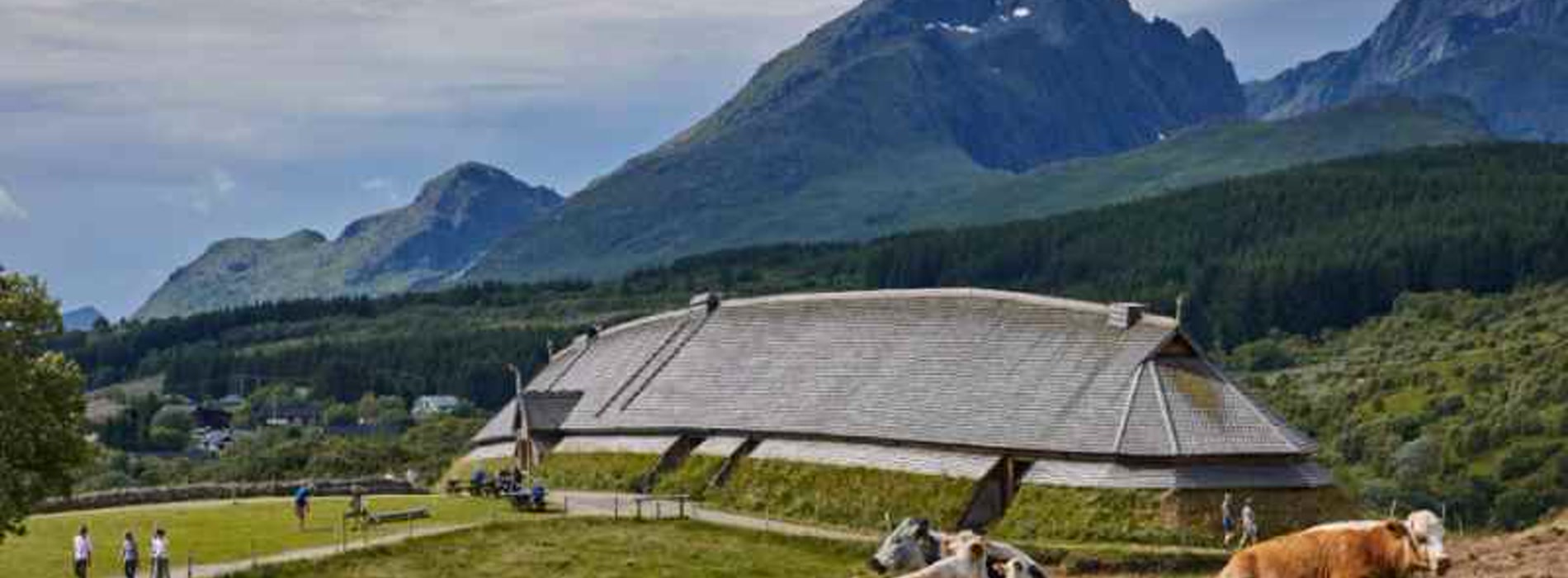
8 Best Stave Churches to Visit in Norway
8 Best Stave Churches to Visit in Norway
Norway is home to some of the most remarkable wooden churches in the world. Known as stave churches (stavkirker), these medieval buildings are famous for their intricate wood carvings, unusual architecture and decorations inspired by both Christianity and Norse traditions.
During the Middle Ages, Norway had an estimated 1,300 to 2,000 stave churches. Today, only 28 historic stave churches remain, making them some of the country’s most valuable cultural treasures.
Most were built during the 12th and 13th centuries, using an advanced wooden construction technique based on large vertical posts called staves.
Each church has its own character. Some are known for their impressive architecture, while others stand out for their medieval interiors, history or beautiful surroundings.
If you’re planning a trip to Norway, here are 8 of the best stave churches to visit, including where to find them and practical information to help you plan your visit.
1. Urnes Stave Church: The Oldest in Norway
Urnes Stave Church (Urnes stavkirke) is the oldest surviving stave church in Norway and the only one recognised as a UNESCO World Heritage Site.
Built around 1130, it stands on a hillside overlooking the beautiful Lustrafjord, a branch of Sognefjord.
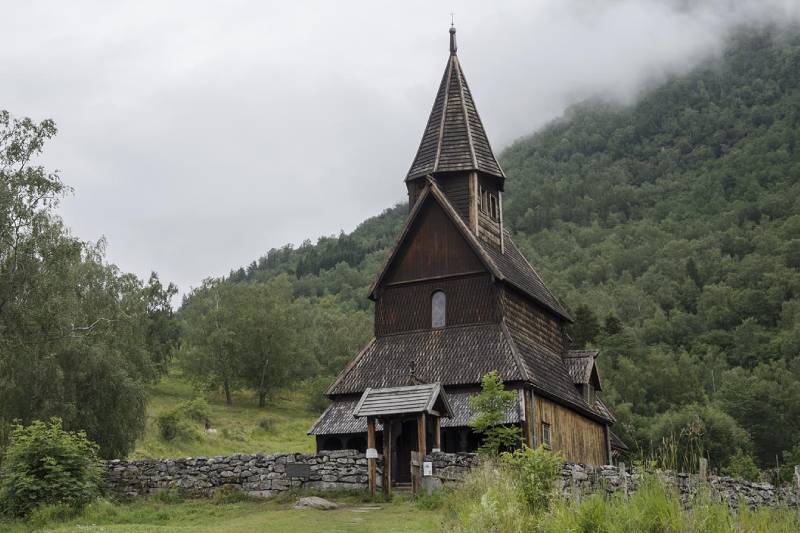
What makes Urnes particularly special is its detailed wooden decoration, known as the Urnes style.
The carvings feature intertwined animals, plants and mythical creatures, reflecting the transition from Norse traditions to Christianity during the Middle Ages.
Some of these carved elements are even older than the current church, as they were reused from a previous building on the same site.
How to visit Urnes Stave Church
Urnes is located in the municipality of Luster, in the Vestland region.
One of the most scenic ways to reach it is by driving from Sogndal to Solvorn and taking the small ferry across Lustrafjord to Ornes.
The ferry crossing takes approximately 20 minutes. From the quay, you can walk uphill to the church.
Urnes is normally open to visitors from May to September. During the 2026 season, it was open from May 2 to September 30.
As visitor numbers inside the church are limited, it’s a good idea to allow enough time for your visit.
Check current opening hours and ticket prices on the official Urnes Stave Church website.
Best for: UNESCO heritage, medieval wood carvings and beautiful fjord scenery.
2. Borgund Stave Church: The Most Iconic
Borgund Stave Church is one of the best-preserved and most recognisable stave churches in Norway.
Built around 1180, it looks almost like something from a medieval fairy tale.
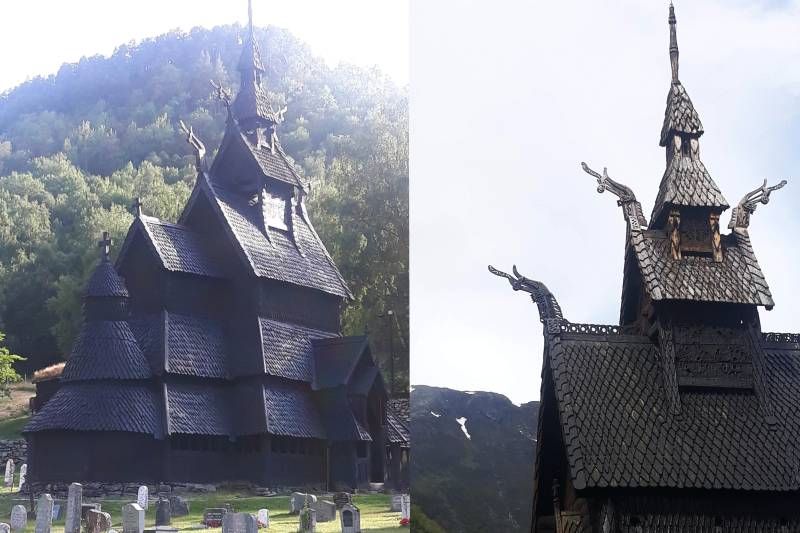
Its architecture features several overlapping roofs, dark wooden walls and carved dragon heads that resemble decorations found on Viking ships.
These details reflect the combination of Christian beliefs and older Norse artistic traditions.
Inside, you can still find medieval wooden structures and runic inscriptions, offering a fascinating glimpse into the church’s long history.
How to visit Borgund Stave Church
Borgund is located in Lærdal, along the E16 road between Oslo and Bergen.
It is approximately one hour by car from Flåm, making it an excellent stop if you’re exploring the Sognefjord region.
The church has a visitor centre with exhibitions about stave church architecture, a café and a souvenir shop.
You can also explore part of the historic King’s Road (Kongevegen), which passes nearby.
Borgund is generally open for visitors from spring to autumn, rather than throughout the entire year. In 2026, the visiting season ran from April 15 to October 14.
Check the official Borgund Stave Church website for updated opening dates and admission prices.
Best for: traditional stave church architecture, dragon carvings and medieval history.
3. Heddal Stave Church: The Largest in Norway
Heddal Stave Church is the largest surviving stave church in Norway, making it one of the country’s most impressive medieval buildings.
Built during the 13th century, it stands out for its three towers, multiple wooden roofs and elaborate architectural details.
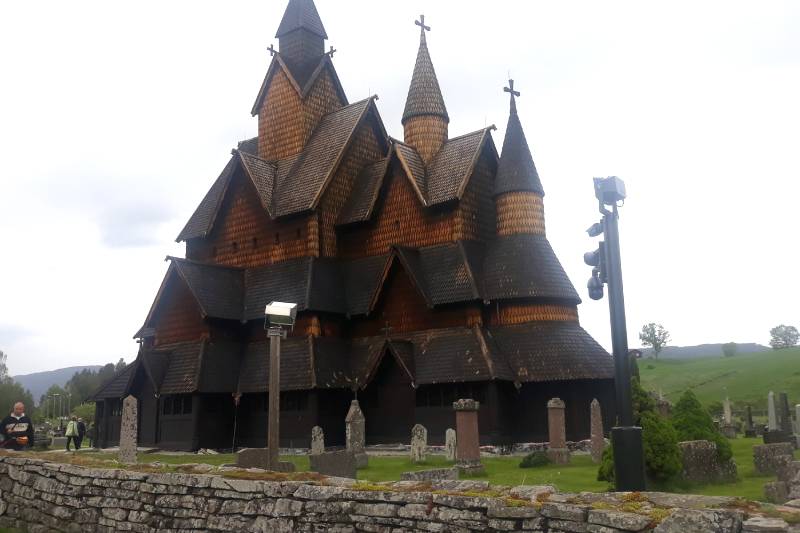
Its large size and distinctive silhouette make it look almost like a wooden cathedral.
Inside, the church combines medieval features with decorative elements added during later centuries.
Despite its age, Heddal remains an active parish church, so religious services and other events can sometimes affect visitor access.
How to visit Heddal Stave Church
Heddal is located near Notodden, in the Telemark region, approximately two hours by car from Oslo.
Its location makes it a convenient destination for a day trip or a stop on a road trip through southern Norway.
The church is generally open for tourist visits during the warmer months, although opening hours may change because of religious ceremonies.
You can find visitor information on Visit Norway’s Heddal Stave Church page.
Best for: impressive wooden architecture and travellers exploring Telemark.
4. Hopperstad Stave Church: Medieval Architecture by Sognefjord
Hopperstad Stave Church is one of Norway’s oldest surviving stave churches, dating back to approximately 1130.
It is located in Vik, a picturesque village surrounded by mountains and farmland near Sognefjord.
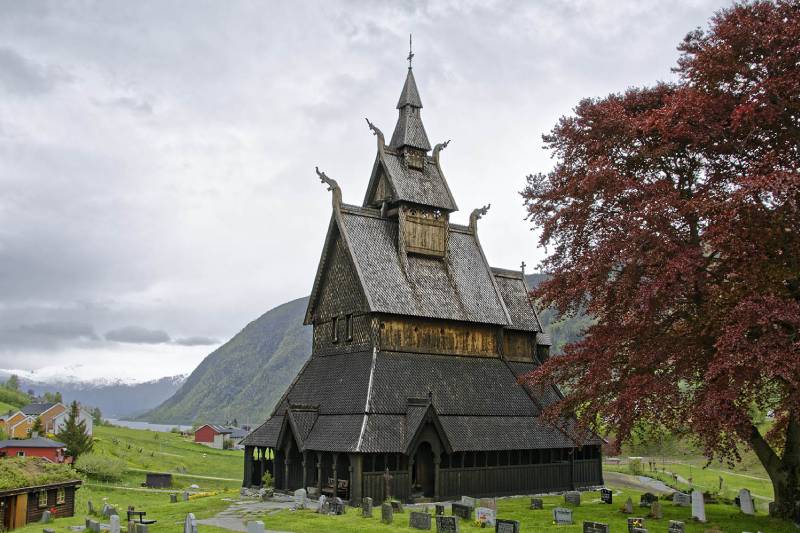
The church is particularly known for its steep wooden roofs, carved dragon heads and beautiful medieval entrance portal.
During the late 19th century, Hopperstad underwent a major restoration led by architect Peter Andreas Blix.
The restoration was inspired partly by Borgund Stave Church, which explains some of the similarities between the two buildings.
Despite these changes, Hopperstad still preserves important medieval features, including parts of its original wooden structure and interior decoration.
How to visit Hopperstad Stave Church
Hopperstad is located in the village of Vik, in the Vestland region.
You can reach Vik by car, bus or seasonal boat connections from Bergen, depending on your itinerary.
The church stands a short distance from the village centre, surrounded by green fields and traditional Norwegian houses.
You can combine your visit with a walk around Vik, the medieval Hove Stone Church or the nearby Sognefjord viewpoints.
Hopperstad usually welcomes visitors between May and September. During the 2026 season, it was open from May 18 to September 19.
Check current ticket prices and opening times on the official Hopperstad Stave Church website.
Best for: medieval craftsmanship, Viking-inspired details and scenic fjord villages.
5. Lom Stave Church: One of Norway’s Most Beautiful Wooden Churches
Located in the mountain village of Lom, Lom Stave Church is one of the largest and most distinctive stave churches in Norway.
It was built around 1158 and has been an important religious landmark for more than 850 years.
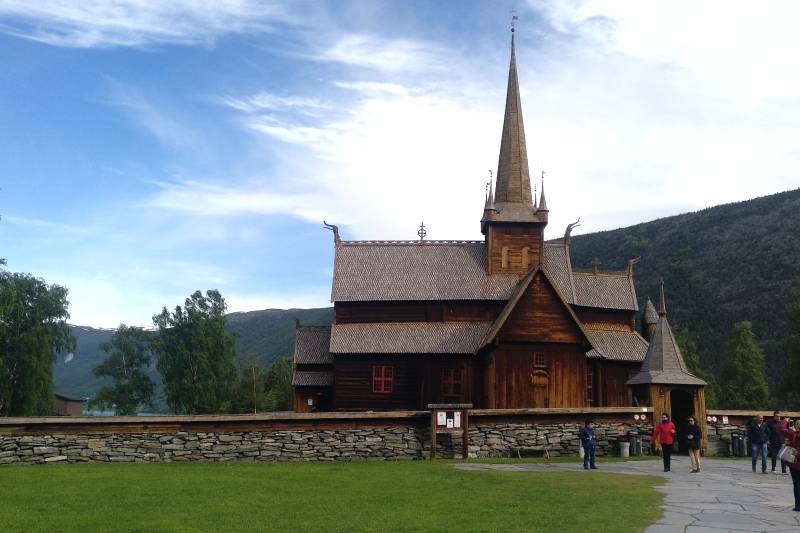
The church originally had a simpler medieval structure, but it was expanded during the 17th century with additional sections and a tower.
Its interior features carved wooden decorations, traditional paintings and a beautiful Baroque pulpit.
The combination of medieval architecture and later artistic additions makes Lom particularly interesting for visitors who enjoy history and traditional Norwegian craftsmanship.
How to visit Lom Stave Church
Lom is located in Innlandet, near the Jotunheimen mountain region.
It can be reached by car from Oslo in approximately five hours, depending on the route and road conditions.
The village is also a popular stop for travellers exploring Jotunheimen National Park and the mountain roads of central Norway.
Lom Stave Church offers guided tours during the summer, allowing visitors to discover its architecture and historic interiors.
As it remains an active parish church, tourist visits may be restricted during services and private ceremonies.
Check visitor information on Visit Norway’s Lom Stave Church page.
Best for: beautiful interiors, traditional craftsmanship and mountain road trips.
6. Eidsborg Stave Church: A Hidden Gem in Telemark
Eidsborg Stave Church is one of Norway’s smallest and oldest surviving stave churches.
Located in Telemark, this charming wooden church is surrounded by green hills and traditional rural landscapes.
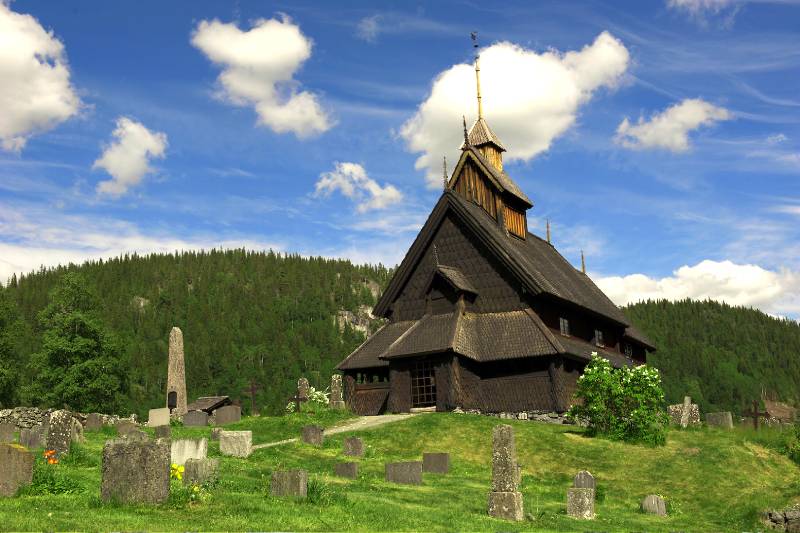
Although it was previously believed to date from the 13th century, recent research suggests that Eidsborg was built before 1150, making it one of the five oldest stave churches in Norway.
Its simple exterior contrasts with its fascinating medieval history.
Inside, you can discover traditional wooden decorations and learn about the church’s connection to Saint Nicholas, known locally as Nikuls.
The church has been carefully restored over the years, preserving its historic character.
How to visit Eidsborg Stave Church
Eidsborg is located in the municipality of Tokke, near Dalen, in the Telemark region.
It is approximately three hours by car from Oslo, making it a possible stop on a longer journey through southern Norway.
The church is located beside the Vest-Telemark Museum Eidsborg, which features exhibitions about local history, traditional crafts and rural life.
During the visitor season, guided tours of the church are usually offered at scheduled times.
A combined ticket provides access to the museum, the outdoor heritage area and the stave church tour.
You can find opening hours and ticket information on the Visit Telemark website.
Best for: quieter historical attractions, small medieval churches and local cultural experiences.
7. Ringebu Stave Church: A Medieval Church Near Lillehammer
Ringebu Stave Church is one of the most distinctive medieval churches in eastern Norway.
Built around 1220, it has been expanded and restored several times throughout its long history.
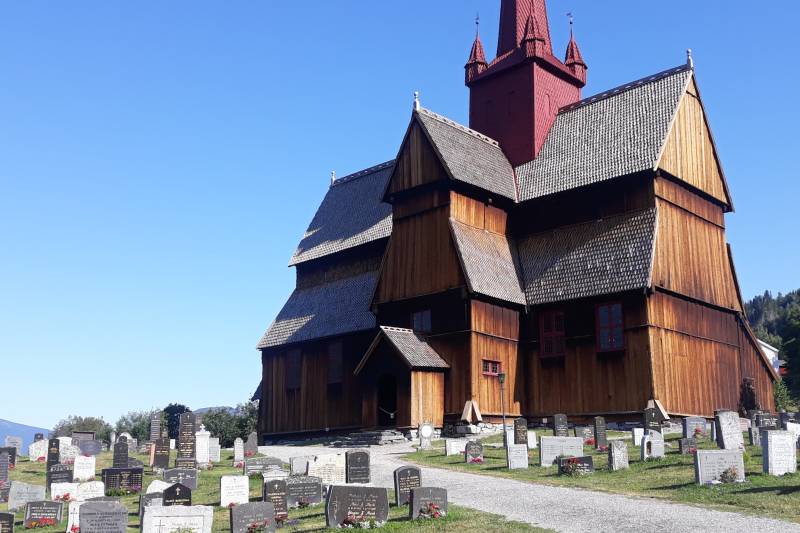
One of its most recognisable features is its tall red tower, added during the 17th century.
The church’s architecture combines original medieval wooden construction with later decorative styles.
Inside, you can find historic wooden details, painted decorations and religious furnishings that reflect the church’s evolution over the centuries.
How to visit Ringebu Stave Church
Ringebu is located in the Gudbrandsdalen Valley, approximately 60 kilometres north of Lillehammer.
The church stands on a hillside overlooking the surrounding countryside, making it a beautiful place to visit during a road trip through the region.
It is accessible by car from Oslo and can also be included in an itinerary towards central Norway.
Ringebu Stave Church is generally open to visitors during summer, with guided tours available at certain times.
Since the church is still used for religious ceremonies, opening hours may vary.
Check visitor information on Visit Norway’s Ringebu Stave Church page.
Best for: traditional Norwegian countryside, medieval architecture and road trips near Lillehammer.
8. Kaupanger Stave Church: A Historic Church Near Sognefjord
Kaupanger Stave Church is one of the largest stave churches in the Sognefjord region and one of the country’s best-preserved examples of medieval wooden architecture.
Built during the 12th century, it stands on a site where two earlier churches once existed.
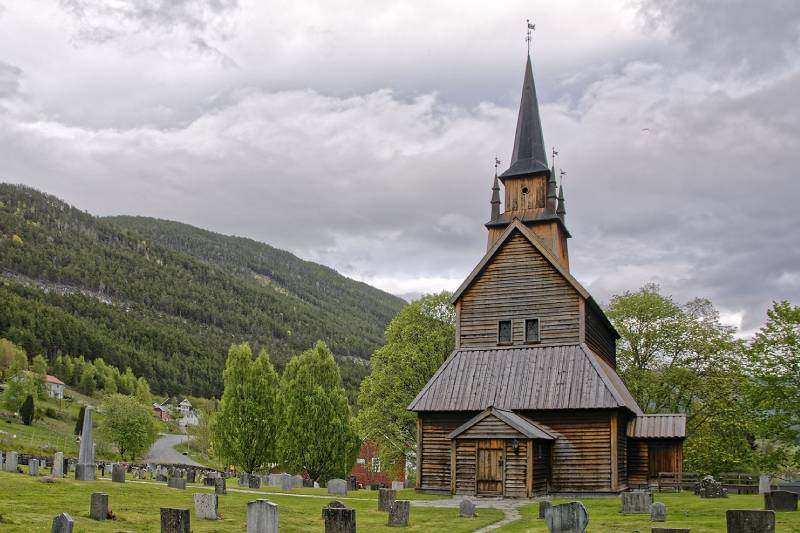
Unlike Borgund and Hopperstad, Kaupanger has a relatively simple exterior.
However, its interior is particularly impressive, with 22 wooden supporting posts creating a long, open space.
These posts are part of the traditional construction technique that gives stave churches their name.
The church remains in use as a parish church, preserving its religious role after more than eight centuries.
How to visit Kaupanger Stave Church
Kaupanger is located in the municipality of Sogndal, near Sognefjord.
It is easily accessible by car from Sogndal and can be combined with visits to other attractions in the region.
The surrounding area has a long history of trade and settlement, making it an interesting destination for travellers exploring Norway’s medieval past.
The church usually offers tourist visits during the summer season, with guided tours available at certain times.
As with other active churches, opening hours may be affected by religious services.
Check visitor information on the official Kaupanger Stave Church website.
Best for: medieval wooden interiors, historical architecture and exploring the Sognefjord region.
Which Stave Church Should You Visit in Norway?
If you only have time to visit one stave church, Borgund is an excellent choice. Its dramatic architecture, dragon carvings and well-preserved medieval structure make it one of the most recognisable examples in Norway.
If you’re interested in UNESCO World Heritage Sites and beautiful fjord scenery, Urnes is particularly special.
For impressive architecture, Heddal stands out as the largest stave church, while Lom is a great option if you’re exploring Norway’s mountain regions.
If you prefer quieter places, Eidsborg and Kaupanger offer fascinating history without the same level of attention as the most famous churches.
Whichever you choose, visiting a stave church is a wonderful way to discover Norway’s medieval history, traditional wooden architecture and cultural heritage.
When Is the Best Time to Visit Norway’s Stave Churches?
The best time to visit most stave churches is between May and September, when tourist access and guided tours are generally available.
Some churches have longer visiting seasons, while others only open during the main summer months.
Although you can often admire their exteriors throughout the year, access to the interiors may be restricted outside the tourist season.
Opening hours and admission prices can also change because of religious ceremonies, restoration work or seasonal arrangements.
Before visiting, check the latest information on the official websites, especially if you plan to travel outside summer.
You can find more information about the country’s surviving churches on Visit Norway’s stave churches guide.