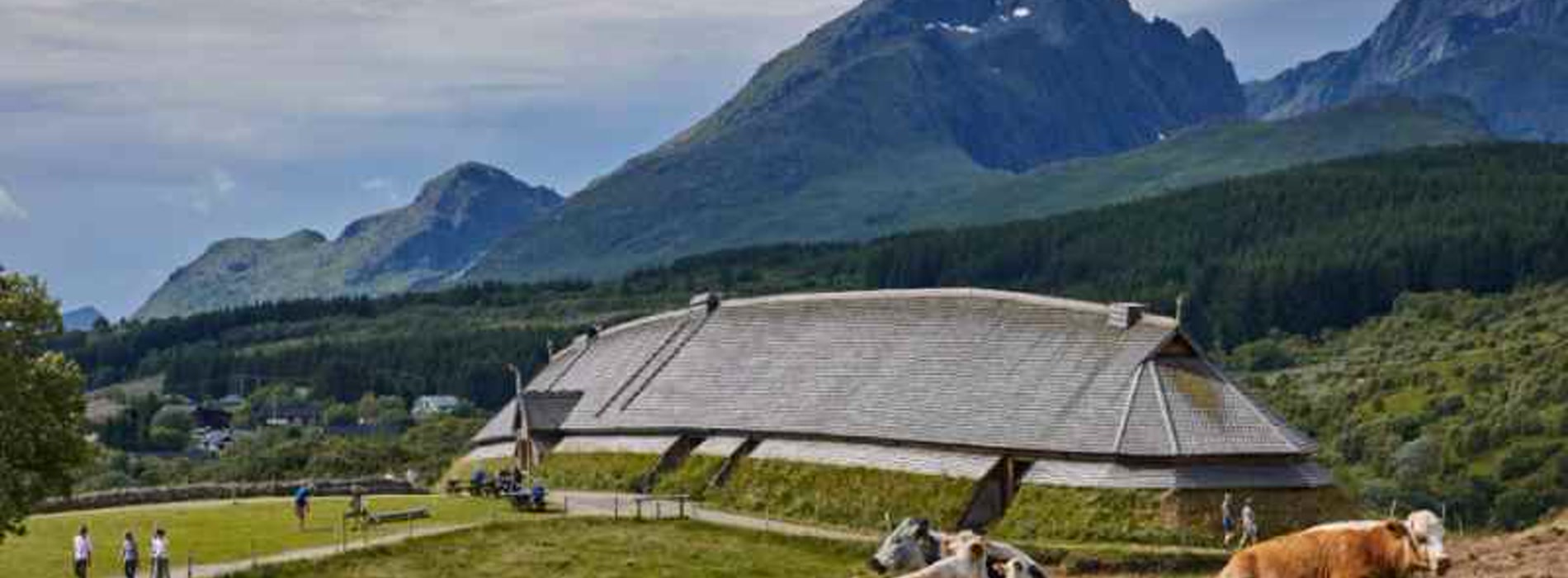
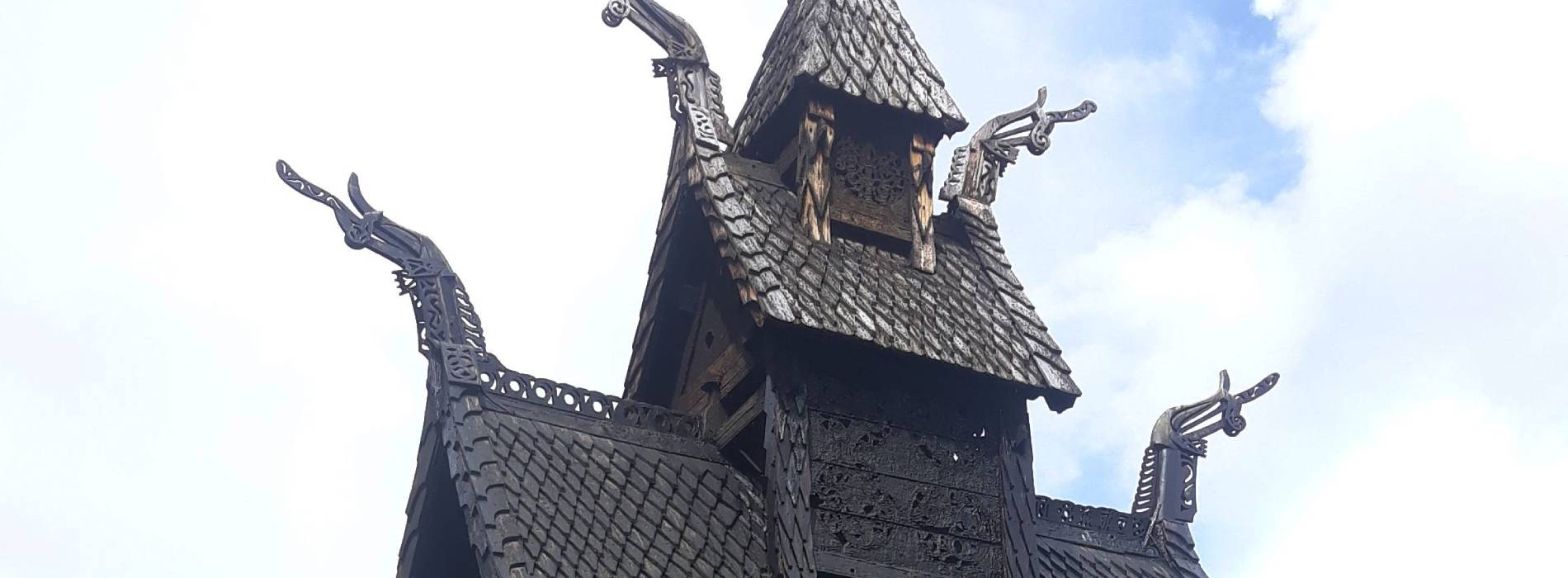
Viking Facts: Where and How Did Vikings Live in Norway?
What Was Norway Like During the Viking Age?
During the Viking Age, between the late 8th and mid-11th centuries, the territory of present-day Norway was far less unified than we might imagine today.
There was no strong, centralised Norwegian state. Instead, the country consisted of a network of small regional kingdoms, local chieftains and scattered communities along the coast and fjords.
Geography played a major role in everyday life. The enormous Scandinavian mountains, long winters and difficulty of travelling overland meant that the sea was the main means of transport and communication.
As a result, most people lived near the coast and navigable fjords, while the inland mountain regions were much less populated.
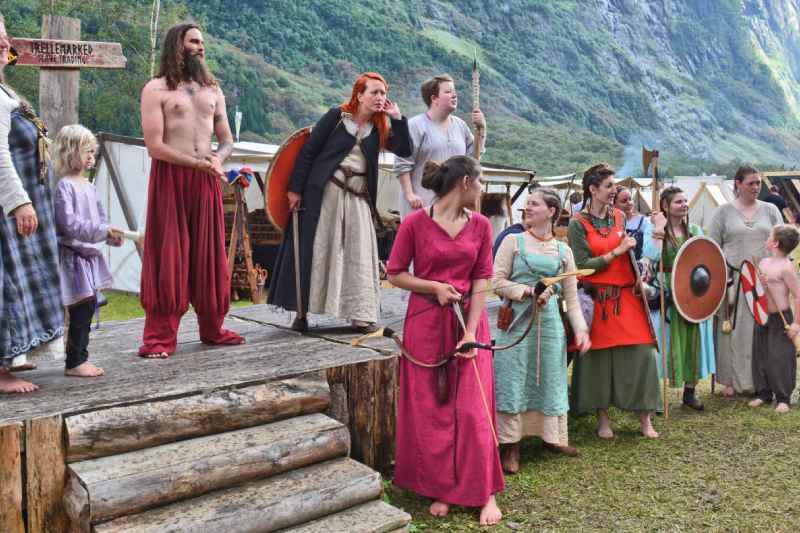
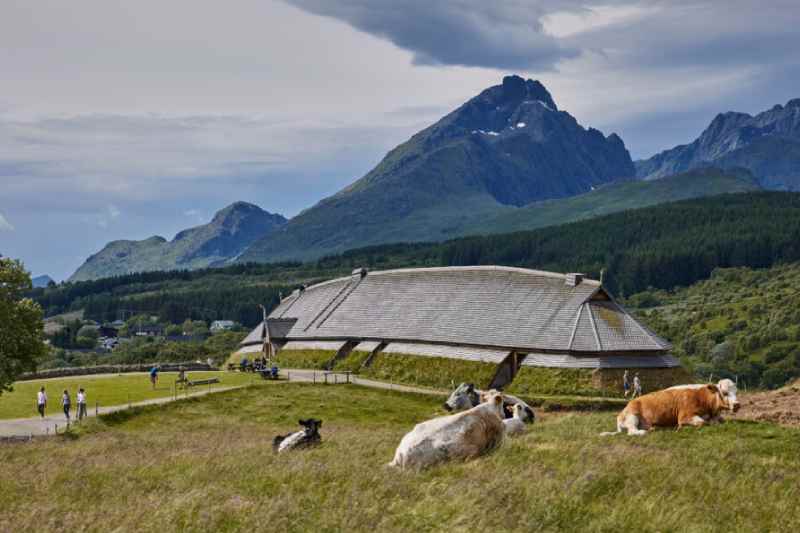
Reconstruction at the open-air museum in Gudvangen.
The Most Populated Regions of Viking Age Norway
During the Viking Age, the most densely populated regions were located in southern and western Norway.
Viken: Around Present-Day Oslo and the Oslofjord
Viken was one of the country’s most important agricultural regions thanks to its relatively fertile land and milder climate.
The area had permanent settlements, trading centres and routes connecting it with Denmark and the rest of the Baltic Sea.
Vestlandet: Norway’s Western Coast
Further west, the coast of Vestlandet, with its large fjords such as Sognefjord and Hardangerfjord, was home to numerous seafaring communities.
This region was particularly important for navigation and Viking expeditions, as its inhabitants depended heavily on the sea for survival.
Many of the families who travelled to Iceland, Greenland and even Canada probably came from these western coastal communities.
Trøndelag and Northern Norway
In central Norway, the Trøndelag region, around present-day Trondheim, was another important population centre.
This was the location of Nidaros, which would eventually become a major political and religious centre.
The region had better farmland than many coastal areas and was connected to both maritime routes and inland Scandinavia.
Further north, settlements were much more scattered.
In Hålogaland, the northern region of Norway, communities mainly depended on fishing, the fur trade and exchanges with the Sámi people.
These northern territories were essential for trading valuable resources, although they were less populated than southern Norway.
How Did Viking Families Live in Norway?
Viking society in Norway was predominantly rural.
The vast majority of people lived on relatively self-sufficient family farms.
Cities, as we understand them today, barely existed. There were small trading centres and seasonal ports, but everyday life revolved around farming, raising livestock and fishing.
On their farms, families grew cold-resistant grains such as barley and oats and raised sheep, goats and cattle.
They had to prepare carefully for winter, storing enough food and fuel to survive several months of darkness and extreme cold.
Geographical isolation also meant that many communities developed a strong sense of independence and their own local traditions.
What Were Viking Houses Like in Norway?
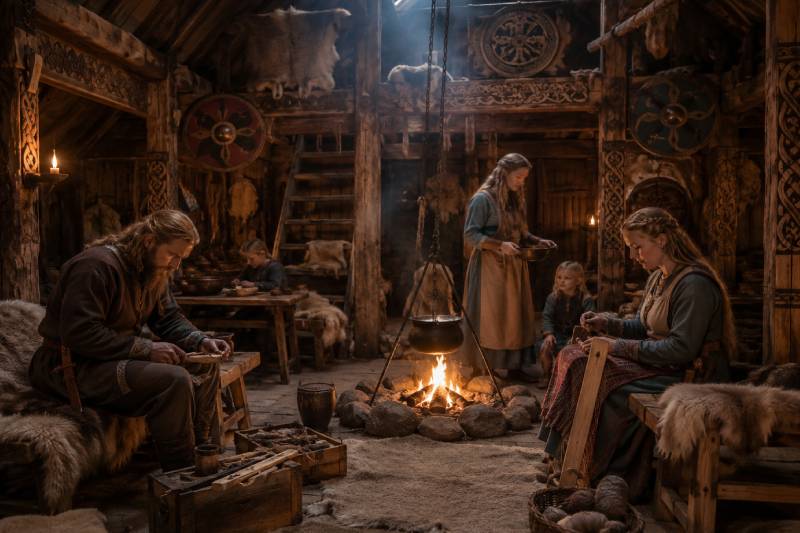
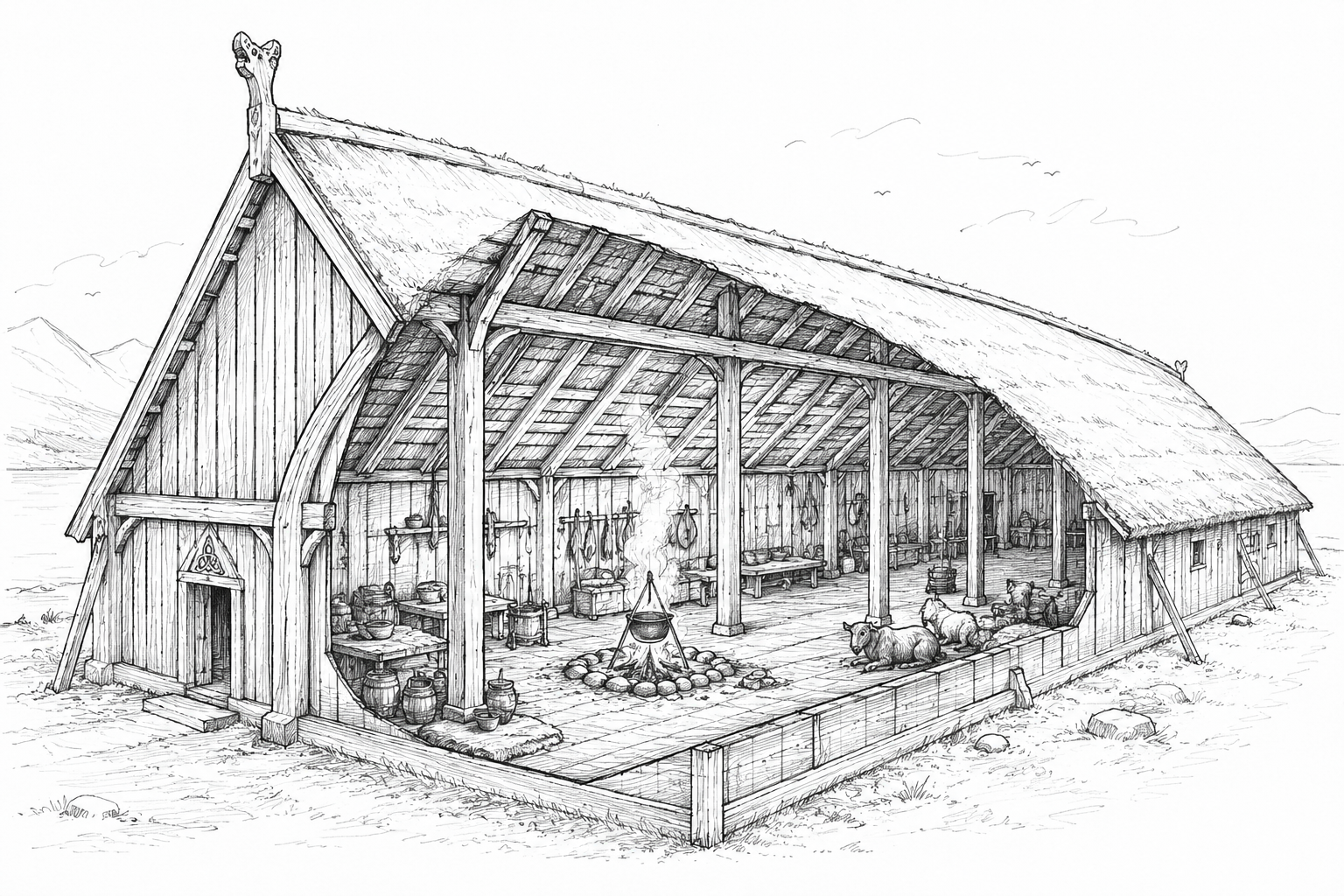
Viking longhouses were the centre of family life.
These wooden and turf buildings could accommodate several generations under one roof, along with animals and supplies.
A central fire provided warmth, light and a place to cook.
Smoke slowly escaped through openings in the roof, meaning the interior was often dark and smoky.
Daily life involved constant work: repairing tools, building ships, weaving clothes, salting fish, preparing leather and maintaining farmland.
Although we mainly associate Vikings with warfare today, for most Norwegians, life was about ensuring the survival of their families in a very challenging environment.
Full-scale reconstruction of a Viking house.
Why Was the Sea So Important to Norwegian Vikings?
The sea played an absolutely central role in Viking life.
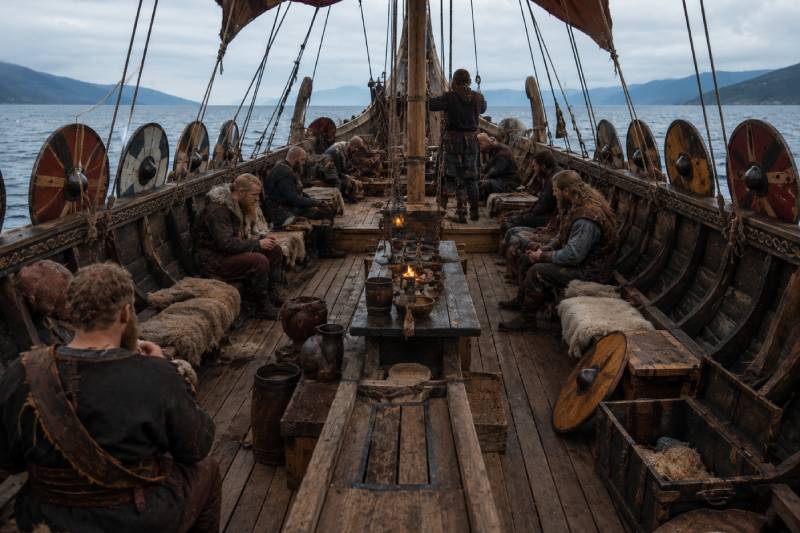
Viking ships were technologically advanced and perfectly adapted to navigating both the fjords and the Atlantic Ocean.
Ships made it possible to trade, fish, explore and carry out military raids.
Norway exported products such as dried fish, furs, iron, timber and walrus ivory, while importing silver, wine, textiles and luxury goods from Europe and the Islamic world.
Norwegian traders and sailors travelled enormous distances for their time, connecting Scandinavia with Constantinople, Baghdad and many regions of Western Europe.
Political Organisation and Viking Kings in Norway
Politically, Norway was divided between chieftains and small regional kings who competed for control of territories and maritime trade routes.
The unification of Norway is traditionally associated with King Harald Fairhair, although the process was gradual and probably much more complex than the sagas suggest.
Family alliances, marriages and oaths of loyalty were fundamental to maintaining power.
There were also assemblies called Things, where free men discussed laws, resolved conflicts and negotiated agreements.
These gatherings played an important political role and helped maintain a certain balance between different local powers.
What Religion Did Norwegian Vikings Follow?
Traditional Norse religion was deeply connected to everyday life.
The gods were not distant figures but forces associated with the weather, fertility, warfare and navigation.
Thor was particularly popular among farmers and sailors, while Odin was more closely associated with wisdom, war and rulers.
Sacrificial rituals and seasonal festivals were also practised, often connected to harvests and the arrival of winter.
However, from the 10th century onwards, Christianity began spreading rapidly, particularly through commercial and political connections with the rest of Europe.
Conversion was gradual, and the two belief systems coexisted for a considerable period.
It’s often said that the Vikings stopped being Vikings when they eventually converted to Christianity, as much of the rest of Europe had already done.
The Role of Women in Viking Society
Women in Viking Age Norway held a relatively prominent position compared with the standards of medieval Europe.
Although society remained patriarchal, many women managed farms, controlled household resources and could inherit property.
When men travelled on trading or military expeditions, women were responsible for managing the family economy.
Icelandic sagas and archaeological evidence suggest that some women held considerable social and economic influence.
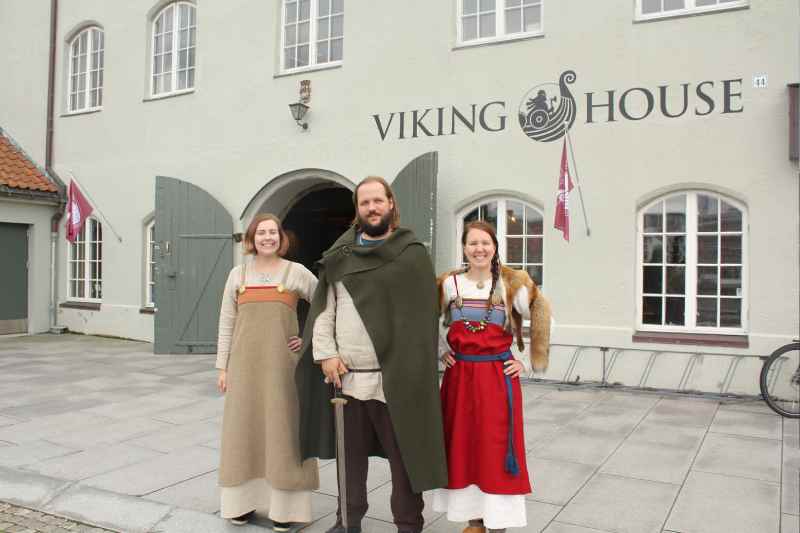
Actors at the Viking Museum in Stavanger.
The Myth of Vikings as Constant Warriors
The modern image of Vikings as warriors who spent their lives fighting is a major oversimplification.
Military expeditions certainly took place and had an enormous historical impact, but only a portion of the population participated in them.
Most people living in Norway never took part in famous raids such as those carried out in England or France.
For the majority of the population, everyday life was dominated by farming, local navigation, fishing and the constant challenge of adapting to Norway’s demanding but spectacular natural environment.
And contrary to the popular image, Vikings didn’t wear horned helmets.
This image became associated with them during the 19th-century Romantic period, including through artwork by Gustaf Malmström that depicted Vikings wearing horns to make them appear more fierce.
Keep reading…