15 Must-See Places in Oslo, Norway
Oslo is Norway’s capital, located in the eastern part of the country, around seven hours by car from the west coast, where you’ll find Norway’s most famous fjords.
Although many travellers come to Norway for its spectacular natural landscapes, Oslo has plenty of interesting places to explore, whether you’re visiting for a weekend or just one day.
As the country’s capital, Oslo is also home to Norway’s main international airport, so there’s a good chance your trip will start here. I’d recommend spending at least one day in Oslo because it’s definitely worth visiting.
But first, a little history.
Norway was part of political unions with Denmark and Sweden for centuries. It wasn’t until 1905 that Norway became fully independent.
Oslo is also located beside a fjord, although it’s quite different from the dramatic fjords of western Norway.
The city’s history dates back to around 1040, when it was founded by King Harald Hardrada. Originally a small Viking settlement, its strategic location beside the fjord made it an important place for trade and defence.
Today, Oslo is a modern, multicultural city with around 700,000 inhabitants, or approximately 1.4 million in the metropolitan area.
Norwegians are known for their relaxed lifestyle and their love of outdoor activities, food and nature, and Oslo offers plenty of opportunities to enjoy all three.
Below, you’ll find the most interesting places to visit in Oslo, arranged so you can explore the city following a walking route.
I’ve also included four attractions further from the centre that require public transport: Vigeland Sculpture Park, the museums on the Bygdøy peninsula, an Oslofjord boat trip and the Grünerløkka neighbourhood.
Vigeland Sculpture Park
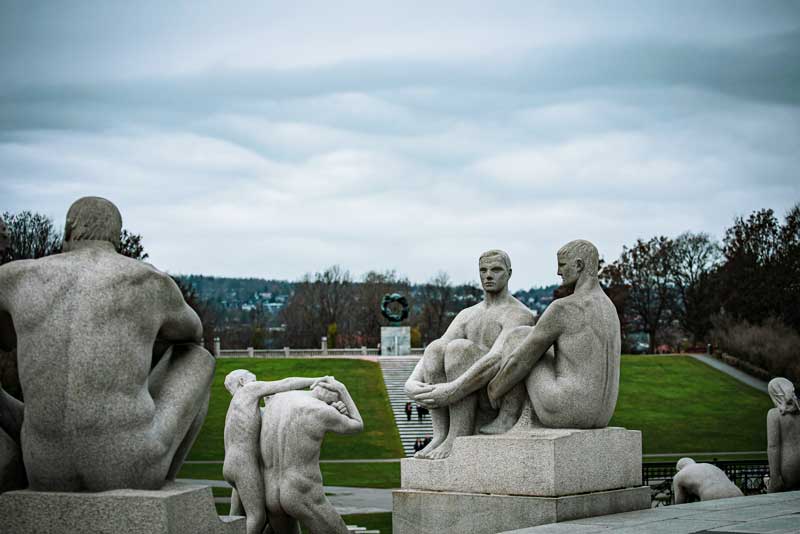
Vigeland Sculpture Park is a unique place located inside Frogner Park (Frognerparken).
It features more than 200 sculptures created by Norwegian artist Gustav Vigeland, exploring human emotions, relationships and different stages of life.
The sculptures are fascinating, showing everything from love and friendship to conflict and ageing.
I’d recommend visiting early in the morning, when the park is quieter and you can enjoy its special atmosphere without the crowds.
Vigeland Sculpture Park is located in the Majorstuen area, approximately 3 kilometres from central Oslo.
Opening hours: Open 24 hours a day, throughout the year.
Admission: Free.
How to Get There
By tram: From the area around Oslo Central Station, take tram line 12 or 15 towards Vigelandsparken.
By metro: Take any metro line to Majorstuen station, then walk approximately 10 minutes to the park.
Oslo Opera House (Operahuset)
After visiting Vigeland Sculpture Park, take the tram back towards Oslo Central Station (Oslo S).
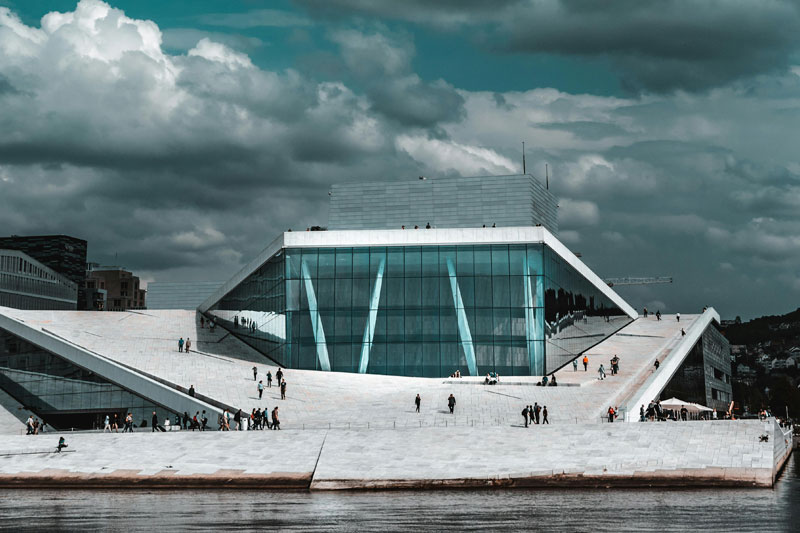
From there, walk towards the waterfront, where you’ll find the Oslo Opera House, one of the city’s most recognisable modern landmarks.
The building is home to the Norwegian National Opera and Ballet, offering a varied programme of opera, ballet and concerts.
What makes the Opera House particularly interesting is its architecture.
The building was designed to resemble an iceberg emerging from the fjord, connecting the land and water through its sloping white surfaces.
One of the best things about visiting is that you can walk directly onto its roof and enjoy panoramic views of the city and Oslofjord.
You can also explore the public areas inside the building.
Admission: Access to the building’s public areas and roof is free.
Tickets for performances vary in price, but some start at around 100 NOK.
Opening hours:
- Monday to Saturday: 10 AM–6 PM.
- Sunday: 12 PM–6 PM.
The Barcode Project
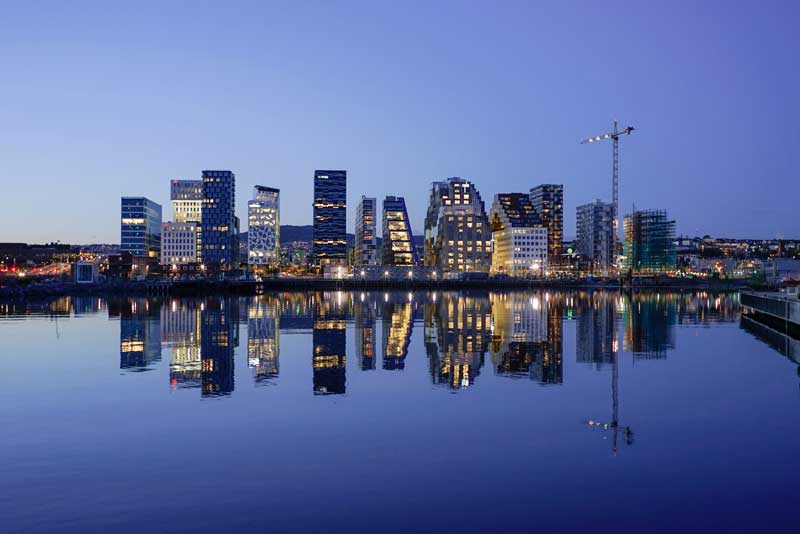
Just a few minutes’ walk behind the Opera House, in an area that was once part of Oslo’s old harbour, you’ll find the modern architectural development known as the Barcode Project.
It’s a collection of tall, narrow buildings that resemble a barcode when viewed from a distance.
The buildings have different heights, shapes and façades, creating an interesting contrast against the surrounding cityscape.
Today, they contain offices, apartments and commercial spaces.
The photograph was taken at sunset, when the light highlights the contrast between the different building materials and the fjord.
MUNCH Museum
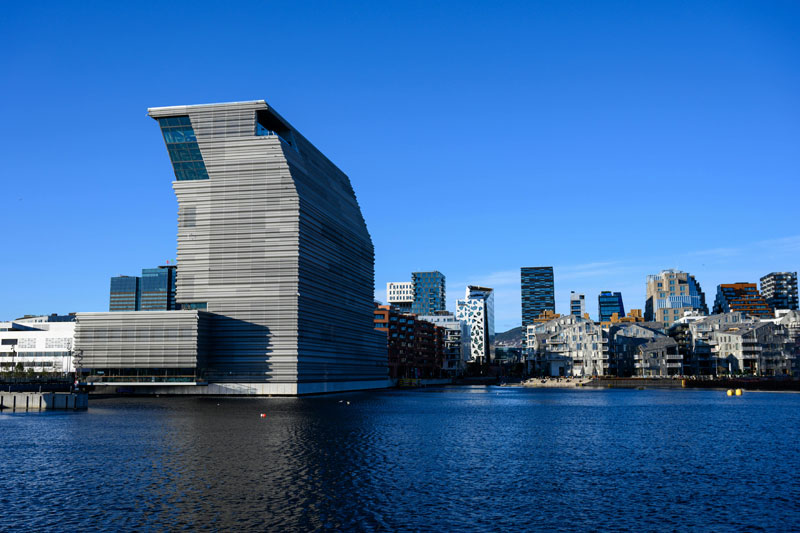
The MUNCH Museum houses the world’s largest collection of works by Norwegian artist Edvard Munch, including his most famous painting, The Scream.
The museum offers a fascinating introduction to the artist’s life and work, with exhibitions exploring his paintings, drawings and artistic development.
But the building itself is also worth seeing.
Designed by Spanish architect Juan Herrero, its glass façade and distinctive tilted structure dominate the waterfront in the Bjørvika district.
It’s one of Oslo’s most impressive examples of contemporary architecture.
Opening hours: Daily, 10 AM–6 PM.
Admission: 160 NOK. Free with the Oslo Pass.
The museum is approximately 10 minutes on foot from the Opera House.
Karl Johans Gate
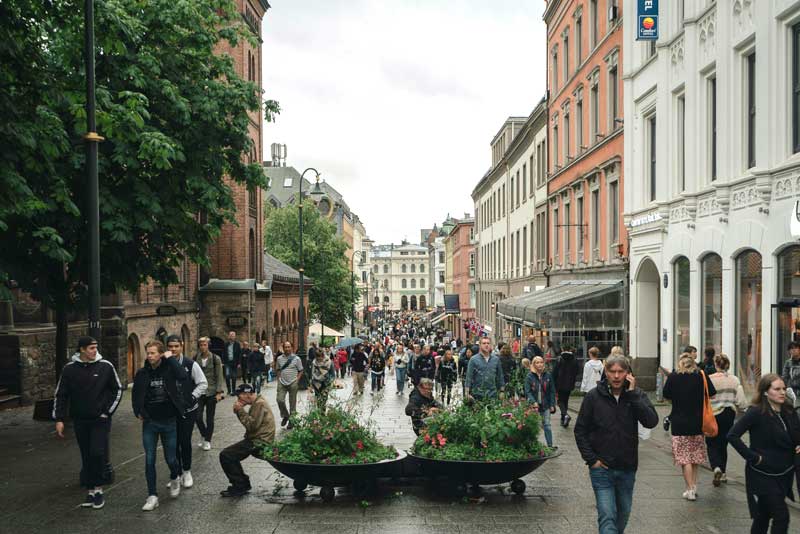
Karl Johans gate is Oslo’s main street, connecting Oslo Central Station with the Royal Palace.
This lively pedestrian avenue is lined with shops, restaurants, cafés and some of the city’s most important buildings.
Along the way, you’ll pass landmarks such as the Norwegian Parliament and the National Theatre.
It’s a great place to enjoy Oslo’s urban atmosphere, browse the shops or stop for a coffee while exploring the city centre.
Akershus Fortress
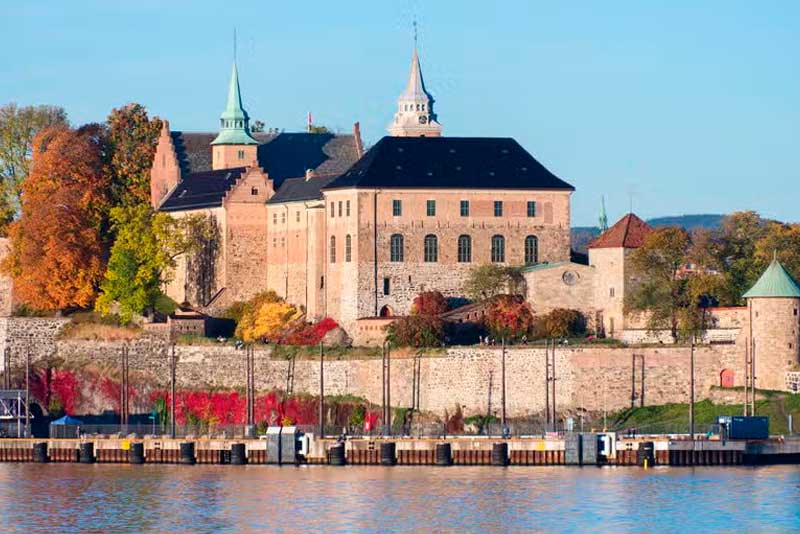
Akershus Fortress is an impressive medieval fortress built in the 13th century.
Throughout its long history, it has witnessed some of the most important events in Norway’s past.
Located on a hill beside Oslofjord, the fortress offers beautiful views of the harbour and surrounding waterfront.
You can explore its historic grounds, walk along the defensive walls and admire the architecture.
Inside the fortress, you’ll also find the Norwegian Resistance Museum, dedicated to Norway’s occupation during the Second World War.
The museum documents the German occupation and the activities of Norwegian resistance groups between 1940 and 1945.
Opening hours: Daily, 10 AM–4 PM.
Admission: Access to the fortress walls is free. The museum entrance costs 80 NOK.
The Royal Palace (Det Kongelige Slott)
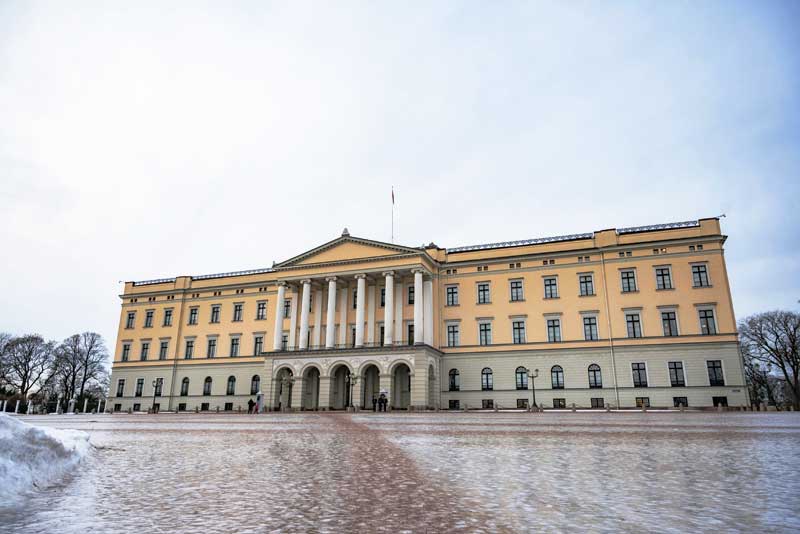
At the end of Karl Johans gate, you’ll find the Royal Palace, the official residence of Norway’s royal family.
This elegant 19th-century building is surrounded by spacious gardens, making it a lovely place for a walk.
Although the palace interior is only open to visitors during the summer months, you can admire its exterior throughout the year.
One of the most popular attractions is the changing of the guard, which takes place outside the palace.
The surrounding gardens are open all year, while guided tours of the interior are normally available from June to August.
National Museum of Art, Architecture and Design
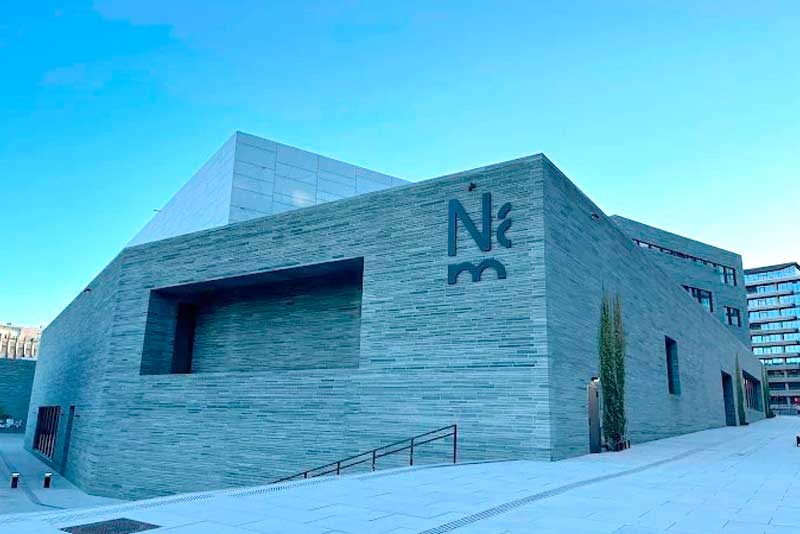
The National Museum is the largest art museum in the Nordic countries, bringing together an impressive collection of classical and contemporary art, design and architecture.
Its exhibitions include paintings, sculptures, decorative arts and objects representing different periods and artistic movements.
One of its most famous works is a version of Edvard Munch’s The Scream.
The museum is an excellent place to discover Norwegian art alongside important international works.
Opening hours: Tuesday to Sunday, 10 AM–5 PM.
Admission: 180 NOK.
You can reach the museum by taking tram lines 11, 17 or 18 to Tullinløkka.
Oslo City Hall
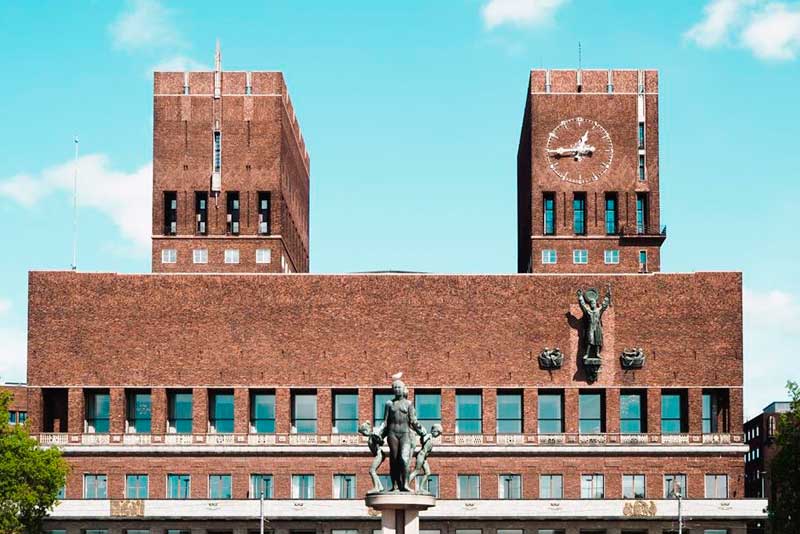
Oslo City Hall (Oslo Rådhus) is one of the capital’s most recognisable buildings.
Opened in 1950, it stands out for its impressive functionalist architecture and its important role in Oslo’s political and cultural life.
The building is internationally famous because the Nobel Peace Prize ceremony takes place here every year on December 10.
Inside, visitors can discover impressive murals and artworks depicting Norwegian history, culture and society.
Opening hours: Monday to Friday, 9 AM–4 PM.
Guided tours are available in several languages.
Admission: Free.
This makes Oslo City Hall an interesting and accessible stop during your visit.
Nobel Peace Center
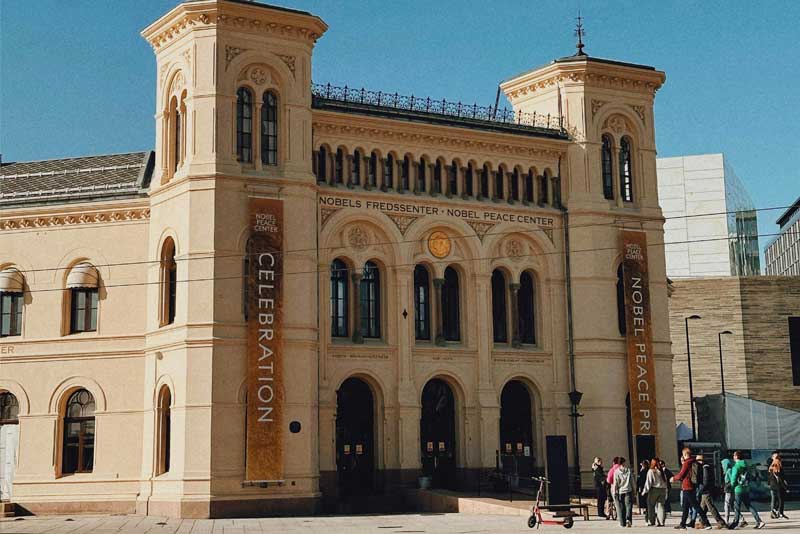
The Nobel Peace Center (Nobels Fredssenter) is one of Oslo’s most interesting cultural attractions.
The museum is dedicated to the Nobel Peace Prize laureates and the ideas that have helped promote justice, human rights and peace around the world.
The building was originally a railway station.
Inside, you’ll find interactive exhibitions telling the stories of important Nobel Peace Prize winners, including Martin Luther King Jr., Malala Yousafzai and Nelson Mandela.
The exhibitions explore their achievements and the causes they have supported.
Opening hours: Tuesday to Sunday, 10 AM–6 PM.
Admission: 140 NOK.
Children under 16 enter free, and admission is included with the Oslo Pass.
Aker Brygge Waterfront and Tjuvholmen
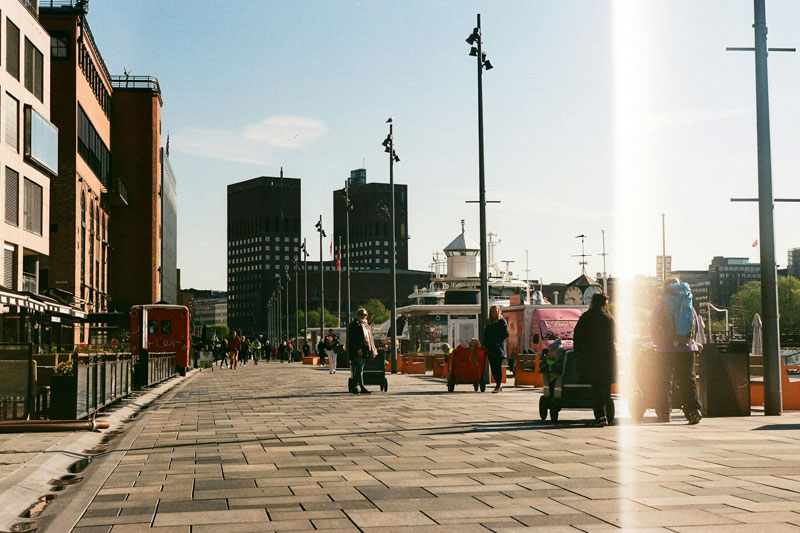
Aker Brygge is one of Oslo’s most popular waterfront areas, filled with restaurants, shops and art galleries.
The area was once an industrial shipyard, but during the 1980s it began a major transformation.
Today, it’s a fashionable and relatively upscale district, popular with both locals and visitors.
It’s a great place to walk along the waterfront, enjoy a meal or relax at one of the outdoor terraces.
At the end of Aker Brygge, cross the pedestrian bridge to reach Tjuvholmen, another interesting neighbourhood.
Its name means Thief Island, reflecting its past as a place associated with smugglers and criminals.
Today, it’s completely different: a sophisticated area known for its contemporary art, modern architecture and stylish waterfront buildings.
Places to Visit Outside Central Oslo
Museums on the Bygdøy Peninsula
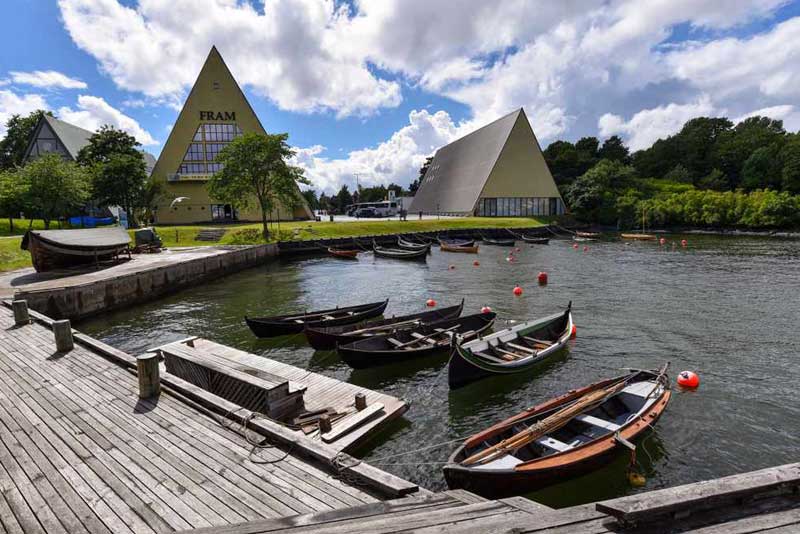
The Bygdøy peninsula is home to some of Oslo’s most interesting museums.
It’s a great place to visit if you’re interested in Norwegian history, culture and exploration.
How to Get to Bygdøy
By ferry: During summer, you can take a ferry from the harbour near Oslo City Hall. The service is included with the Oslo Pass.
By bus: Take bus line 30 from Oslo Central Station or the City Hall area.
By car: Parking is available near the museums, although spaces can fill up quickly during the high season.
Viking Ship Museum
The Viking Ship Museum houses some of the best-preserved Viking ships in the world, offering a fascinating insight into the lives of the sailors, explorers and warriors who shaped Norwegian history.
The Viking Ship Museum in Oslo is currently closed for renovations until 2027.
Norwegian Museum of Cultural History
Located on the Bygdøy peninsula, the Norwegian Museum of Cultural History (Norsk Folkemuseum) is one of Oslo’s most fascinating attractions.
This open-air museum takes you on a journey through time, showing how Norwegians lived from the Middle Ages to the 20th century.
You can explore historic buildings and discover traditional Norwegian customs and everyday life.
However, if you’re planning to travel extensively around Norway, I wouldn’t necessarily prioritise this museum, as you’ll have other opportunities to see traditional villages and historic buildings.
Fram Museum
The Fram Museum is dedicated to Norway’s history of polar exploration, making it a fascinating place for anyone interested in adventure and science.
Its main attraction is the famous polar ship Fram, which played an important role in some of the most significant Arctic and Antarctic expeditions of the late 19th and early 20th centuries.
Kon-Tiki Museum
The Kon-Tiki Museum is dedicated to the expeditions of Norwegian explorer Thor Heyerdahl.
Its main attractions include the original Kon-Tiki raft, which Heyerdahl and his crew sailed from South America to Polynesia in 1947, and the Ra II reed boat.
The museum explores Heyerdahl’s theories about early ocean voyages and the cultures that inspired his expeditions.
Grünerløkka Neighbourhood
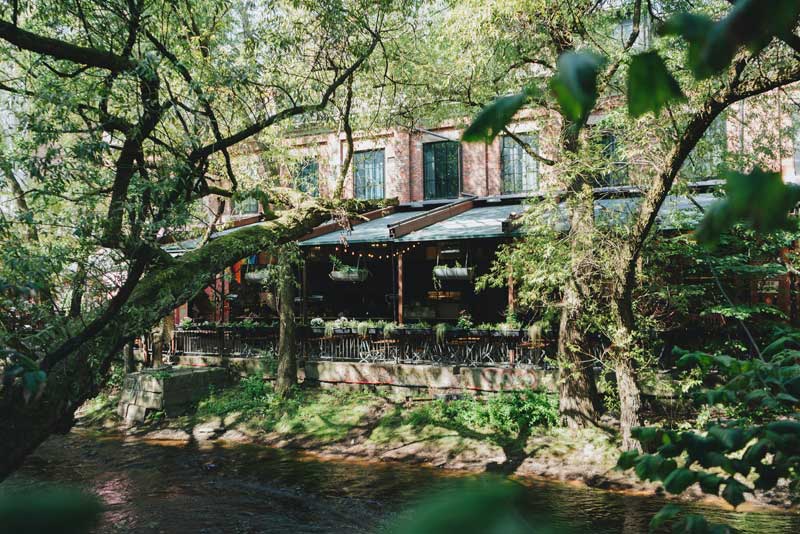
Grünerløkka is Oslo’s hipster neighbourhood, located northeast of the city centre.
During the 19th century, the area was home to factories and working-class housing.
However, from the 1980s onwards, Grünerløkka gradually transformed into a bohemian and fashionable neighbourhood, attracting artists, students and young entrepreneurs.
Today, it’s one of Oslo’s liveliest and most popular districts.
The neighbourhood combines industrial history, street art, independent shops and a fantastic selection of cafés and restaurants.
It’s a great place to experience a more local side of Oslo.
How to Get There
By tram: Lines 11, 12 and 13 stop in the neighbourhood, including at Schous plass and Olaf Ryes plass.
On foot: You can walk from Oslo Central Station in approximately 20–25 minutes.
Holmenkollen
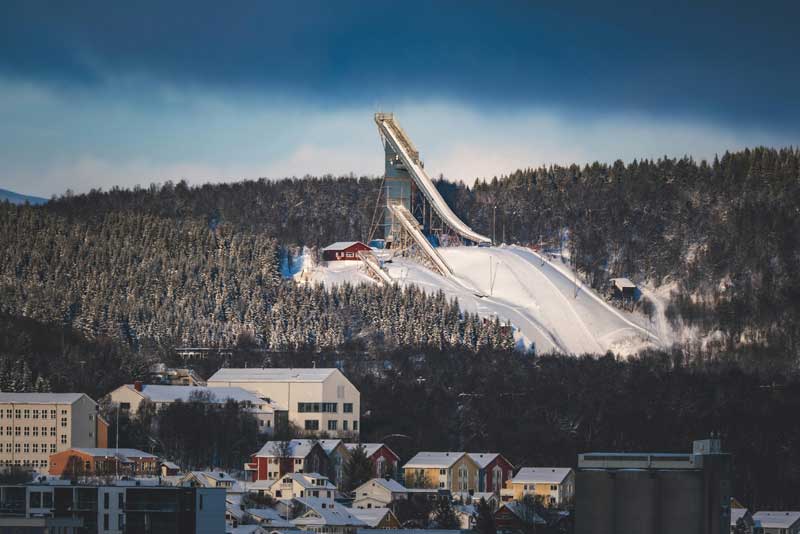
Holmenkollen is much more than a ski jump: it’s a symbol of Norway’s love of winter sports.
Its history dates back to 1892, when the first ski jumping competition was held here.
Since then, Holmenkollen has become one of the most important destinations for skiing enthusiasts, hosting Nordic skiing World Cup events and competitions during the 1952 Winter Olympics.
The current ski jump, opened in 2010, is a striking example of modern architecture and one of the most advanced structures of its kind.
You can visit the Ski Museum and climb the observation tower for panoramic views of Oslo and the surrounding landscape.
Summer opening hours: 10 AM–5 PM.
Admission: 160 NOK for adults and 80 NOK for children.
Entry is free with the Oslo Pass.
How to Get to Holmenkollen
Holmenkollen is approximately 30 minutes from central Oslo.
By metro: Take line 1 towards Frognerseteren and get off at Holmenkollen station. From there, it’s a 10–15-minute uphill walk to the ski jump.
By car: Parking is available near the complex, although spaces may be limited during major events.
Oslofjord
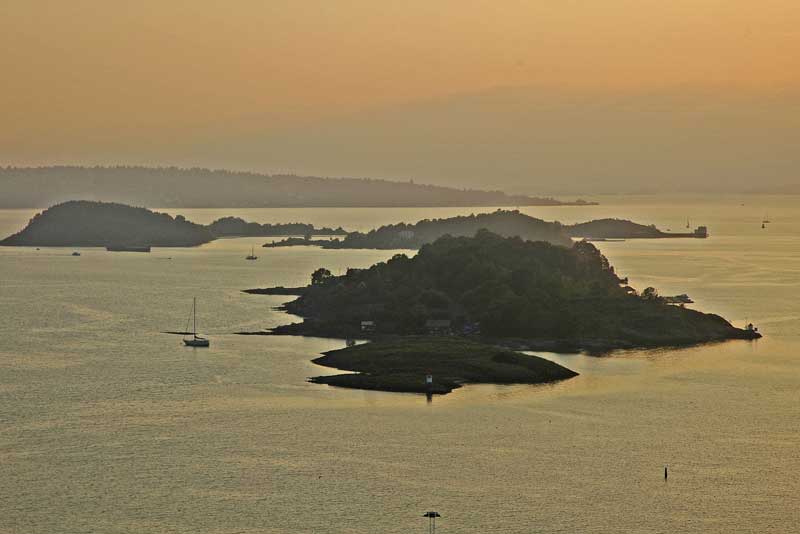
Oslofjord is quite different from the dramatic fjords you’ll find in western Norway.
Instead of steep vertical cliffs, the landscape is gentler, with picturesque islands, small beaches and traditional coastal houses.
The fjord is also an important historical area, with landmarks such as Akershus Fortress and archaeological sites connected to the Viking Age.
If you want to explore Oslofjord by boat, there are several options.
Sightseeing Cruises
You can join boat trips lasting between one and three hours, sailing past some of the islands and coastal landscapes surrounding Oslo.
Some cruises include dinner or guided commentary explaining the history of the fjord.
Prices: Approximately 250–400 NOK (€20–35) per person, depending on the duration and type of excursion.
Public Ferries
Another option is to take one of the regular public ferries connecting Oslo with nearby islands such as Hovedøya and Gressholmen.
These ferries are part of the city’s public transport network, so you can use the Oslo Pass or buy a regular ticket.
They depart from the harbour area near City Hall.
This is a convenient way to enjoy the fjord without booking a sightseeing cruise.
How to Get to Norway’s Famous Fjords from Oslo
If you’re planning to visit the spectacular fjords of western Norway, there are several ways to get there from Oslo, depending on your interests, budget and available time.
By Train
One of the most popular options is the Oslo–Bergen Railway, which crosses spectacular mountain landscapes and areas surrounded by glaciers.
From Bergen, often called the Gateway to the Fjords, you can explore famous fjords such as Sognefjord and Hardangerfjord.
You can also stop at Myrdal and take the scenic Flåm Railway (Flåmsbana), which descends through a beautiful mountain valley to the picturesque village of Flåm.
By Plane
If you’re short on time, flying is one of the quickest options.
There are direct flights from Oslo to Bergen and Ålesund, two cities that provide convenient access to some of Norway’s most famous fjords.
Flights take less than an hour, allowing you to spend more time exploring places such as Geirangerfjord and Nærøyfjord.
By Rental Car
Renting a car is a great option if you enjoy travelling at your own pace.
Routes from Oslo towards western Norway, including the E16 towards Bergen, offer beautiful scenery and opportunities to stop at viewpoints and small villages along the way.
The drive takes approximately seven hours, depending on the route.
By Bus
Long-distance buses are another possibility, although I wouldn’t particularly recommend them if you only have a few days in Norway.
There are direct connections from Oslo to destinations such as Flåm and Bergen.
While bus journeys generally take longer than travelling by train or car, they can offer good value for money.