8 Best Things to Do in Haugesund, Norway (With Map)
8 Best Things to Do in Haugesund, Norway (With Map)
Haugesund is a small coastal city in western Norway, located between Bergen and Stavanger. Although it isn’t as famous as the country’s fjords or mountain landscapes, it’s an interesting place to stop during a road trip along the Norwegian coast.
With around 39,000 inhabitants, Haugesund has a compact city centre, a lively waterfront and a fascinating connection to Norway’s Viking history.
According to Norse tradition, Harald Fairhair, considered Norway’s first king, was buried near Haugesund. The surrounding region was an important centre of power during the Viking Age, and you can still visit historical sites connected to this period.
The city also has a strong maritime heritage. During the 19th century, herring fishing helped transform Haugesund into an important trading and shipping centre.
Today, Haugesund is known for its harbour, cultural events and the Norwegian International Film Festival, held every August.
But is Haugesund worth visiting?
If you’re travelling between Bergen and Stavanger, I’d recommend stopping for a few hours. The city itself is easy to explore, and if you’re interested in Viking history, nearby Avaldsnes makes the visit even more worthwhile.
Here are 8 things to see and do in Haugesund, along with practical tips and a recommended one-day itinerary.
1. Visit Haraldshaugen: Norway’s National Monument
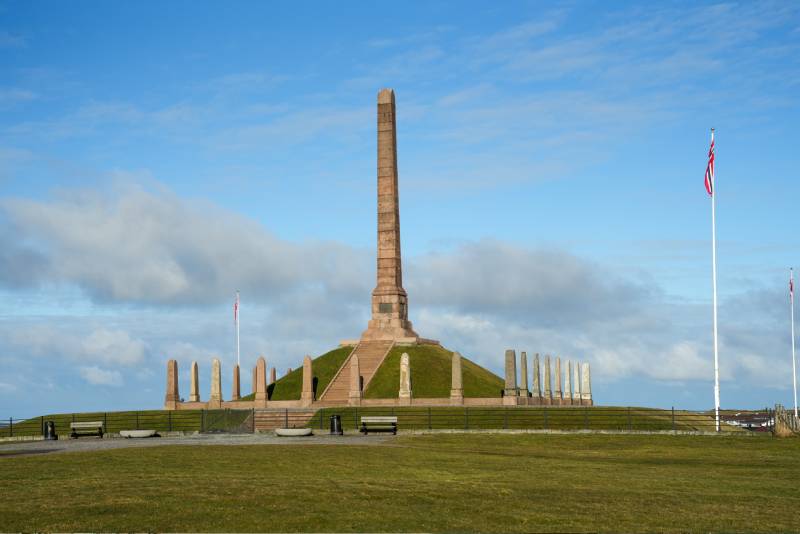
Haraldshaugen is one of Haugesund’s most important historical landmarks.
Located approximately two kilometres north of the city centre, this national monument commemorates the unification of Norway under King Harald Fairhair during the Viking Age.
The monument was built in 1872 to celebrate the traditional thousandth anniversary of Norway’s unification.
It consists of a large stone mound topped by a 17-metre granite obelisk, surrounded by 29 standing stones representing Norway’s historical counties.
According to medieval sagas, Harald Fairhair was buried in this area, although the exact location of his grave has never been conclusively established.
The monument is also an interesting place to learn about Norway’s national identity and the stories surrounding its early kings.
How to visit Haraldshaugen
Haraldshaugen is located in the Gard area, just north of central Haugesund.
You can reach it in several ways:
- On foot: approximately 30–40 minutes from the city centre, depending on your starting point.
- By bus: take a local bus towards Gard and walk to the monument.
- By car: parking is available nearby.
The monument is outdoors and can be visited throughout the year.
Admission is free.
If you enjoy walking, you can combine your visit with a section of the coastal path and admire the sea views along the way.
Best for: Viking history, photography and short coastal walks.
Find Haraldshaugen on Google Maps
2. Walk Along Haugesund’s Waterfront
The waterfront is the heart of Haugesund and one of the nicest places to explore during a visit.
The area around Smedasundet is lined with restaurants, cafés, boats and colourful buildings overlooking the water.
Haugesund has a long connection with the sea, particularly through fishing and shipping, and the harbour remains an important part of everyday life.
Take some time to walk along the waterfront, watch the boats and enjoy the atmosphere.
If you’re visiting during summer, you’ll often find people sitting outside enjoying the long daylight hours.
What to see around the harbour
One of the most recognisable landmarks is Risøy Bridge, which connects the city centre with Risøy Island.
From the bridge, you’ll enjoy beautiful views of the harbour and Smedasundet.
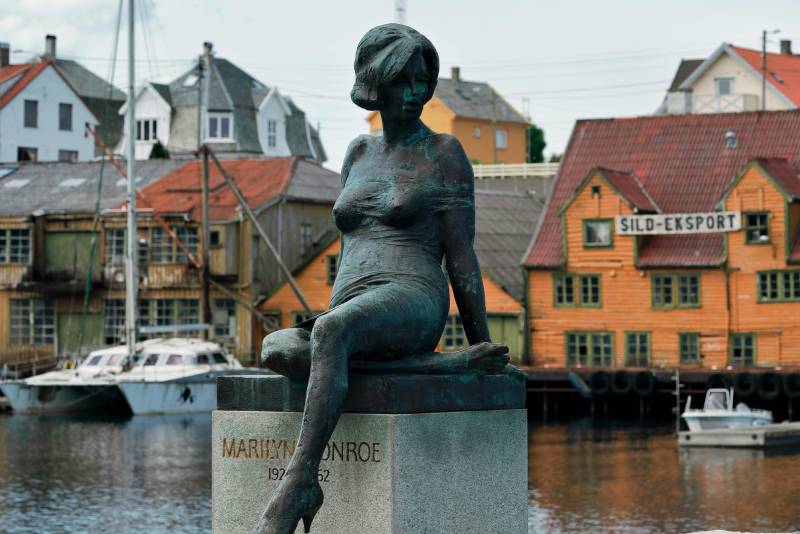
You can also find a statue of Marilyn Monroe along the waterfront.
The statue was installed in 1994 because of a local belief that the actress had family roots in the Haugesund region. That supposed connection was later disproven, but the sculpture remains a curious landmark.
Cultural events in Haugesund
Haugesund hosts several cultural events throughout the year.
Two of the best known are:
- Norwegian International Film Festival: held in August, bringing together Norwegian and international film professionals.
- Sildajazz: an annual jazz festival that fills the city with concerts and cultural activities.
If your visit coincides with one of these festivals, you’ll find a particularly lively atmosphere.
Best for: waterfront walks, restaurants, photography and experiencing local life.
3. Explore Haraldsgata: Haugesund’s Main Shopping Street
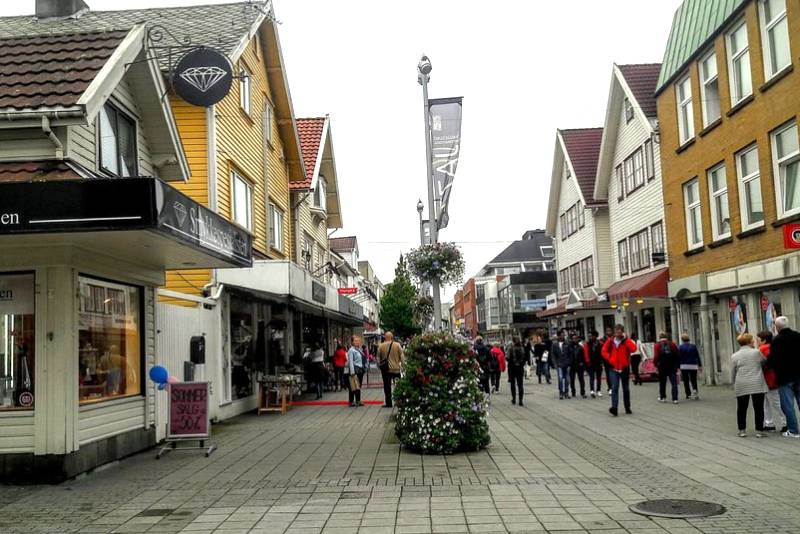
Haraldsgata is the main shopping street in Haugesund and one of the easiest places to explore while walking through the city centre.
Much of the street is pedestrianised, making it a pleasant place to browse shops, stop for a coffee or simply enjoy the atmosphere.
You’ll find local businesses, familiar Norwegian brands, cafés and restaurants.
There are also several colourful buildings and small architectural details worth noticing as you walk.
Haraldsgata is especially lively during the summer months, when the city hosts outdoor events and cultural activities.
During December, Christmas lights and decorations create a different atmosphere.
What to do on Haraldsgata
You don’t need a specific plan to enjoy this part of Haugesund.
You can explore the shops, stop at a bakery for coffee and a traditional Norwegian pastry, or take a short break before continuing your sightseeing.
It’s also a convenient place to find restaurants and services during your visit.
Best for: shopping, cafés and exploring Haugesund at a relaxed pace.
4. Visit Our Saviour’s Church (Vår Frelsers Kirke)
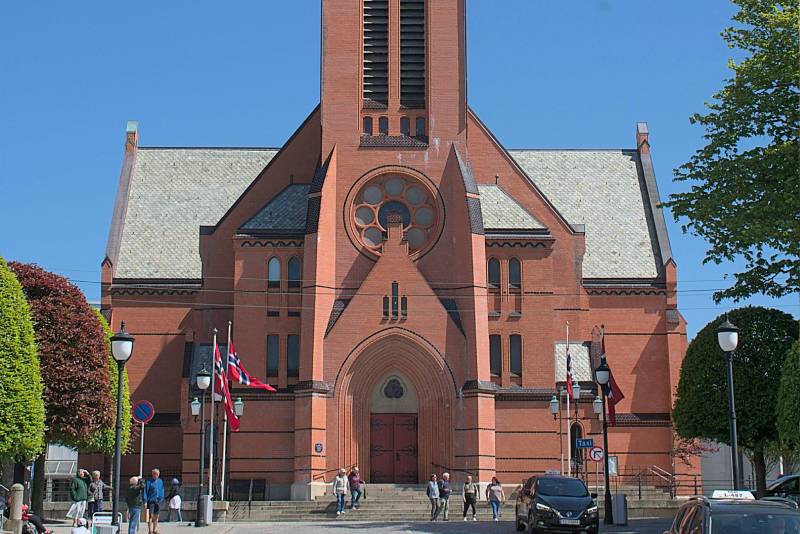
Our Saviour’s Church (Vår Frelsers kirke) is one of the most recognisable buildings in central Haugesund.
Built in 1901, this large brick church stands out for its Neo-Gothic architecture and impressive tower.
Inside, you’ll find colourful stained-glass windows, decorative woodwork and a beautiful altarpiece.
The church’s interior is relatively simple compared with some European cathedrals, but its architectural details make it an interesting stop.
One of its most notable features is the large chandelier designed by Norwegian artist Emanuel Vigeland in 1916.
How to visit Our Saviour’s Church
The church is located on Skåregata, close to Haraldsgata and the main shopping streets.
Its central location makes it easy to include in a walking tour of Haugesund.
The church remains an active place of worship, so visitor access may be restricted during services, weddings and other religious ceremonies.
Even if you can’t enter, it’s worth stopping to admire the exterior.
Best for: architecture, history and a short sightseeing stop.
5. Discover the Arquebus War History Museum
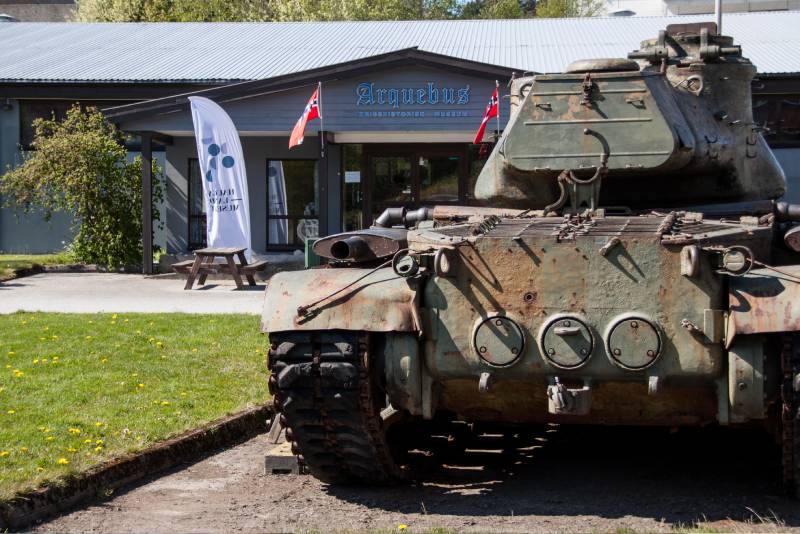
If you’re interested in the Second World War, the Arquebus War History Museum is one of the most interesting historical attractions near Haugesund.
Located in Førresfjorden, approximately nine kilometres east of the city, it’s one of Norway’s largest museums dedicated to military history.
The museum focuses on the German occupation of Norway between 1940 and 1945, particularly events in northern Rogaland and Sunnhordland.
Its large collection includes military vehicles, uniforms, equipment, weapons and historical documents.
The exhibitions explore several aspects of wartime life, including the Norwegian resistance, the merchant navy and the experiences of civilians during the occupation.
The museum takes its name from Arquebus, the code name used by Norwegian resistance member Sverre K. Andersen for his secret radio transmitter.
The original transmitter is part of the museum’s collection.
How to visit the Arquebus Museum
Location: Gardsvikvegen 20, Førresfjorden.
The museum is approximately 15 minutes by car from central Haugesund.
You can also reach the area by local bus, using routes 206 or 260 and getting off near Førresbotten.
Opening hours: the museum operates seasonally, with regular public visits mainly during the warmer months. Guided group visits may be arranged outside the normal season.
Admission: the published adult ticket price is 100 NOK.
Check the current opening dates before travelling, as the museum isn’t open daily throughout the year.
Official website: Arquebus War History Museum
Best for: Second World War history, military exhibitions and travellers interested in Norway’s resistance movement.
6. See Haugesund’s Famous Pink Town Hall
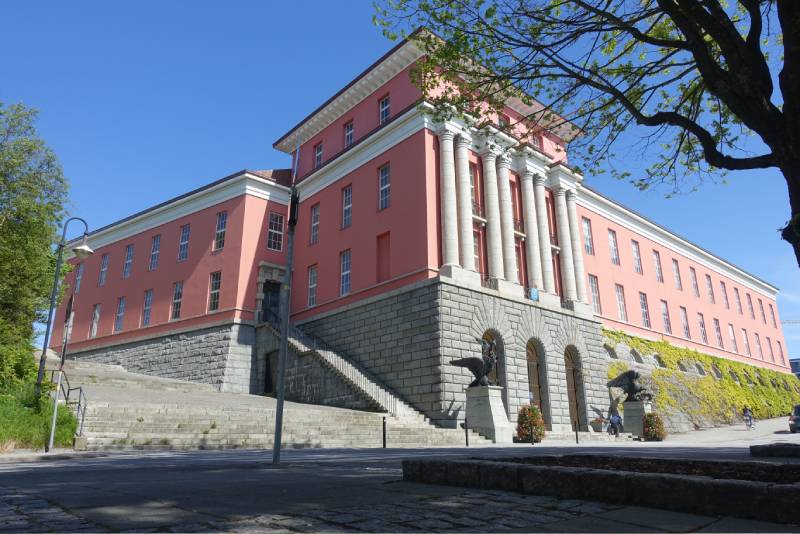
Haugesund Town Hall (Haugesund rådhus) is one of the most distinctive buildings in the city, thanks to its unusual pink façade.
The building officially opened in 1931 and was designed by Norwegian architects Gudolf Blakstad and Hermann Munthe-Kaas.
Its architecture reflects the classical influences of the early 20th century, with an elegant symmetrical design and impressive decorative details.
The town hall was a gift to the city from shipowner Knut Knutsen OAS and his wife Elisabeth.
Today, it remains one of Haugesund’s most recognisable landmarks.
What to see at Haugesund Town Hall
The building is surrounded by a landscaped park, which is particularly beautiful during the warmer months.
It’s an excellent place to stop for photographs and enjoy a short walk.
Although the building isn’t generally a tourist attraction with regular guided visits, you can admire its architecture from outside throughout the year.
Location: Rådhusgata 66, central Haugesund.
Best for: architecture, photography and short city walks.
7. Visit Dokken Open-Air Museum
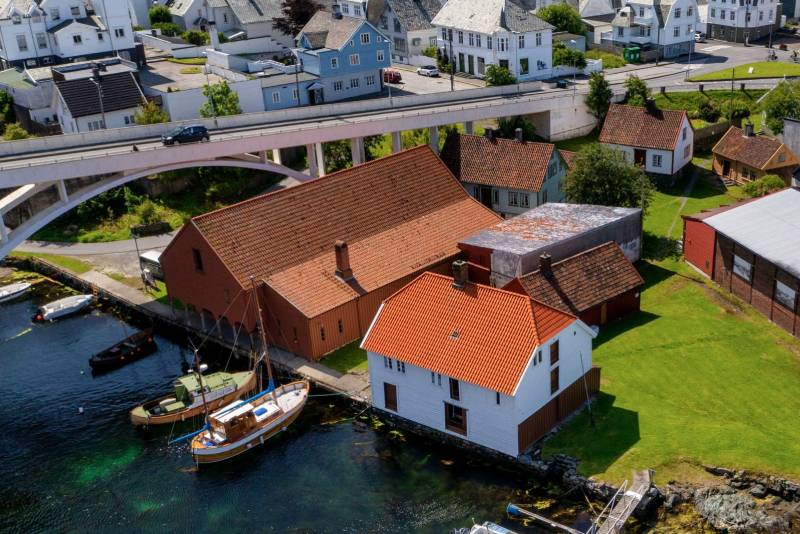
Dokken Museum is a small open-air museum where you can discover what life in Haugesund was like during the 19th and early 20th centuries.
Located on Hasseløy Island, just across the water from the city centre, it consists of several historic wooden houses that have been preserved and restored.
The museum recreates the everyday life of fishing families, sailors and local residents during the period when Haugesund was developing into an important maritime town.
Inside the buildings, you’ll find traditional furniture, household objects and exhibitions about the local fishing industry.
It’s an interesting contrast to the modern harbour and shopping streets nearby.
What can you see at Dokken Museum?
The museum includes historic buildings, small gardens and displays showing different aspects of life in the region.
During the main visitor season, guides and museum hosts help explain how people lived and worked in Haugesund more than a century ago.
The outdoor area is also a pleasant place to walk, especially on a sunny day.
Practical information
Location: Brugata 1D, Haugesund.
The museum is within walking distance of the city centre, across the bridge to Hasseløy.
Opening hours: seasonal, with the widest access during summer. Special openings may take place during cruise ship visits or Christmas events.
Admission: the published adult ticket price is 100 NOK; children under 16 enter free.
Check opening dates before visiting, particularly outside the summer season.
Official website: Dokken Open-Air Museum
Best for: local history, traditional Norwegian houses and families.
8. Explore Avaldsnes: The Birthplace of Norway’s Viking Kings
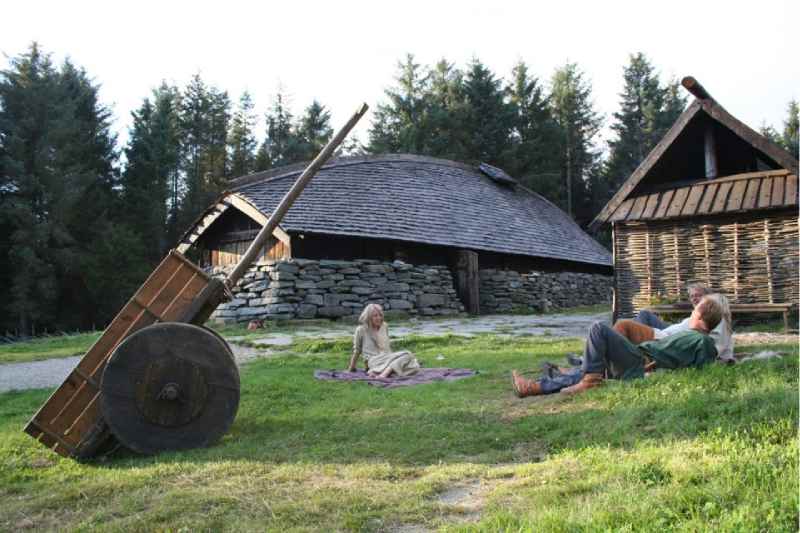
Avaldsnes is one of the most important Viking heritage sites in Norway and one of the best reasons to visit Haugesund.
Located on Karmøy Island, a short drive south of the city, Avaldsnes was an important centre of power during the Viking Age.
The area is closely associated with Harald Fairhair, who is traditionally remembered as the first king to unite Norway.
Its strategic position overlooking the Karmsundet strait allowed local rulers to control an important maritime route along the Norwegian coast.
Today, Avaldsnes combines historical sites, archaeological remains and reconstructed Viking buildings.
Visit the Nordvegen History Centre
The Nordvegen History Centre introduces visitors to the history of Avaldsnes and its role as an early royal seat.
Through exhibitions, multimedia presentations and historical objects, you can discover the stories of Viking kings, Norse mythology and life along the Norwegian coast.
The centre is suitable for adults and children and offers an accessible introduction to the region’s Viking heritage.
Explore the Reconstructed Viking Farm
A short walk from the history centre takes you to the Viking Farm, located on the small island of Bukkøy.
Here, you’ll find reconstructed buildings based on archaeological evidence and traditional Viking construction techniques.
The settlement includes wooden houses and other structures that recreate what a Viking community might have looked like.
During the summer season, guided visits and historical activities may be available.
The Viking Farm has a shorter opening season than the history centre, so check availability before travelling.
See St. Olav’s Church and the Standing Stone
Another important attraction in Avaldsnes is St. Olav’s Church, a medieval stone church begun around 1250.
The church stands on a hill overlooking Karmsundet, close to the Nordvegen History Centre.
Beside the church, you’ll find the famous standing stone known as Virgin Mary’s Sewing Needle (Jomfru Marias synål).
Measuring approximately 7.2 metres tall, the stone is surrounded by local legends.
According to one of these stories, the end of the world will come if the stone ever touches the church wall.
It’s a fascinating example of how ancient monuments and later Christian traditions became connected in Norwegian history.
How to get to Avaldsnes
Avaldsnes is located approximately 15–20 minutes by car from central Haugesund.
You can also use regional public transport, although connections and walking distances should be checked in advance.
Opening hours: the Nordvegen History Centre operates throughout much of the year on a seasonal timetable. The Viking Farm mainly welcomes individual visitors during summer.
Admission: tickets are available for the history centre, with combined tickets offered during the summer season.
Official website: Historic Avaldsnes
Best for: Viking history, families and exploring one of Norway’s most important early royal sites.
How to Get to Haugesund
Haugesund is located on Norway’s western coast, between Stavanger and Bergen.
It’s a convenient stop during a road trip through Rogaland and the surrounding fjord regions.
By Car
Driving is a flexible way to reach Haugesund and explore nearby attractions such as Avaldsnes.
If you’re travelling between Bergen and Stavanger, you can include Haugesund as part of your itinerary.
Some routes involve ferry crossings, so check the journey before setting off.
Having a car is particularly useful if you plan to visit the surrounding countryside or continue towards the Åkrafjord region.
By Bus
Haugesund has express bus connections with Stavanger and Bergen, including services operated along the western coastal route.
You can also use local buses to explore the city and nearby areas.
For current connections, use:
By Plane
The nearest airport is Haugesund Airport, Karmøy (HAU), located outside the city.
The airport has domestic and selected international connections.
You can reach central Haugesund by airport transport, taxi or rental car, depending on the available services.
Check current flight schedules and ground transport options before travelling.
What to See Near Haugesund
If you have more time, Haugesund can be a useful base for exploring other destinations in the region.
Åkrafjord and Langfoss Waterfall
One of the most impressive natural attractions within reach of Haugesund is Langfoss, a spectacular waterfall flowing down the mountainside towards Åkrafjord.
The waterfall is located near Road E134, making it relatively easy to visit during a road trip.
You can admire it from the roadside or explore other viewpoints in the surrounding area.
The nearby municipality of Etne also offers beautiful fjord landscapes, traditional villages and outdoor activities.
Discover the best things to do in Etne
Skudeneshavn
Located at the southern end of Karmøy Island, Skudeneshavn is one of Norway’s most charming coastal towns.
It’s known for its well-preserved white wooden houses, narrow streets and traditional maritime atmosphere.
The old town is a lovely place for a walk, particularly during summer.
You can combine Skudeneshavn with a visit to Avaldsnes if you have an extra day in the region.
When Is the Best Time to Visit Haugesund?
The best time to visit Haugesund is generally between May and September, when the weather is milder and outdoor attractions are easier to enjoy.
Summer is also when the city hosts some of its most popular festivals and cultural events.
If you’re interested in Viking history, visiting during the summer gives you a better chance of exploring the reconstructed Viking Farm at Avaldsnes.
However, Haugesund can be visited throughout the year.
The waterfront, Haraldshaugen and the town centre are accessible in all seasons, although some museums operate on reduced schedules.
As with much of western Norway, rain and wind are possible throughout the year, so bring a waterproof jacket.
Is Haugesund Worth Visiting?
Yes, but I’d recommend visiting it as part of a wider trip rather than making it the main destination of your journey.
Haugesund isn’t as spectacular as Geiranger or the Lofoten Islands, and its city centre doesn’t have the same architectural character as Bergen or Ålesund.
However, it’s a pleasant coastal city with an interesting maritime atmosphere and some important historical attractions.
If you’re travelling between Bergen and Stavanger, a stop of two to four hours is enough to explore the main streets, waterfront and town hall.
If you’re particularly interested in Viking history, consider spending a full day so you can also visit Haraldshaugen and Avaldsnes.
For travellers who enjoy discovering smaller Norwegian cities beyond the main tourist routes, Haugesund is an interesting addition to a western Norway itinerary.
Recommended One-Day Itinerary in Haugesund
If you have one day in Haugesund, I’d recommend combining the historic city centre, Haraldshaugen National Monument and Avaldsnes Viking heritage site.
The itinerary is designed for travellers visiting by car, although you can explore the city centre on foot and use public transport for the attractions outside it.
Allow approximately 6–8 hours, including sightseeing, lunch and travel between locations.
Stop 1. Haugesund Waterfront and Haraldsgata
Suggested time: 60–90 minutes
Start your day walking along Smedasundet, Haugesund’s picturesque harbour area.
Enjoy the views of the boats and waterfront buildings before heading towards Haraldsgata.
Explore the pedestrian shopping street, stop for coffee and admire the local atmosphere.
If you enjoy photography, you can also walk towards Risøy Bridge for views across the harbour.
Stop 2. Our Saviour’s Church and the Pink Town Hall
Suggested time: 30–45 minutes
Continue through the city centre towards Our Saviour’s Church.
Admire its Neo-Gothic architecture and, if the church is open, take a look inside.
From here, walk to the famous pink Town Hall.
The building and surrounding park provide a pleasant photo stop.
Stop 3. Dokken Open-Air Museum
Suggested time: 45–60 minutes
Cross towards Hasseløy Island and visit Dokken Museum.
Explore the historic wooden houses and learn about the everyday lives of Haugesund’s fishing families.
If the museum is closed, you can still enjoy a short walk around the surrounding area, respecting any access restrictions.
Afterwards, return to the centre for lunch.
Stop 4. Haraldshaugen National Monument
Suggested time: 30–45 minutes, excluding travel
In the afternoon, head north to Haraldshaugen.
Take some time to explore the monument and learn about the history of Harald Fairhair and the traditional unification of Norway.
If you have time, enjoy a short walk along the nearby coastal path.
You can reach Haraldshaugen by car, bus or on foot from central Haugesund.
Stop 5. Avaldsnes Viking Heritage Site
Suggested time: 1.5–2 hours
Finish your day at Avaldsnes, one of Norway’s most important Viking heritage destinations.
Visit the Nordvegen History Centre and explore the historical area around St. Olav’s Church.
If you’re travelling during the summer season and the Viking Farm is open, include a visit to the reconstructed settlement.
This is a great way to finish your day by discovering the history that makes the Haugesund region particularly interesting.
One-Day Itinerary Summary
| Stop | Suggested time |
|---|---|
| Waterfront and Haraldsgata | 60–90 min |
| Our Saviour’s Church and Town Hall | 30–45 min |
| Dokken Museum | 45–60 min |
| Lunch | 45–60 min |
| Haraldshaugen | 30–45 min |
| Avaldsnes | 1.5–2 hours |
| Total | Approximately 6–8 hours with transfers |
A Few Tips for Your Visit
Check museum opening hours first. Dokken Museum and the Avaldsnes Viking Farm have seasonal schedules, so you may need to change the order of your itinerary.
Don’t try to include every museum in one day. If you’re particularly interested in World War II history, replace Dokken or another stop with the Arquebus War History Museum, provided it’s open.
Allow extra time without a car. Local bus connections and walking distances can make the full itinerary considerably longer.
Stay flexible. If the weather is good, spend more time enjoying the waterfront and coastal paths. On rainy days, prioritise the museums and indoor attractions.