10 Best Things to See and Do in Alver, Norway
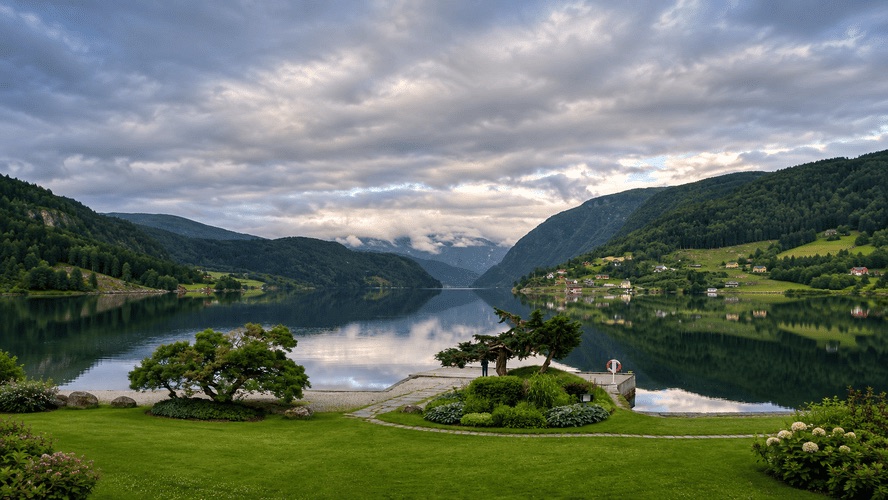
Alver is a municipality located north of Bergen, in the Nordhordland region. It includes small villages, islands, fjords and coastal landscapes where some of Norway’s oldest rural traditions are still preserved.
The municipality was established in 2020 through the merger of Lindås, Radøy and Meland. It has more than 800 islands and islets and forms part of the Nordhordland UNESCO Biosphere Reserve, recognised in 2019 as the first of its kind in Norway.
Unlike other destinations famous for their dramatic fjords, Alver offers a quieter experience, with small fishing villages, historic churches, coastal walking trails and traditional farmland.
If you’re exploring the area around Bergen, here are 10 places to see and things to do in Alver, along with practical tips to help you plan your visit.
1. Discover the Architecture of Knarvik Church
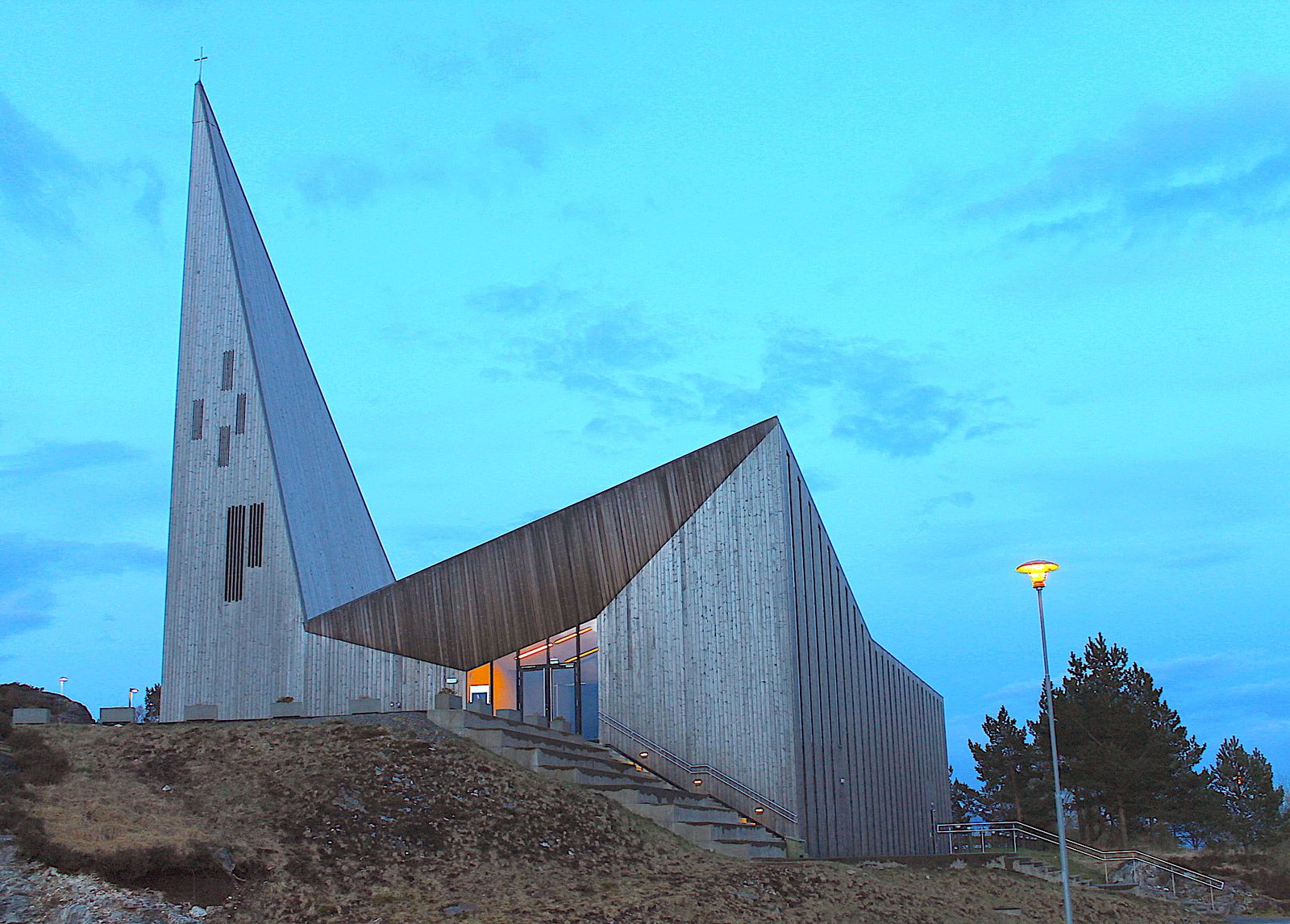
Knarvik Church (Knarvik kyrkje) is one of the most distinctive buildings in Alver and an excellent example of contemporary religious architecture in Norway.
Designed by Reiulf Ramstad Arkitekter and opened in 2014, the church stands out for its wooden structure, sloping roofs and triangular tower.
Its design reinterprets elements of traditional Norwegian churches through modern architecture that blends naturally into the surrounding landscape.
The building won the People’s Choice Award in the religious architecture category at the 2015 Architizer A+ Awards.
It’s worth visiting to admire its exterior, especially around sunset, when the light highlights the shapes and details of the building.
If you’d like to see the interior, check the parish’s opening hours before your visit.
What Else to See in Knarvik
Knarvik is Alver’s main administrative and commercial centre, making it a convenient place to stop for lunch or pick up supplies before continuing your journey.
Inside the shopping centre, you’ll find a bronze statue dedicated to Ivar Medaas (1938–2005), a singer and musician from Alversund, famous for popularising the Norwegian song Dar kjem dampen.
The sculpture, created by Arne Mæland, depicts him holding a hardingfele, a traditional Norwegian Hardanger fiddle.
2. Explore the Coastal Heathlands of Lygra
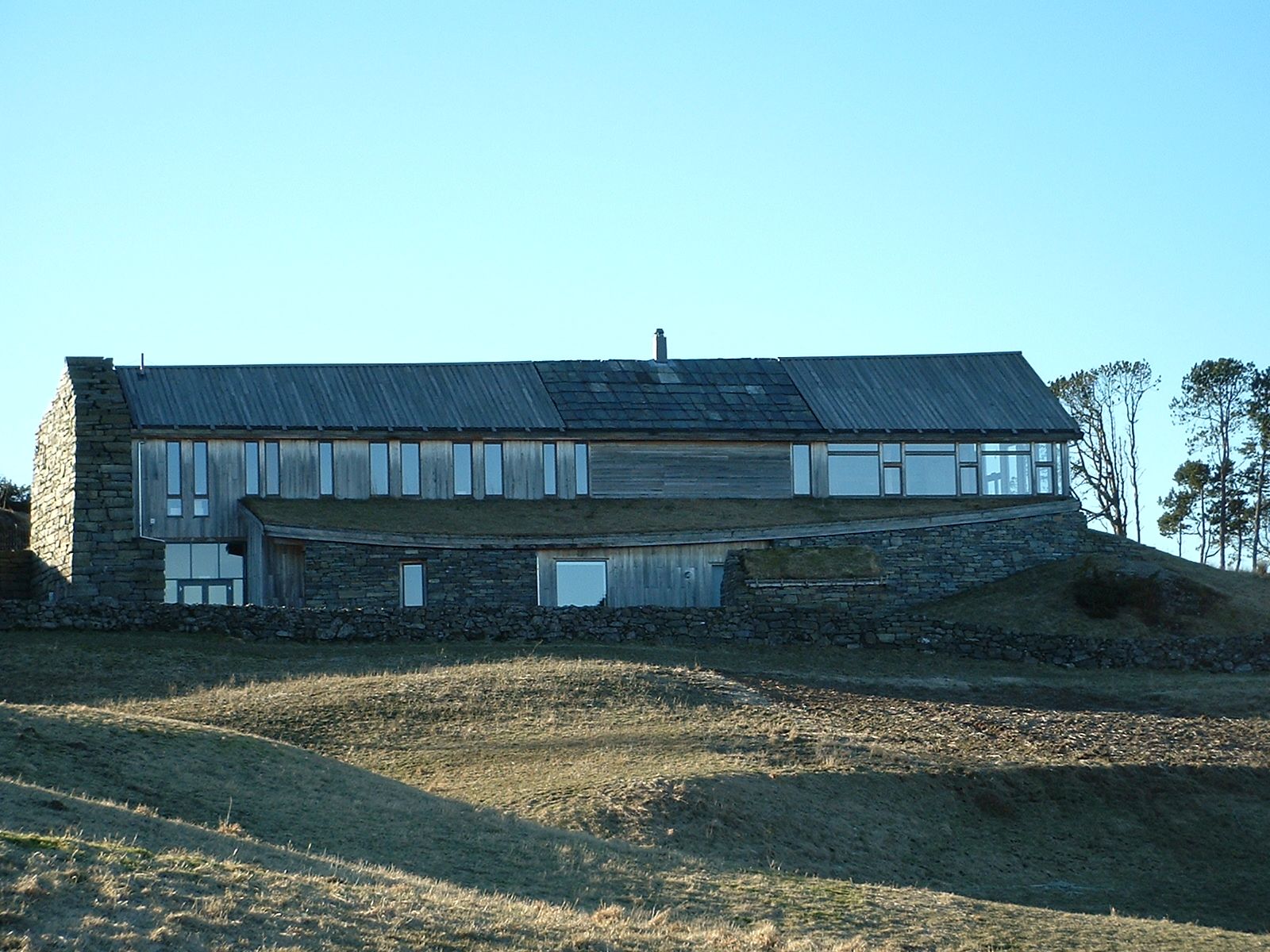
Lyngheisenteret, located on the island of Lygra, is one of the most interesting places in Alver to discover the relationship between nature and Norway’s rural traditions.
This visitor centre protects a coastal heathland landscape with a history stretching back approximately 5,000 years.
Far from being completely wild, the landscape we see today is the result of centuries of farming and livestock grazing.
Local farmers still use traditional methods, including sheep grazing and controlled heather burning, to prevent other vegetation from taking over these open landscapes.
The centre is particularly important for preserving a cultural landscape that has almost disappeared from many other parts of Europe.
Its conservation and educational work received recognition from UNESCO in 2001 and Europa Nostra in 2005.
Things to Do at Lyngheisenteret
A visit combines nature, culture and local food.
- Walk along the marked trails: Explore the heathlands and enjoy views of Lurefjorden and the surrounding islands.
- Learn about traditional farming: An exhibition and documentary explain how people have used and maintained this landscape for generations.
- Watch the wildlife: Traditional sheep breeds graze in the fields, and several bird species can be spotted in the surrounding area.
- Eat at Matstova: The centre’s restaurant serves dishes made with local ingredients and offers beautiful fjord views.
Approximately one kilometre away, you’ll find Lygra Church, a small white wooden church built in 1892 that still reflects the island’s rural character.
Practical Information
The centre is generally open from Easter until the end of September, although some activities take place outside the main season.
According to the published 2026 prices, entry to the main building and restaurant is free.
Admission to the exhibition and documentary costs:
- Adults: 110 NOK.
- Students: 80 NOK.
- Children aged 16 and under: Free.
During the regular season, opening hours are:
- Wednesday to Friday: 11 AM–3:30 PM.
- Sunday: 12 PM–5 PM.
Always check the latest opening hours and prices on the official Lyngheisenteret website before planning your visit.
3. Enjoy Views of Lurefjorden from Seim
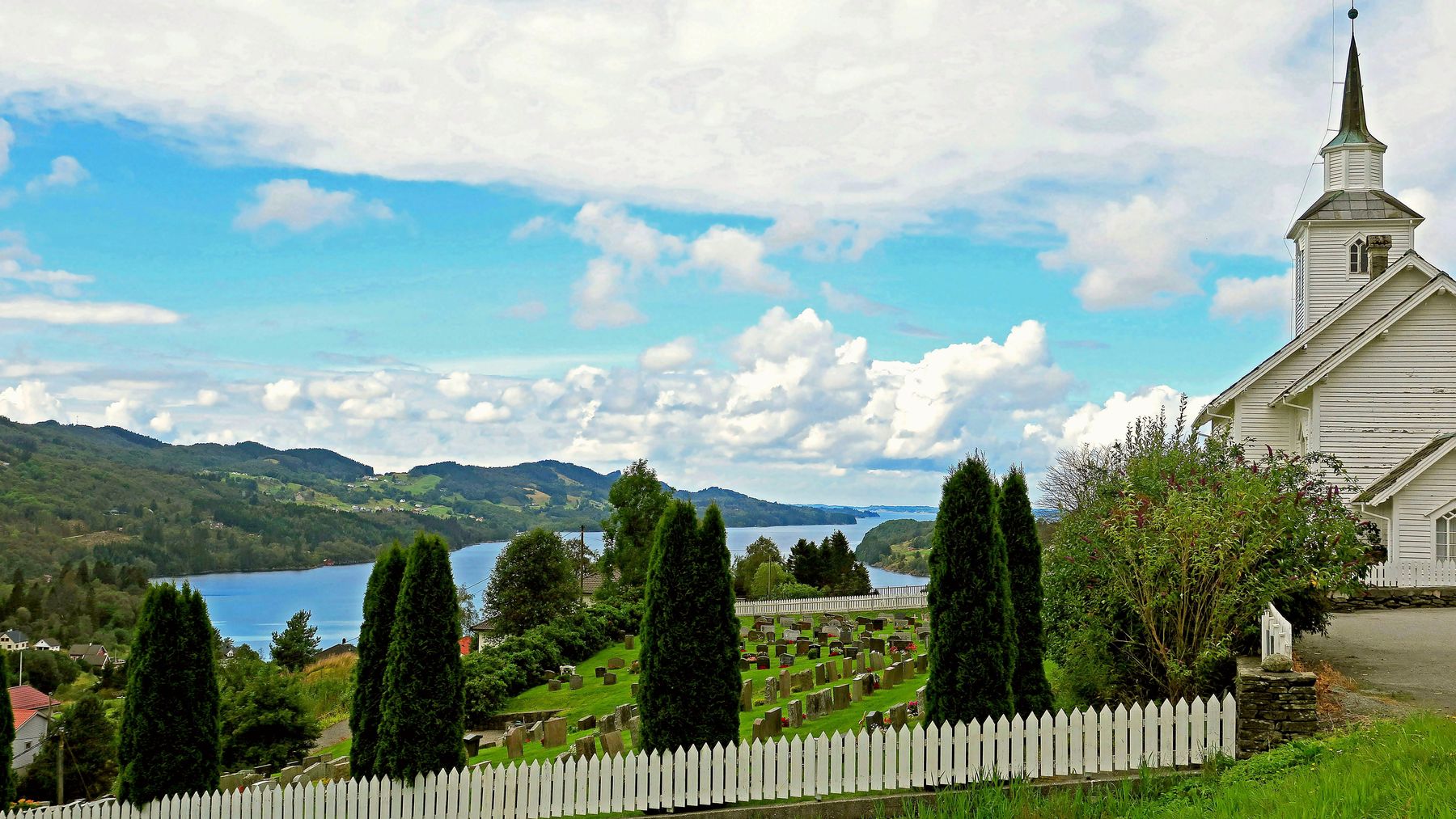
Seim is a small village located beside Lurefjorden, surrounded by hills, forests and agricultural landscapes.
It’s a worthwhile stop on your way to Lygra, both for its natural surroundings and historical importance.
One of its main attractions is Seim Church, a wooden building constructed in 1878.
Its distinctive white façade stands on a small hill beside the cemetery, offering beautiful views of the fjord.
Seim also has an important place in Norway’s medieval history.
During the reign of Harald Fairhair, it was one of the estates associated with the monarchy.
According to the Norse sagas, several of Norway’s early kings had connections with this settlement.
This historical connection is particularly visible at one of the village’s most important landmarks: Håkonshaugen burial mound.
4. Discover Viking History at Håkonshaugen
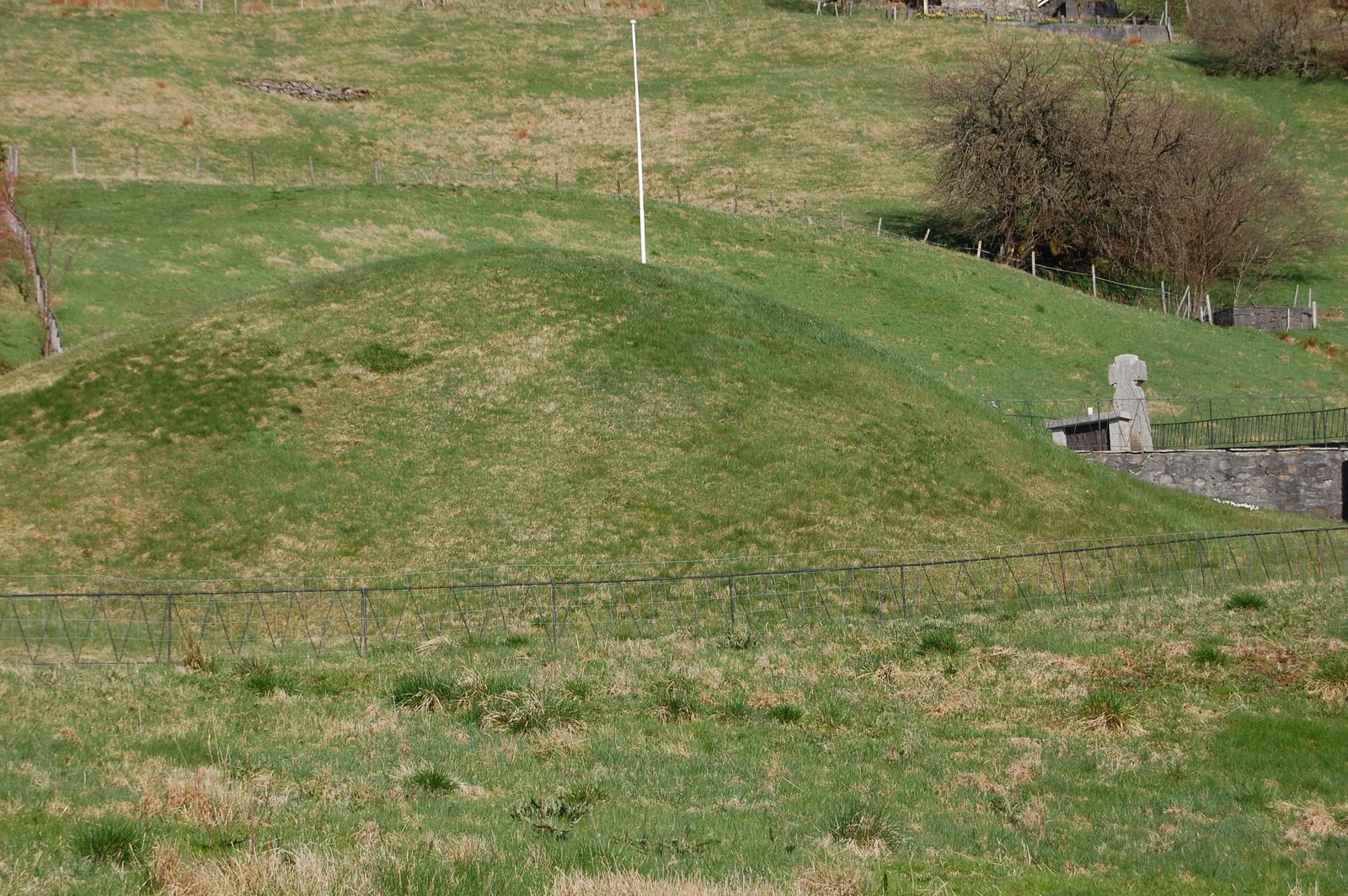
Very close to Seim Church lies Håkonshaugen, also known as Kongshaugen, a burial mound traditionally associated with King Håkon I of Norway, known as Håkon the Good.
According to the Norse sagas, the king died from wounds sustained during the Battle of Fitjar, around the year 961, and was buried at the former royal estate in Seim.
Archaeologists studied the mound in 1879 and 1958.
The excavations revealed part of its original structure, approximately 20 metres in diameter, and remains that may have belonged to a coffin.
However, no conclusive evidence was found to confirm that the king was buried there.
The monument was reconstructed in 1961 to commemorate the thousandth anniversary of his death.
Although the visit is short, Håkonshaugen is particularly interesting for anyone who wants to learn about Viking history and the origins of the Norwegian monarchy.
The burial mound is outdoors and can easily be visited together with Seim Church.
5. Enjoy Alver’s Beaches and Swimming Areas
During summer, Alver’s small beaches and recreational areas become popular places for locals in Nordhordland to relax.
Although the water remains cold even during the warmest months, many of these places offer spaces for picnics, relaxing by the sea or going for a swim.
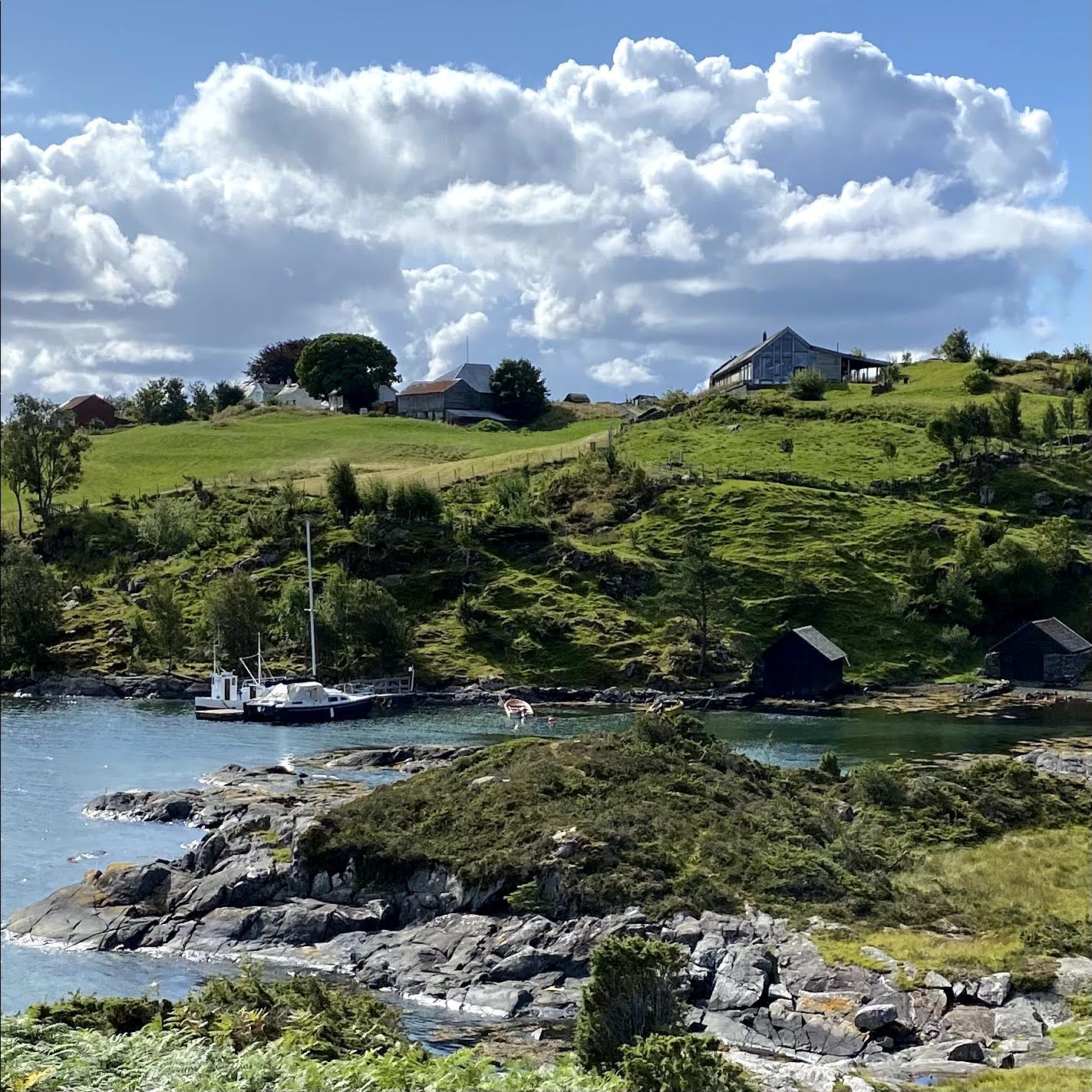
Some of the best-known swimming areas include:
Fisketangen
Located near Seim, Fisketangen has two small sandy beaches and areas of shallow water.
It’s a particularly good option for families looking to spend a few hours outdoors.
Vallevika
This swimming area combines an open coastal landscape with nearby hiking trails.
From here, you can reach Vollom beech forest, an unusual type of woodland in this part of Norway’s coast.
Fløksand
Located on the island of Holsnøy, Fløksand is one of Alver’s most popular recreational areas.
It has places to relax beside the water and a walkway connecting the shore to a small nearby islet.
Io
Also located on Holsnøy, Io is another option for enjoying the coast.
Its rocky shoreline and small swimming areas make it a good choice for visitors looking for a quiet place surrounded by nature.
Tip: These swimming areas are spread across different parts of the municipality. If you have limited time, it’s better to choose one close to your route rather than trying to visit them all.
6. Visit Historic Manger Church
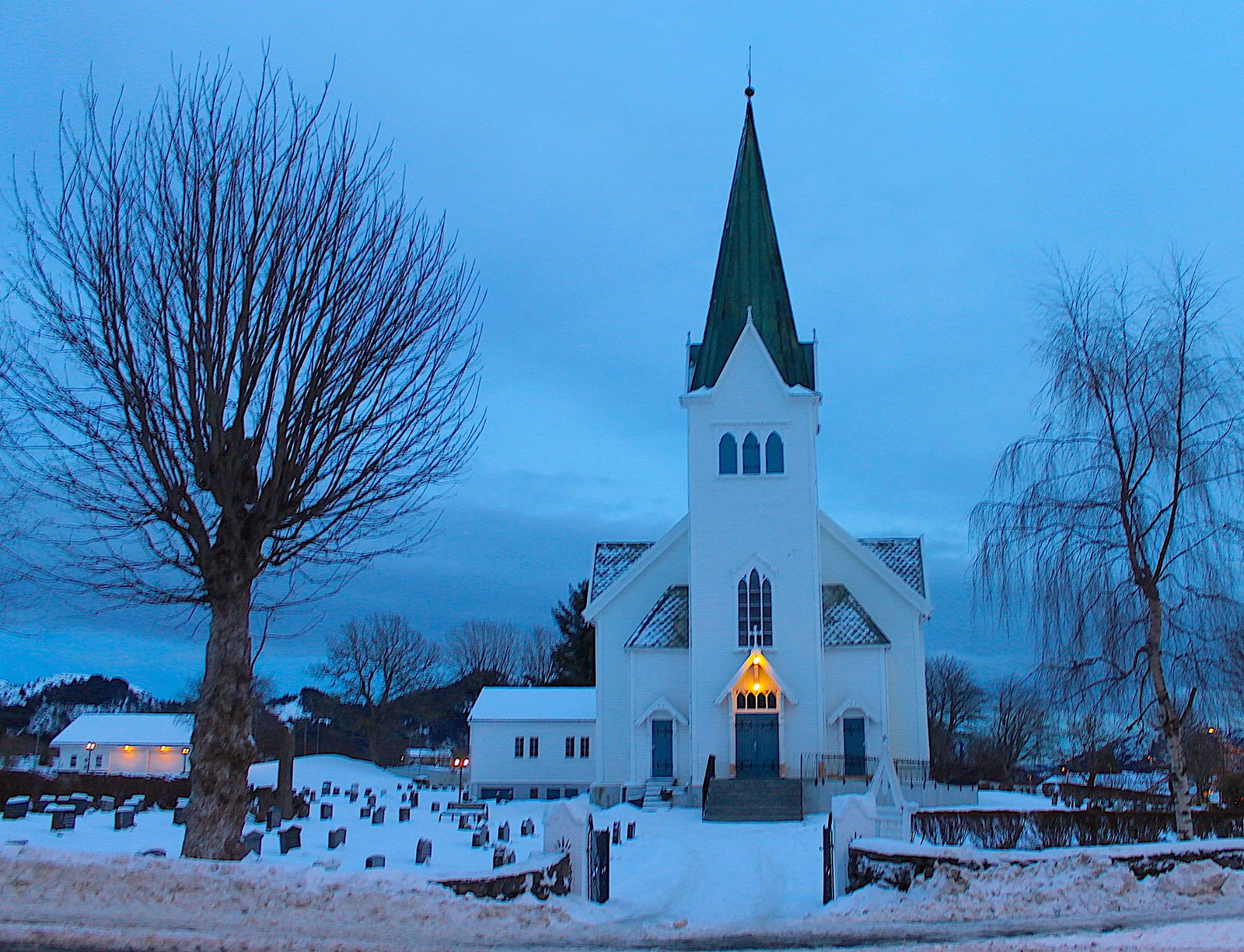
Manger Church (Manger kyrkje) is located in the village of Manger, on the island of Radøy.
It’s a white wooden church built in 1891, following plans by architect Hans Heinrich Jess.
Although the current building dates from the 19th century, this location has been an important religious site since the Middle Ages.
The first church was probably a stave church, one of Norway’s characteristic medieval wooden churches.
Other buildings followed, including a stone church opened in 1743, which was eventually replaced by the present church.
The former church also played a role in Norway’s political history.
In 1814, it was used as an election venue during the process leading to the Constitutional Assembly at Eidsvoll and the adoption of the Norwegian Constitution.
Today, the church and its cemetery form one of Manger’s most representative historical sites.
You can easily combine a visit with other attractions on Radøy.
7. Discover the Emigrant Church in Sletta
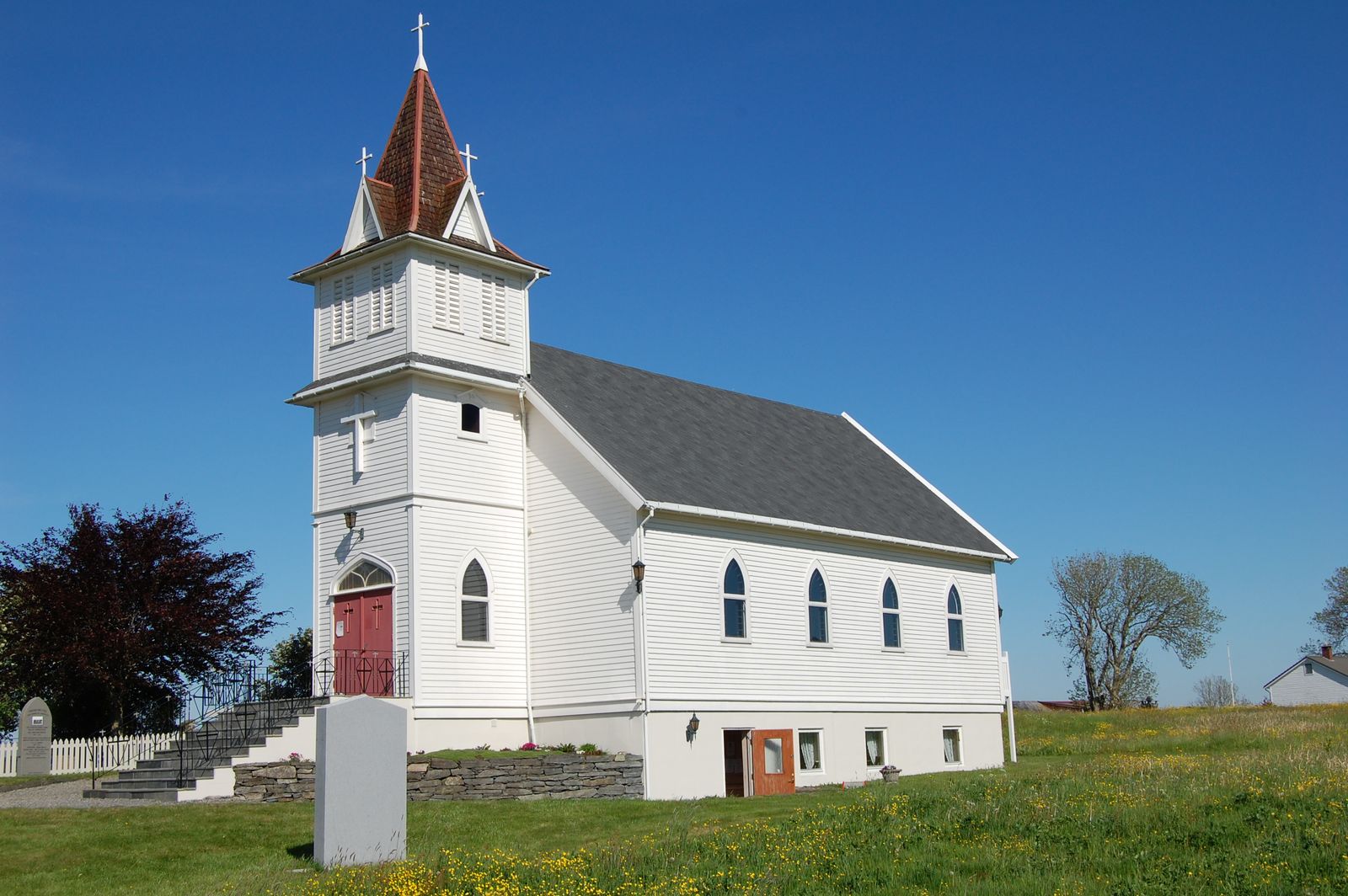
In Sletta, in northern Radøy, you’ll find a church with an unusual history: it was originally built in the United States by Norwegian emigrants before being moved back to Norway.
The building was formerly known as Brampton Lutheran Church.
It was constructed in North Dakota in the early 20th century by a Norwegian immigrant community. Construction began in 1911, and the church was consecrated in 1921.
Decades later, the building was dismantled and transported to Norway in 1996.
It was reconstructed and reopened in 1997 as part of the Western Norway Emigration Centre (Vestnorsk Utvandringssenter).
The church preserves architectural features typical of rural Norwegian-American communities, including its white wooden structure and tower with a reddish roof.
Its main attraction is the story behind it.
During the 19th and 20th centuries, large numbers of Norwegians emigrated to North America in search of new opportunities.
They established communities that preserved aspects of their Norwegian traditions, language and culture.
Today, the church stands as a reminder of the historical connections between Norway and the United States.
If you’re interested in visiting the interior or learning about the centre’s activities, check the museum’s official visitor information.
8. Walk to Sjøbua and Discover Fosnstraumen Strait
Northern Radøy offers two interesting places where you can combine a coastal walk with a visit to one of the region’s oldest archaeological sites.
Sjøbua Day-Trip Cabin in Byngja
Sjøbua is one of Alver’s day-trip cabins, located in the Byngja recreational area, almost directly beside the water.
Getting there is easy.
From the parking area, a short 750-metre trail combines a gravel path with a wooden boardwalk.
The walk takes approximately 10–15 minutes and involves very little elevation gain.
The cabin has a wood-burning stove and an accessible toilet.
It’s intended as a resting place during a day trip, not as overnight accommodation.
Its beautiful location beside the sea makes it a great option for a short walk and an opportunity to enjoy Radøy’s coastal scenery.
Fosnstraumen: A Strait with a Long History
A little further north lies Fosnstraumen, the narrow strait separating the islands of Radøy and Fosnøyna.
The strong tidal currents attract large numbers of fish, meaning this area has been used for fishing since prehistoric times.
It remains a popular place for recreational fishing today.
Beyond its scenic appeal, Fosnstraumen is also home to one of the area’s most important archaeological sites.
At Kotedalen, near the southern end of the bridge, archaeologists discovered remains of Stone Age settlements.
Excavations identified numerous periods of human occupation spanning approximately 5,500 years, along with remains of fish, seals and seabirds.
These discoveries offer valuable insights into how early communities lived along the Norwegian coast and made use of its natural resources.
Important: The currents in Fosnstraumen can be extremely strong, making it unsuitable for swimming.
9. Cross the Alversund Bridge
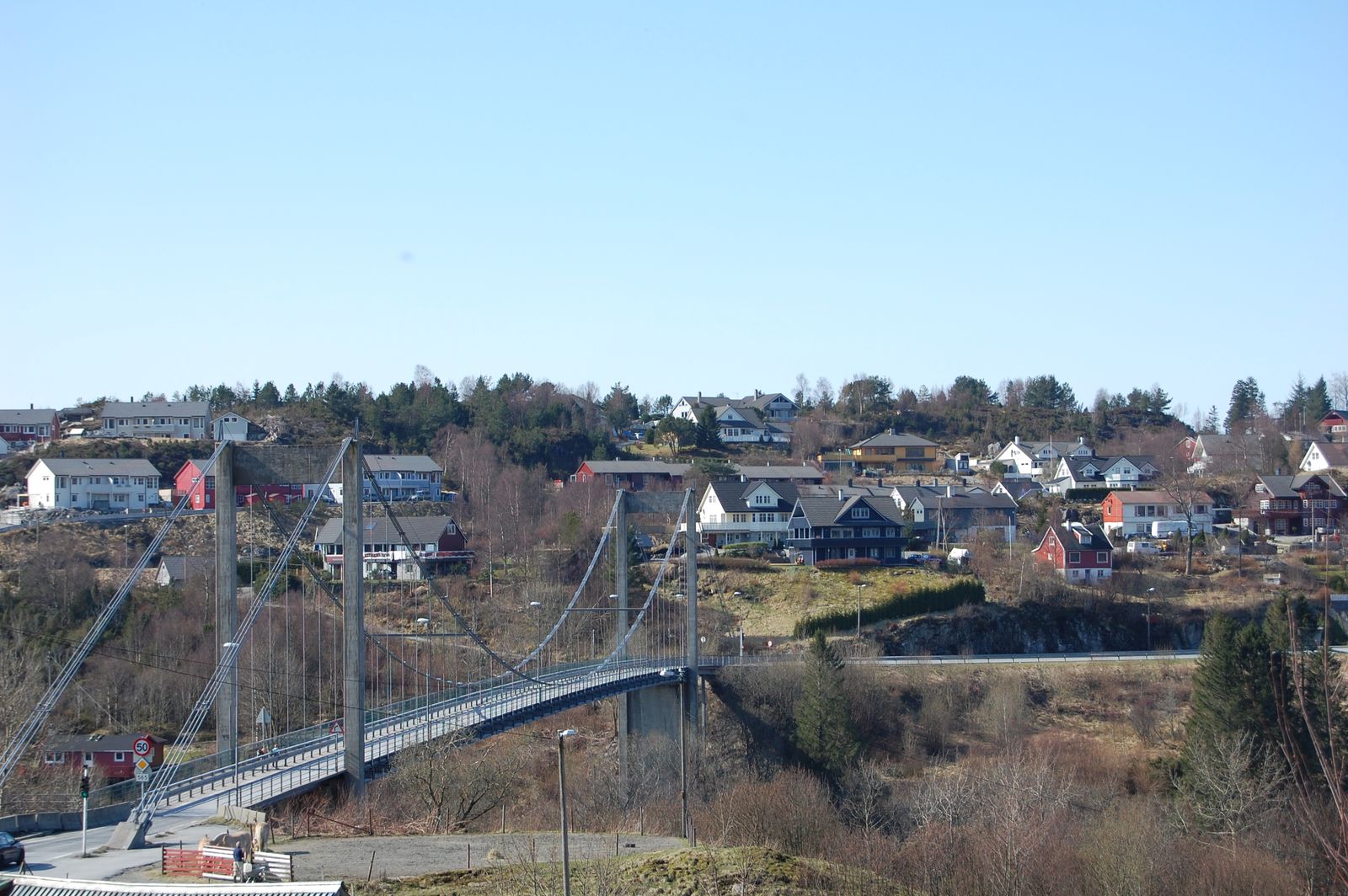
Alversund Bridge (Alversundbrua) connects the two sides of the Alverstraumen strait, near Knarvik, and is one of the most recognisable features of the local landscape.
Opened in 1958, this suspension bridge crosses a narrow sea channel surrounded by small villages, wooden houses and green hills.
The strait is also connected to the origin of the name Alver, which comes from an old farm located nearby.
Although you won’t need much time here, it’s worth stopping in the surrounding area to admire the bridge and enjoy the views of the water and traditional houses of Alversund.
Thanks to its proximity to Knarvik, it’s an easy stop to include in your journey.
10. Cross the Spectacular Nordhordland Bridge
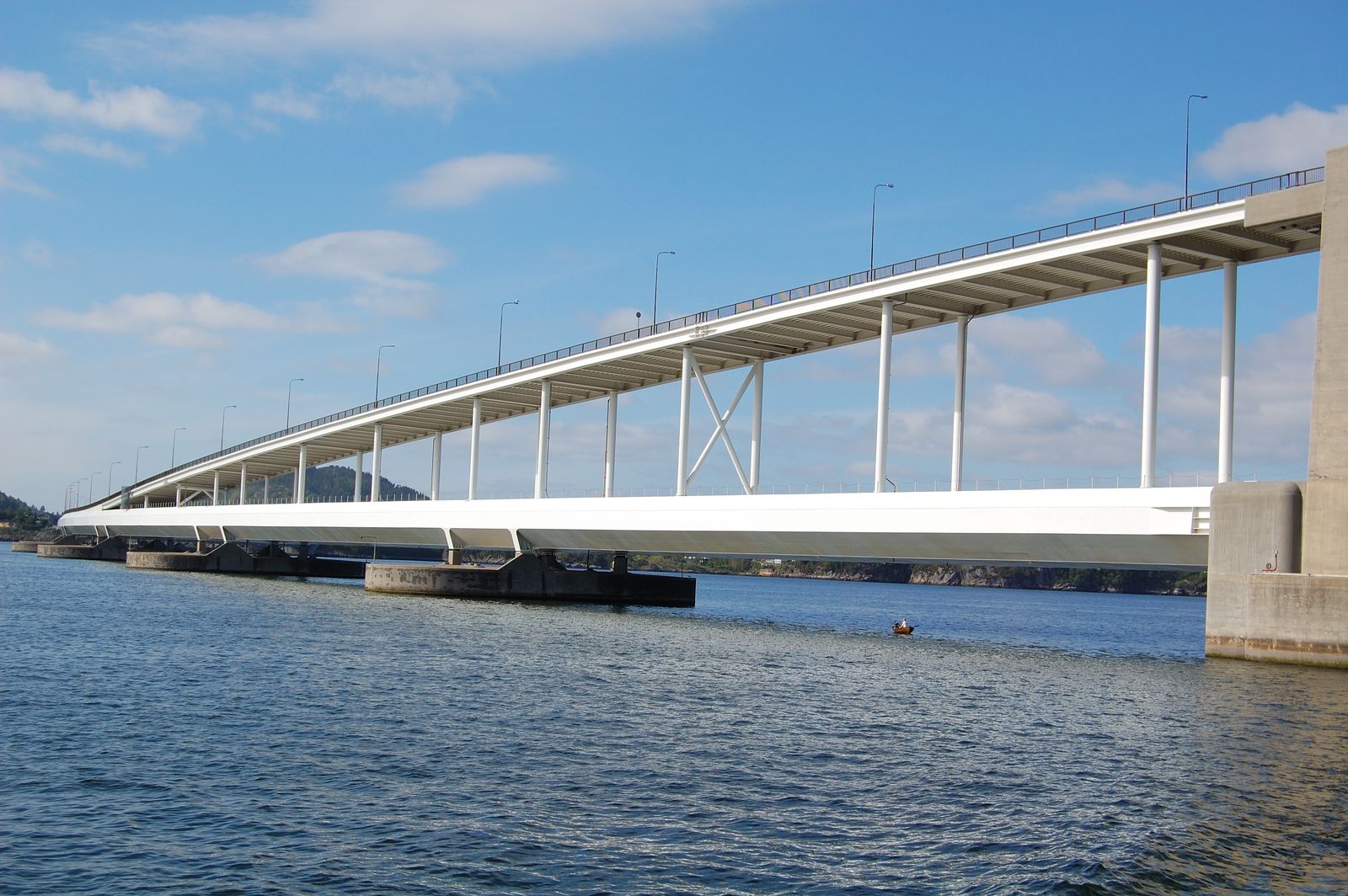
Nordhordland Bridge (Nordhordlandsbrua) is one of the most remarkable engineering structures on Norway’s western coast and provides the main road connection between Bergen and Alver.
Opened in 1994, the bridge crosses Salhusfjorden and connects the Bergen area with the island of Flatøy.
It measures approximately 1,614 metres in total length and combines two different construction systems: a cable-stayed section and a floating section.
Its most unusual feature is the floating section, approximately 1,246 metres long, supported by ten concrete pontoons.
Because of the fjord’s great depth, the floating structure doesn’t use lateral anchors attached to the seabed, making the bridge a particularly impressive engineering achievement.
In addition to carrying traffic along the E39 road, the bridge also has a path for pedestrians and cyclists.
If you’re driving from Bergen, you’ll probably cross it on your way into Alver.
The crossing itself offers beautiful views of Salhusfjorden and Nordhordland’s landscape of islands and mountains.
How to Plan Your Visit to Alver
Although Alver is close to Bergen, its main attractions are spread across several islands and villages.
For this reason, the most practical approach is to explore the area by region, especially if you want time to walk, visit attractions and enjoy the landscapes without rushing.
Route 1: Knarvik, Seim and Lygra
This is the most recommended option for a first visit to Alver.
Start at Knarvik Church, then continue to Seim to discover its historical connections and visit Håkonshaugen.
Finish your excursion in the coastal heathlands of Lygra.
If Lyngheisenteret is open, you can visit the exhibition, explore the walking trails and enjoy lunch at the restaurant.
Route 2: Radøy Island
This route combines historical heritage, culture and coastal landscapes.
Begin in Manger, where you’ll find the historic church, and continue to Sletta to visit the Emigrant Church.
From there, head to Byngja for a short walk to Sjøbua cabin before finishing at Fosnstraumen Strait.
If you have more time and the weather is good, you could spend another day exploring the swimming areas on Holsnøy.
How to Get to Alver from Bergen
The easiest way to explore Alver is by car, particularly if you want to visit several villages, islands and natural areas in one day.
From central Bergen, the journey to Knarvik takes approximately 30–40 minutes along the E39, crossing Nordhordland Bridge.
To reach Lygra, allow around one hour.
Public Transport
Skyss operates bus services connecting Bergen with Knarvik and other villages in Alver.
Frequency varies depending on the route and day of the week.
You can also reach Lygra by express boat from Strandkaiterminalen in Bergen, using services operated by Norled.
The boat journey takes approximately 40 minutes, followed by a 10–15-minute walk from the quay to Lyngheisenteret.
Check the availability of boat connections and the conditions for requesting a stop at Lygra before travelling.
If you’re visiting without a car, Knarvik and Lygra are among the easiest destinations to organise.
For exploring Radøy and other rural areas, having your own vehicle offers much more flexibility.
You can also read our guide on how to get around Norway.
When Is the Best Time to Visit Alver?
May to September generally offers the best conditions for exploring Alver’s coastal landscapes, enjoying hiking trails and taking part in outdoor activities.
During spring and summer, the heathlands of Lygra, the surrounding fields and the small villages are particularly beautiful.
Towards the end of summer, flowering heather adds shades of purple to parts of the landscape.
July and August are the best months for visiting the beaches, although the water remains relatively cold.
You can also visit the villages, churches and outdoor viewpoints during autumn and winter.
However, daylight hours are shorter, and some visitor centres remain closed outside the main season.
Whatever time of year you visit, it’s a good idea to bring waterproof clothing and a warm layer, as wind and sudden changes in the weather are common along this part of Norway’s coast.